

Best picks
Best Battery Testers: Car, Load and Household Picks
Choose a battery tester for your car or household cells. Compare conductance and load tests, AGM support and voltage checks, with clear limits for each tool.
By thisMETER EditorialUpdated November 2, 20268 min read1 picks
Our picks at a glance
For most car owners, our pick is the TOPDON BT100: its specified 12 V lead-acid support, 100–2000 CCA range and battery, cranking and charging checks cover the jobs we would prioritize. Choose the Schumacher BT-100 for a physical load test, or the ZTS MINI-9RL for household AA, AAA and supported 9 V batteries; a multimeter alone cannot establish car-battery health.
Specifications and manuals checked November 2, 2026. These recommendations are based on manufacturer documents; we have not physically evaluated the products.
thisMETER is reader-supported: when you buy through our links, we may earn a commission at no extra cost to you. As an Amazon Associate, thisMETER earns from qualifying purchases.
Quick picks
| Pick | Our recommendation | What the official documents establish | Main limit |
|---|---|---|---|
| TOPDON BT100 | Best for most car owners | Conductance; 12 V; 100–2000 CCA; flooded, AGM, gel, EFB | Lead-acid battery support |
| TOPDON BT200 | Best for mixed vehicle systems | 12 V battery-health test; 12 V/24 V cranking and charging checks; 100–2000 CCA | Conflicting marketing about 24 V battery-health testing |
| Foxwell BT100 Pro | Simple electronic alternative | 12 V; 100–1100 CCA; flooded, AGM and gel | Maker explicitly excludes a load test |
| Schumacher BT-100 | Best physical load tester | 100-amp load on 12 V; 50-amp load on 6 V | Hot housing and mandatory cooling interval |
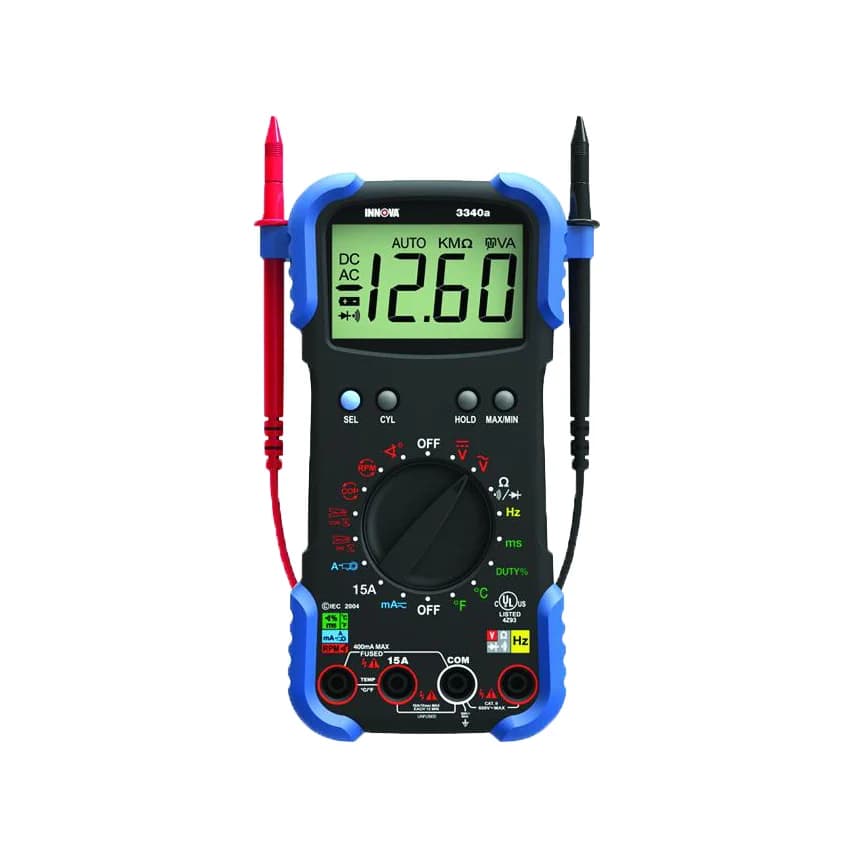
| Innova 3340 | Best if you also need an automotive multimeter | Auto-ranging, RPM pickup, dwell and temperature functions | Voltage alone cannot establish battery health |
| ZTS MINI-9RL | Best household option here | Pulse-load checks for listed alkaline, NiMH/NiCd and 9 V battery types | Match both chemistry and size to its list |
The TOPDON and Schumacher names are easy to mix up: BT100 and BT-100 are different products from different makers. Buy by the full brand and model.
Best for most car owners: TOPDON BT100
Why we choose it: the BT100 product page specifies battery, cranking, charging and ripple checks, while its technical table gives a 100–2000 CCA range. The supported lead-acid types include regular flooded, AGM flat plate, AGM spiral, gel and EFB, so we would start here for an AGM or EFB start-stop battery.
TOPDON identifies its method as conductance testing in the page metadata. The displayed results include state of health, state of charge and internal resistance, with a 2-inch backlit screen.
The trade-off: this is a 12 V battery tester. Its listed chemistry support gives us no basis to recommend it for LiFePO4.
Best for mixed vehicle systems: TOPDON BT200
Why we choose it: the BT200 V3 manual documents a 12 V battery-health procedure plus cranking and charging checks for 12 V and 24 V systems. It specifies 100–2000 CCA; the US product page adds a 2.4-inch color LCD.
The trade-off is a documentation conflict. US marketing says battery testing covers both voltages, and TOPDON's older combined sell sheet advertises 24 V battery support. The V3 manual instead says "Battery Test (12V Only)." Its separate cranking and charging procedures support both voltages. Do not infer whole-bank battery-health coverage from the operating-voltage range; confirm that capability for the unit you intend to buy.
Simple electronic alternative: Foxwell BT100 Pro
Why we choose it: Foxwell's BT100 Pro page lists regular flooded, AGM flat-plate, AGM spiral and gel batteries, with a backlit display and operation without Bluetooth or software. Its manual specifies 100–1100 CCA.
The trade-off: the page title calls it a battery load tester, but its own explanatory text says it will not perform a load test or deep-cycle test, and excludes 6 V and 24 V batteries. Buy it as an electronic battery checker. EFB is absent from the cited compatibility lists, so choose an explicitly documented EFB model for that application.
Best physical load tester: Schumacher BT-100
Why we choose it: Schumacher's BT-100 page specifies a real 100-amp load for 12 V batteries and a 50-amp load for 6 V batteries, with an analog meter.
The trade-off: its linked manual limits the load switch to 10 seconds maximum, followed by 5 minutes of cooling before another load test. The metal housing can become hot enough to burn; use the handle. This is a less convenient choice for repeated checks.
There is also a rating conflict: the page's prose says up to 1,000 CA, while its specification row says 200–1000 CCA (SAE). CA and CCA use different temperatures, as Interstate's glossary explains. Confirm suitability against the supplied manual and battery label rather than treating those limits as interchangeable.
Best automotive multimeter companion: Innova 3340
Why we choose it: the Innova 3340 adds auto-ranging, an included inductive RPM pickup, dwell, frequency, pulse width, duty cycle and temperature functions. We recommend it when the shopping list extends beyond the battery; compare it with our multimeter picks.
Innova
Innova 3340 Automotive Digital Multimeter
An auto-ranging automotive multimeter that adds RPM (with an inductive pickup), dwell, pulse width, duty cycle, frequency and temperature to the usual electrical tests, with a 15 A unfused current input.
- 15A max
The trade-off: a normal voltage reading cannot establish battery health, as Midtronics explains. Also, Innova specifies an unfused 15 A input limited to 15-second tests with at least 15 minutes between them. A battery-voltage check belongs in the voltage input; Fluke warns that using the current jack for a voltage measurement creates a short circuit. For current-measurement tool choices, see our clamp meter guide.
Best household option here: ZTS MINI-9RL
Why we choose it: ZTS's MINI-9RL compatibility list includes AA/AAA/C/D NiMH and NiCd rechargeables, AA/AAA/C/D/N alkaline cells, and specified 9 V alkaline, carbon-zinc, NiMH and Li-ion batteries. Its pulse-load method evaluates performance under load, giving us a reason to choose it over a voltage-only check for sorting supported household batteries.
The trade-off: support follows the chemistry list, not simply whether a battery fits against the contacts. Do not infer support for unlisted coin cells or other lithium formats. The data sheet specifies four AAA batteries for the tester itself, supplied separately. Choose the MINI-9RL tester-only variant if you do not need the optional case kit.
How we choose
We compared manufacturer product pages, technical tables and manuals, prioritizing the test method, supported chemistry, rating range and interpretation limits. Awards are our editorial judgments from those documents. We have not physically evaluated these instruments, and we do not rank their accuracy against each other.
We checked CPSC recall-search data for the makers and reviewed the returned matches; this is a screening step, not a safety certification. Our broader policies are on How we choose and How we measure.
Buying guide: choose the test before the tester
Voltage, conductance or load?
A multimeter answers a voltage question. Conductance testing uses a small AC signal through the battery, as Midtronics describes, and provides information about its internal condition. A load tester applies a load and observes the voltage response; the Schumacher's load depends on the battery voltage. These are different tests, so a CCA-range comparison alone cannot select the right tool.
- Yes: Voltage: useful for assessing charge against the battery maker's table
- Yes: Conductance: adds information about internal battery condition
- Yes: Load: observes voltage while the specified load is applied
- No: Voltage alone: cannot establish battery health
Even a satisfactory CCA result is not a complete diagnosis: Midtronics notes that a battery can meet its CCA rating while its reserve capacity is inadequate. If a local shop offers a free test and this is a one-off concern, ask what the check includes before buying a tool. Prefer a battery and charging-system assessment when the cause remains unclear.
What does CCA mean?
Foxwell's manual identifies CCA as an SAE cold-starting rating. Interstate's BCI definition describes the current a lead-acid battery can deliver at 0°F for 30 seconds, maintaining at least 7.2 V for a 12 V battery. That is a defined cold-performance condition. A handheld tester's CCA assessment should not be confused with reproducing that cold-chamber test.
Select the rating standard printed on the battery, then enter its matching rating. TOPDON's manual explicitly requires both. Do not enter an EN value while selecting CCA, or substitute amp-hours for a starting-current rating.
How to test a car battery with a multimeter
For an accessible low-voltage battery, follow the vehicle and meter manuals. Turn off the engine and accessory loads for a resting check, and follow the battery maker's instructions about resting after charging. East Penn warns that recent charging can affect conductance-test accuracy too.
Fluke's DC-voltage instructions give the connection order below. Apply it only within the meter's specified limits.
Select DC volts
Put the black lead in COM and the red lead in the voltage jack. Never use the current jack for this check.
Match polarity
Touch black to the negative terminal and red to the positive terminal, keeping the probes from bridging the terminals.
Read and disconnect
Read the display, then remove red before black. Compare the resting reading with the battery maker's table.
East Penn's heavy-duty AGM guide gives these open-circuit figures. They describe its flooded and AGM guidance, rather than a universal replacement threshold:
| Charge (%) | Flooded | AGM |
|---|---|---|
| 100 | 12.60–12.70 V | 12.8 V or higher |
| 75 | 12.40 V | 12.60 V |
| 50 | 12.20 V | 12.30 V |
The table shows why the battery type matters: the same 12.60 V reading has different charge implications in the two columns. Charge is not a prediction of service life. Follow the battery maker's charging and retest instructions before deciding that a discharged battery needs replacing.
Reporting and household compatibility
For work where someone else needs the result, put a printer or report-export function on your buying checklist and confirm it in the exact model's manual. For your own car, prioritize documented chemistry and rating support. A larger display is a convenience; it does not resolve an unsupported test mode.
For AA, AAA or 9 V batteries, use the household tester's specific chemistry contacts. The ZTS list distinguishes rechargeable chemistries from alkaline and carbon zinc. Battery shape alone is not a compatibility guarantee, and its household support does not extend to a car battery.
Verdict
Our default car-battery recommendation is the TOPDON BT100 for its documented lead-acid chemistry coverage and system checks. Choose the BT200 for its documented additional system-voltage coverage after reading the battery-health limitation, the Schumacher BT-100 for a physical load test, or the ZTS MINI-9RL for supported household batteries. Use the Innova 3340 as the broader automotive meter companion, and seek further diagnosis when the battery reading does not explain the problem.
Sources
The linked maker pages and manuals support the product comparisons. For interpretation, see Midtronics on battery-diagnosis limits, Interstate's battery glossary, East Penn's charge table and Fluke's DC-voltage procedure. Recall screening used the CPSC's official recall data.
Frequently asked questions
Can a multimeter tell if a car battery is bad?
A multimeter can check voltage, but voltage alone cannot establish battery health. Midtronics explains that a battery can show a normal resting voltage while its condition is poor. Use the battery maker's charge table to interpret the reading, then seek a battery and charging-system test if the starting problem remains. A low reading is a reason to investigate charging, rather than an automatic replacement verdict.
Which battery tester should I buy for an AGM or EFB battery?
Our default recommendation is the TOPDON BT100: its current page lists regular flooded, AGM flat-plate, AGM spiral, gel and EFB lead-acid batteries, with a 100–2000 CCA range. Match the tester's battery-type setting and rating standard to the battery label. Foxwell lists flooded, AGM and gel for the BT100 Pro; its cited documents do not establish EFB support, so we would choose the explicitly supported TOPDON for that job.
Does the TOPDON BT200 test 24 V batteries?
TOPDON's documents conflict. Its US marketing describes battery testing on both system voltages, but the BT200 V3 manual labels the battery-health procedure '12V Only' and separately supports cranking and charging checks on 12 V and 24 V systems. We recommend it for that documented distinction. Obtain written confirmation for your exact unit before buying it specifically to assess the health of a complete 24 V battery bank.
Can these car battery testers test lithium batteries?
The dedicated car testers recommended here specify lead-acid battery types; those specifications do not establish support for a LiFePO4 starting battery. Choose a tester explicitly approved for your battery's chemistry and application. Household lithium support is a separate question: ZTS specifically lists 9 V Li-ion rechargeables for the MINI-9RL, which does not make it a car-battery tester or a universal lithium-cell tester.
Related guides
Best Sound Level Meters: When a Phone App Is Enough
Choose a sound level meter for spot checks or logging, see when the NIOSH iOS app is enough, and understand weighting, calibration and Class 1 versus Class 2.
Updated November 2, 2026Read
Kill A Watt and Other Plug-In Watt Meters: Measure What Anything Really Uses
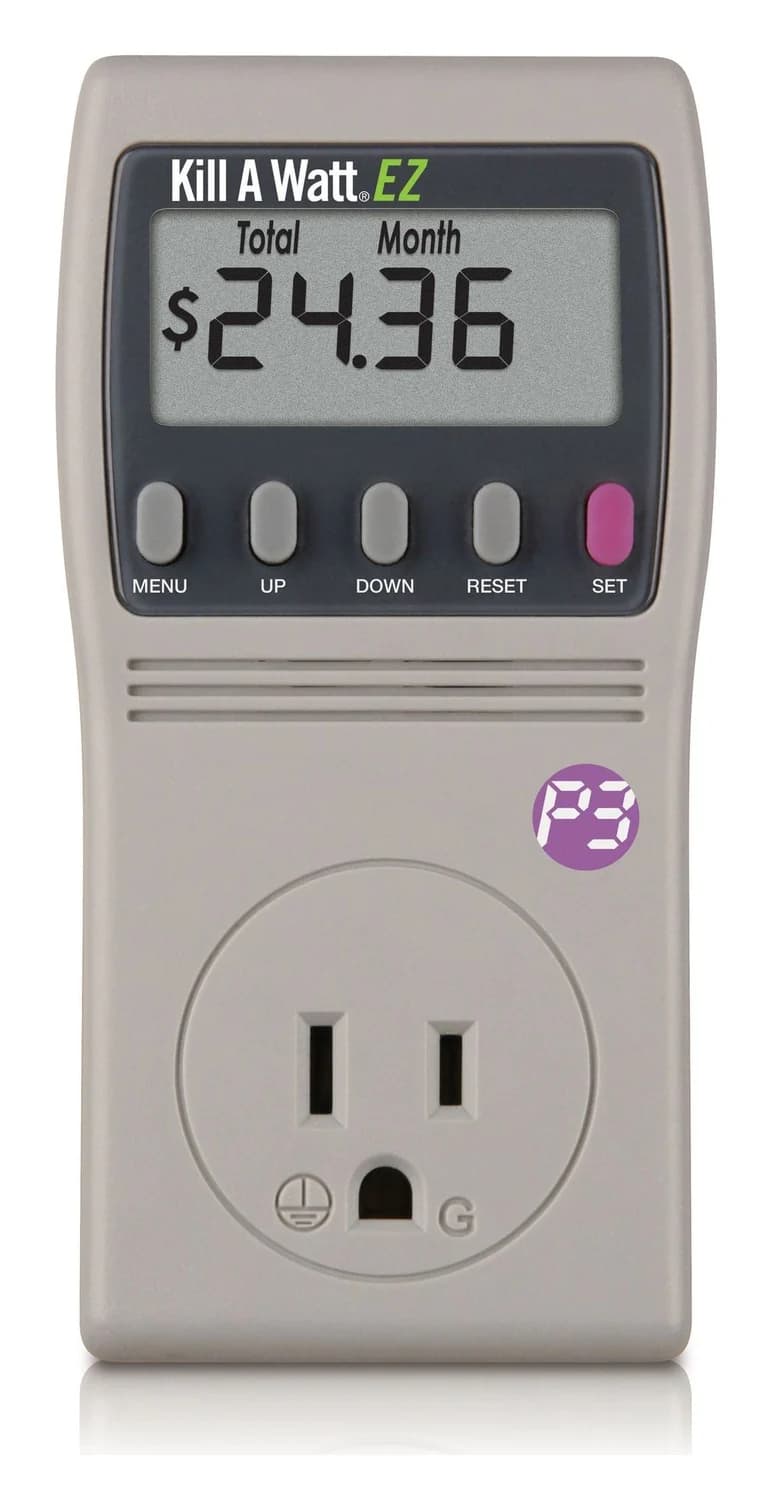
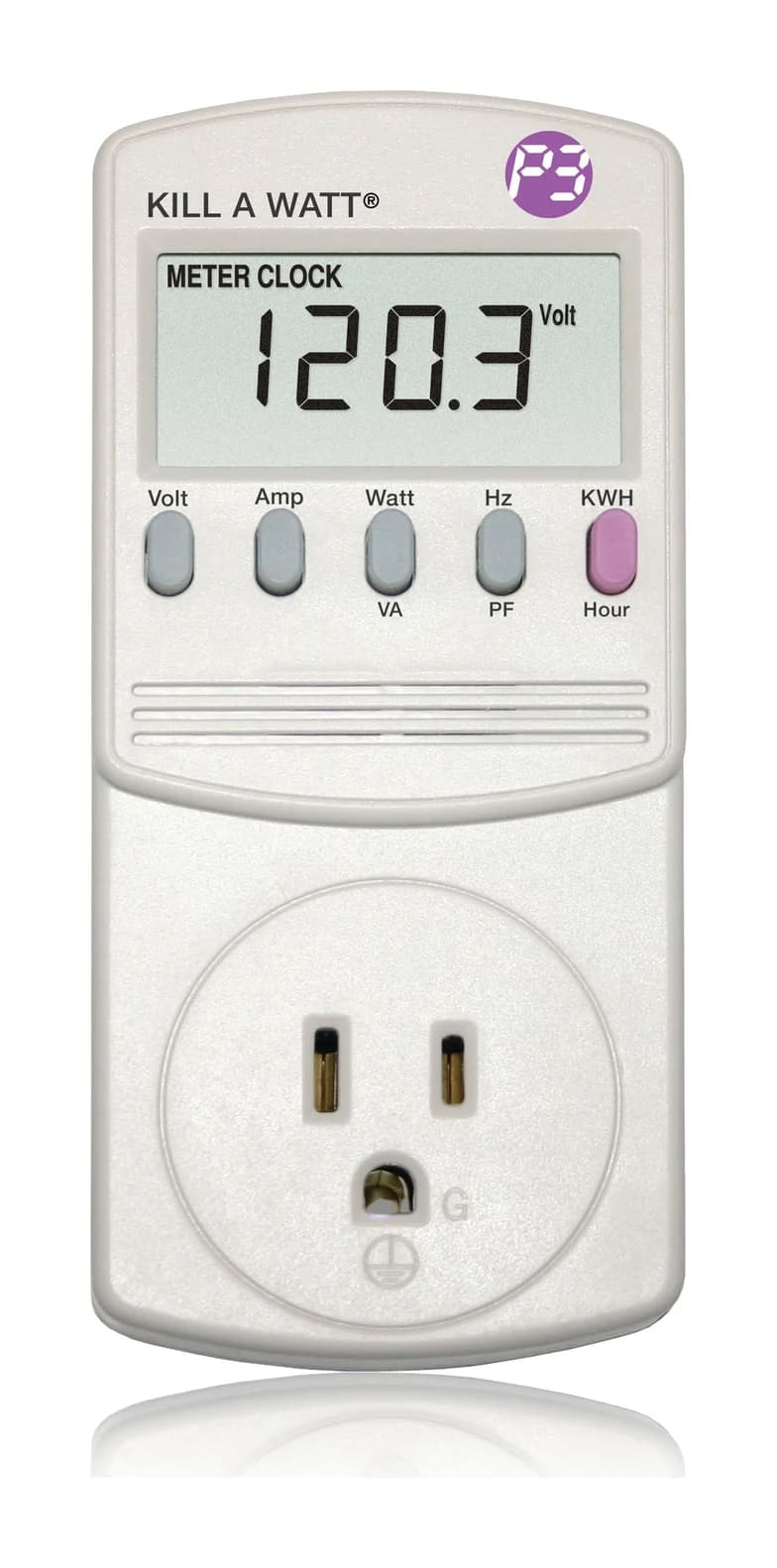
Measure what an appliance really uses with a Kill A Watt or an energy-monitoring smart plug: which to buy, how to read watts vs VA, and the 0.2% fine print.
Updated November 2, 2026Read
Home Energy Monitors: Emporia Vue 3, a Smart Plug or a Plug-In Meter?
Do you need a whole-home energy monitor? What the Emporia Vue 3 measures, what its panel install involves, and when a smart plug or a Kill A Watt is enough.
Updated November 2, 2026Read