Skip to content

POWER-Z (ChargerLAB)

POWER-Z (ChargerLAB) SINK240

Check your model and package

SINK240 bare trigger board (single PCB, no display)

Maximum voltage tolerance:
60 V (withstand)
Protocol support:
Full USB PD3.1 triggering, SPR and EPR fixed profiles (5 V, 9 V, 12 V, 15 V, 20 V, 28 V, 36 V, 48 V) plus PPS; maximum trigger 240 W (48 V)
Role:
USB PD sink / trigger board: requests a voltage profile from a PD source; it does not display or measure voltage, current or power

We may earn a commission. How we earn.

Check price on Amazon
Package details

Model: SINK240

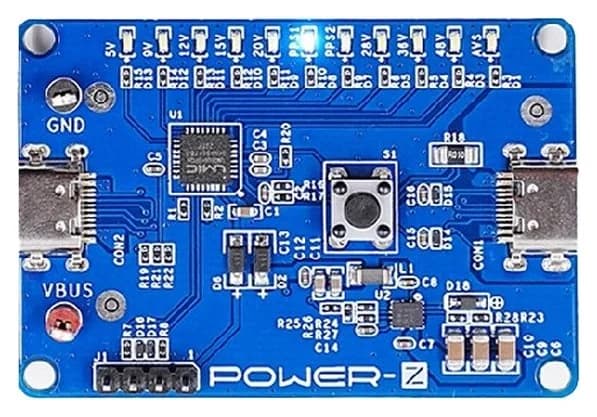
Bare single-sided PCB with USB-C in/out plus VBUS/GND terminals and 11 profile LEDs; triggers PD3.1 (SPR/EPR) and PPS but shows no measurements.

Condition:
Confirm new or reconditioned on the listing
Quantity:
1 unit

Important limit: A trigger/breakout board only: no display and no voltage, current or power readout; verification needs a separate meter or electronic load

Confirm condition, quantity and included accessories on the retailer’s listing.

Compare versions and packages

Specifications checked November 5, 2026. Full product details

Understand the whole path

See the power.
Keep the connection.

An inline meter becomes part of your USB connection. Choose the question it needs to answer.

Actual products · maker photographs

Klein Tools ET920 USB Digital Meter (USB-A and USB-C)
Klein ET920ET920
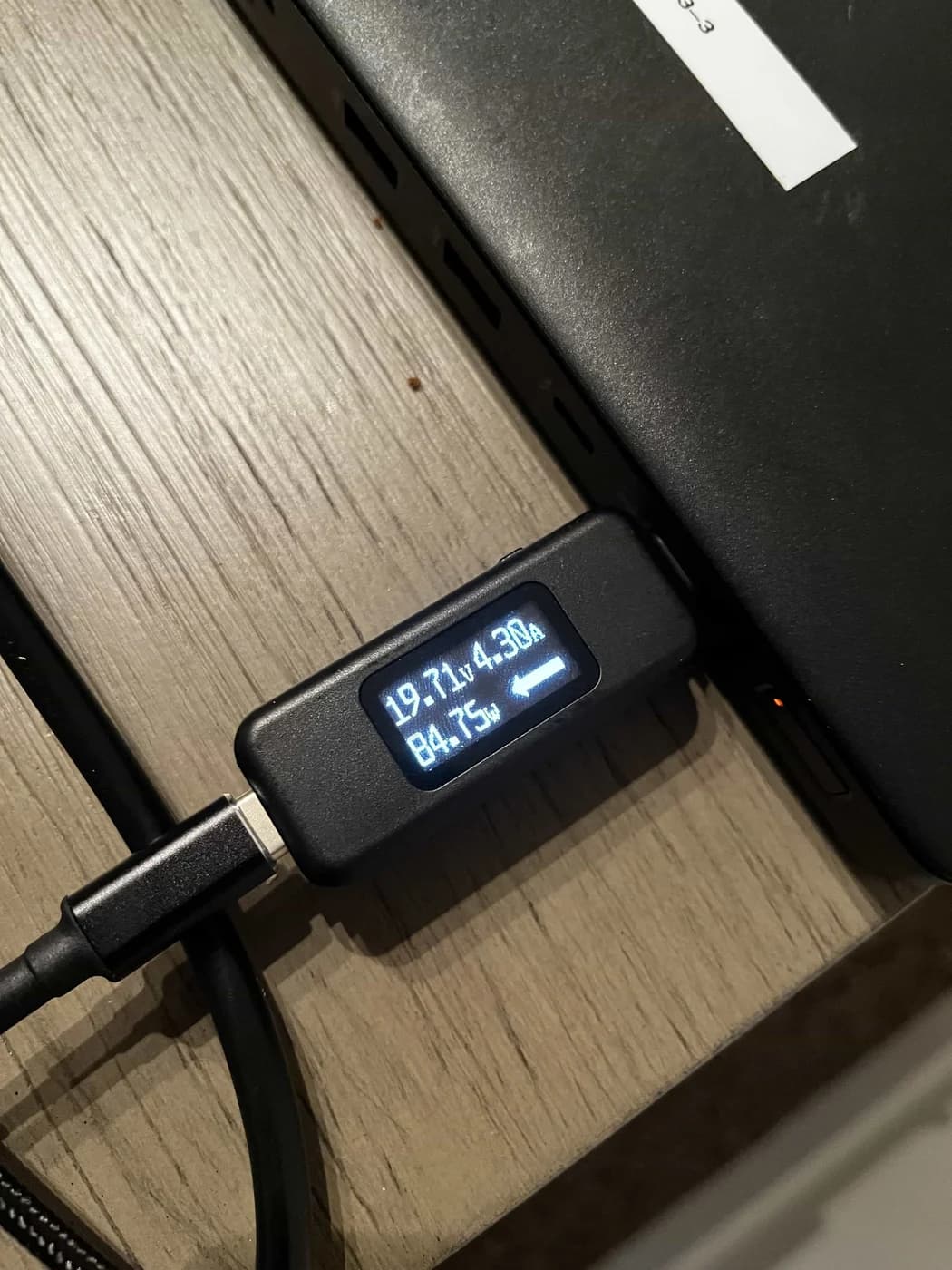
Plugable USB-C Voltage and Amperage Meter (USBC-VAMETER3, 240W EPR)
Plugable USBC-VAMETER3Maker lifestyle photograph
ChargerLAB POWER-Z KM003C USB-C Tester and PD Analyzer
POWER-Z KM003CKM003C
What needs to work through the meter?

Power ≠ data ≠ protocol analysis

Specification diagram: source to inline USB meter to device. Power, data and protocol analysis are independent capabilities.SOURCEINLINE METERDEVICEUSB-CUSB-C

⎓ Power readings: match the voltage range

↔ Data and video: separate capabilities

≋ PD profile readout: check the model

Specification diagram · conceptual paths, with no simulated measurement.

Choose a task to compare the recorded capabilities.

The detail that changes the choice

Choose what it can tell you.

Klein Tools
Klein Tools ET920 USB Digital Meter (USB-A and USB-C)

Choose a measurement

Klein ET920

ET920

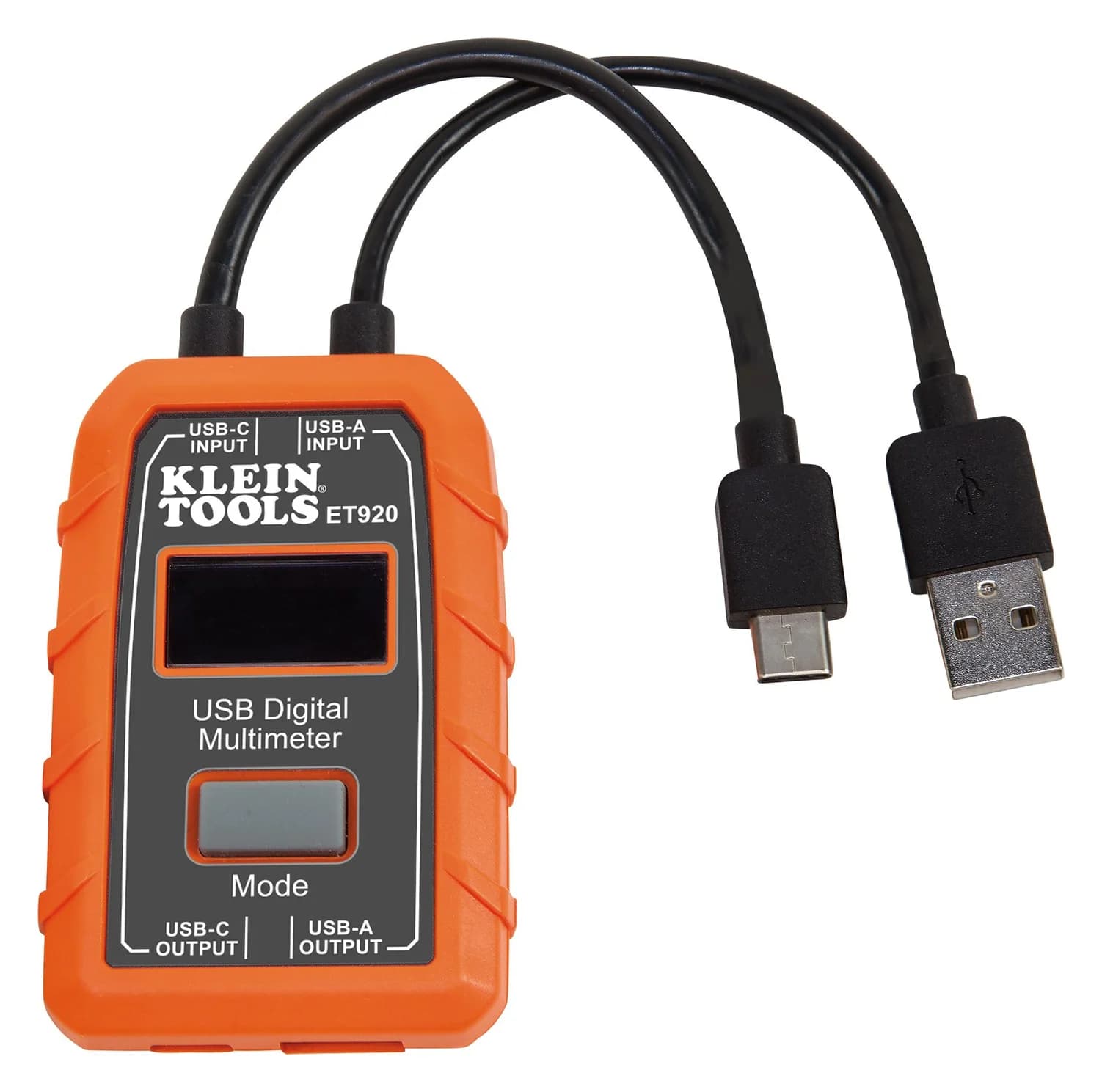
An inline USB meter with USB-A and USB-C pass-through that shows voltage, current, charge, energy and calculated resistance, powered by the port it measures.

  • 20 V operating max

Check before buying. Tops out at 20 V: no USB PD EPR (28 V and up), and Klein warns that more than 24 V DC damages it

See the recorded specification
Connectors
USB-A input and output; USB-C input and output (the inputs are on short attached cables, about 4 in / 100 mm)
Voltage
3 to 20 V DC; accuracy ±1% (the manual adds '±2 Bytes')
How it connects
USB-A in to USB-A out, or USB-C in to USB-C out; the two sides can't be used at the same time, and it isn't a USB-C to USB-A adapter

Source record: ET920

Manufacturer specifications recorded by thisMETER. These are not our own measurements. References belong to this product record; a field-by-field source mapping is not claimed.

Connectors
USB-A input and output; USB-C input and output (the inputs are on short attached cables, about 4 in / 100 mm)
Voltage
3 to 20 V DC; accuracy ±1% (the manual adds '±2 Bytes')
How it connects
USB-A in to USB-A out, or USB-C in to USB-C out; the two sides can't be used at the same time, and it isn't a USB-C to USB-A adapter

Record checked 2026-11-02.

Full product details ↗
Plugable
Plugable USB-C Voltage and Amperage Meter (USBC-VAMETER3, 240W EPR)

Choose a measurement

Plugable USBC-VAMETER3

USBC-VAMETER3

A thumb-size inline USB-C meter that shows volts, amps, watts and the direction of current on an OLED screen while passing data, video and USB PD 3.1 EPR power up to 240 W.

  • 50 V operating max
  • 240 W PD

Check before buying. Shows volts, amps, watts and direction only: Plugable lists no energy totals, PD profile readout or e-marker test

See the recorded specification
Operating range
4.5 to 50 V, 50 mA to 6.5 A
USB PD
Passes USB PD 3.1 Extended Power Range (101 to 240 W); ports rated 48 V, 5 A, 240 W
Data and video
Passes USB data (USB 1.1 through 3.1 Gen 2, 10 Gbps) and USB-C Alternate Mode video
Connectors
USB-C plug and USB-C receptacle; works in either direction

Source record: USBC-VAMETER3

Manufacturer specifications recorded by thisMETER. These are not our own measurements. References belong to this product record; a field-by-field source mapping is not claimed.

Operating range
4.5 to 50 V, 50 mA to 6.5 A
USB PD
Passes USB PD 3.1 Extended Power Range (101 to 240 W); ports rated 48 V, 5 A, 240 W
Data and video
Passes USB data (USB 1.1 through 3.1 Gen 2, 10 Gbps) and USB-C Alternate Mode video
Connectors
USB-C plug and USB-C receptacle; works in either direction

Record checked 2026-11-02.

Full product details ↗
ChargerLAB
ChargerLAB POWER-Z KM003C USB-C Tester and PD Analyzer

Choose a measurement

POWER-Z KM003C

KM003C

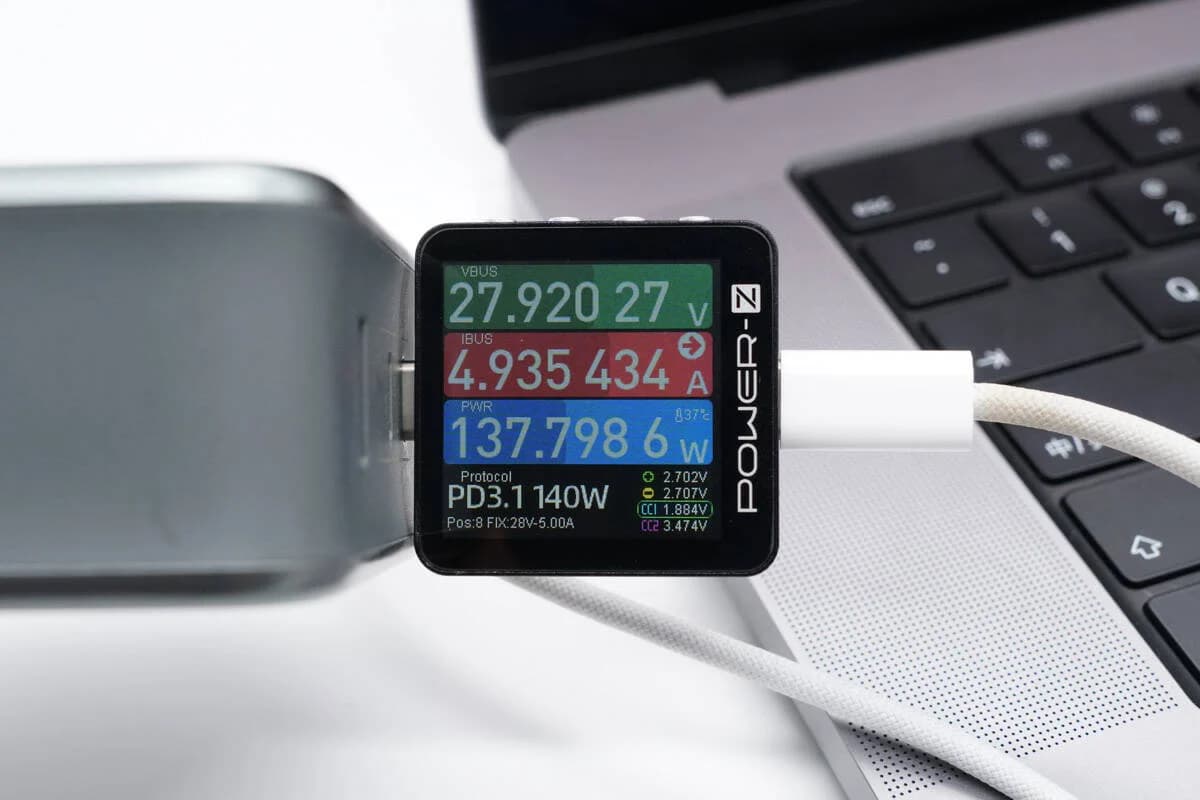
A USB-C power tester and USB PD protocol analyzer rated to 50 V and 6 A (240 W in PD) that reads cable e-markers, lists a charger's power profiles, detects and triggers fast-charge protocols, and logs to PC software.

  • 50 V operating max
  • 240 W PD

Check before buying. No reverse-voltage protection, per ChargerLAB's manual

See the recorded specification
Voltage and current
0 to 50 V and up to 6 A continuous (240 W in USB PD)
Ports
USB-C plug (input) and USB-C receptacle (output), each supporting USB4 Gen 3 (bidirectional), plus a separate USB-C HID port for a PC or power supply (driver-free per the manual)
USB PD
Supports PD 3.2 (backward compatible), with SPR AVS added in a tester firmware update and PD 3.2 packet capture added in a PC software update; USB PD protocol analyzer with the PC software
Tests
Voltage and current, capacity and energy, e-marker readout, PDO (power profile) list, fast-charge protocol detection and triggering
Protocols (ChargerLAB's list)
PD 3.1 and 3.2, QC4+, QC5, AFC, FCP, SCP, PE, VFCP, SVOOC, UFCS and others

Source record: KM003C

Manufacturer specifications recorded by thisMETER. These are not our own measurements. References belong to this product record; a field-by-field source mapping is not claimed.

Voltage and current
0 to 50 V and up to 6 A continuous (240 W in USB PD)
Ports
USB-C plug (input) and USB-C receptacle (output), each supporting USB4 Gen 3 (bidirectional), plus a separate USB-C HID port for a PC or power supply (driver-free per the manual)
USB PD
Supports PD 3.2 (backward compatible), with SPR AVS added in a tester firmware update and PD 3.2 packet capture added in a PC software update; USB PD protocol analyzer with the PC software
Tests
Voltage and current, capacity and energy, e-marker readout, PDO (power profile) list, fast-charge protocol detection and triggering
Protocols (ChargerLAB's list)
PD 3.1 and 3.2, QC4+, QC5, AFC, FCP, SCP, PE, VFCP, SVOOC, UFCS and others

Record checked 2026-11-02.

Full product details ↗
Compare all 4 published tools · 1 more
POWER-Z (ChargerLAB)
POWER-Z (ChargerLAB) ChargerLAB POWER-Z SINK240 USB PD3.1 Trigger Board

Choose a measurement

POWER-Z (ChargerLAB) SINK240

SINK240

A bare-PCB USB-C trigger and breakout board that requests any USB PD3.1 voltage profile (SPR and EPR up to 48 V, 240 W) or PPS mode from a PD source and presents it on Type-C and screw-down VBUS/GND terminals for test loads.

  • 240 W PD

Check before buying. A trigger/breakout board only: no display and no voltage, current or power readout; verification needs a separate meter or electronic load

See the recorded specification
Connectors
USB-C input, USB-C output, plus positive (VBUS) and negative (GND) wire-loop terminals on the output side for connecting a test load

Source record: SINK240

Manufacturer specifications recorded by thisMETER. These are not our own measurements. References belong to this product record; a field-by-field source mapping is not claimed.

Connectors
USB-C input, USB-C output, plus positive (VBUS) and negative (GND) wire-loop terminals on the output side for connecting a test load

Record checked 2026-11-05.

Full product details ↗

The trap behind the watts

A live wattage isn’t a PD-profile list.

PDOs describe offered power profiles. E-markers describe declared cable capability. Neither is a file-transfer benchmark. Protocol analysis and long logs may need separate host software.

Maker specifications, not our own measurements. Read the exact model’s manual before use.

POWER-Z (ChargerLAB) ChargerLAB POWER-Z SINK240 USB PD3.1 Trigger Board

A bare-PCB USB-C trigger and breakout board that requests any USB PD3.1 voltage profile (SPR and EPR up to 48 V, 240 W) or PPS mode from a PD source and presents it on Type-C and screw-down VBUS/GND terminals for test loads.

Which version should you buy?

Selected package: SINK240 bare trigger board (single PCB, no display).

Selected package

  • SINK240 USB PD3.1 trigger board

    This page

    Model: SINK240

    What differs
    Bare single-sided PCB with USB-C in/out plus VBUS/GND terminals and 11 profile LEDs; triggers PD3.1 (SPR/EPR) and PPS but shows no measurements.
    Best for
    Bench PD3.1/PPS triggering and load breakout.

Color / finish

Compare finishes and availability below. Check model and edition differences before ordering.

  • POWER-Z KM003CAvailability / details

    Model: KM003C

    A full USB power meter and protocol analyzer with a color display, made by the same brand family; a different kind of product, not a bare trigger board.

    Buyers who need voltage, current and protocol readout rather than a trigger/breakout board.

    View POWER-Z KM003C

Purchase links appear where the exact offer is verified. Confirm the named model, quantity and accessories before ordering.

Watch out

  • SINK240 has no screen: anyone wanting voltage/current readings from the same device needs a POWER-Z meter such as KM003C instead.
  • SINK240 ships as a bare board; no case, cables or load are included.

Why people pick it

  • Triggers every USB PD3.1 profile including EPR 28/36/48 V up to 240 W, so one small board exercises any PD source a maker publishes
  • Handles PPS negotiation across four ranges (3.3-21 V) for fine-grained source testing
  • Eleven labeled LEDs plus a single button make the negotiated profile readable at a glance without a display or PC
  • Type-C out plus VBUS/GND wire-loop terminals give an easy breakout for electronic loads and bench wiring
  • Compact 54 x 38 mm single-sided board with a 60 V input tolerance, per the maker

Know before you buy

  • A trigger/breakout board only: no display and no voltage, current or power readout; verification needs a separate meter or electronic load
  • Bare PCB with no enclosure, so it is a bench tool rather than a carry-anywhere tester
  • The AVS indicator LED is reserved and the maker states AVS is unusable at present
  • Profiles can only be stepped through one button press at a time; there is no way to jump straight to a chosen PDO

Full specifications

RoleUSB PD sink / trigger board: requests a voltage profile from a PD source; it does not display or measure voltage, current or power
Protocol supportFull USB PD3.1 triggering, SPR and EPR fixed profiles (5 V, 9 V, 12 V, 15 V, 20 V, 28 V, 36 V, 48 V) plus PPS; maximum trigger 240 W (48 V)
PPS ranges3.3-5.9 V (200 mV steps), 3.3-11 V (400 mV steps), 3.3-16 V (1000 mV steps), 3.3-21 V (1500 mV steps), starting at 5 V, 9 V, 15 V or 20 V respectively
Maximum voltage tolerance60 V (withstand)
ControllerUnicmicro UM3506, a PD3.1 DRP bidirectional fast-charging controller (SRC, SNK and DRP roles; E-Marker cable support)
Indicators11 LEDs for 8 fixed/EPR PDO levels (5-48 V, steady on), 2 PPS modes (flashing) and 1 AVS mode (not usable at present)
ControlOne push button cycles through the requested PDO/EPR/PPS profiles
ConnectorsUSB-C input, USB-C output, plus positive (VBUS) and negative (GND) wire-loop terminals on the output side for connecting a test load
BoardSingle-sided PCB, 54 x 38 mm, POWER-Z logo on the bare reverse side
PowerPowered by the PD source under test; no batteries

From manufacturer documentation, checked November 5, 2026. Spotted an error? Tell us.

Alternatives to consider

ChargerLAB POWER-Z KM003C USB-C Tester and PD Analyzer

ChargerLAB KM003C

Max voltage
50 V
Max power
240 W
Specifications & conditions
Max current
6 A
Protocols decoded
USB PD 3.2 (EPR, AVS), QC4+, QC5, AFC, FCP, SCP, PE, UFCS and more

A USB-C power tester and USB PD protocol analyzer rated to 50 V and 6 A (240 W in PD) that reads cable e-markers, lists a charger's power profiles, detects and triggers fast-charge protocols, and logs to PC software.

Check package and model options

  • USB-C chargers
  • Electronics
  • Pros
Plugable USB-C Voltage and Amperage Meter (USBC-VAMETER3, 240W EPR)

Plugable USBC-VAMETER3

Max voltage
50 V
Max power
240 W

Current limit: Measurement range: 4.5 to 50 V, 50 mA to 6.5 A. USB port rating: 48 V, 5 A, 240 W.

Specifications & conditions
Max current
6.5 A

A thumb-size inline USB-C meter that shows volts, amps, watts and the direction of current on an OLED screen while passing data, video and USB PD 3.1 EPR power up to 240 W.

Check package and model options

  • USB-C chargers
  • Budget
  • Gift