

Comparison
Fluke MicroScanner2 vs LinkIQ
Verify Wiring or Qualify Cable Speed?
Choose between Fluke MicroScanner2 and LinkIQ for wiring checks, cable speed qualification, PoE load tests and saved reports. Compare models and kit contents.
By thisMETER EditorialUpdated November 3, 20268 min read
On this page · Quick picks: buy the answer your job requires
For installers deciding whether an existing Ethernet run supports an upgrade, choose Fluke Networks LinkIQ LIQ-100: it qualifies cabling up to 10 Gb/s, tests PoE under load and saves up to 1,000 results. Choose MicroScanner2 MS2-100 for wiring verification and distance to faults across Ethernet, telephone and coax cabling. Neither replaces category certification when the job requires TIA/ISO acceptance.
Quick picks: buy the answer your job requires
Compare specifications and all conditions
Is the cable wired correctly, and where is the fault?
- Our choice
- MicroScanner2 MS2-100
- Reason to choose it
- Wiremap, length and fault location, including coax
Will this installed run support the required Ethernet rate?
- Our choice
- LinkIQ LIQ-100
- Reason to choose it
- Frequency-based cable qualification through 10GBASE-T
Can the switch supply PoE through this run, with records for handover?
- Our choice
- LinkIQ LIQ-100
- Reason to choose it
- Negotiated power, loaded testing and saved results
Does this installation meet the specified cabling category?
- Our choice
- Commission certification
- Reason to choose it
- A TIA/ISO certification result requires a certification tester
Full comparison table
Swipe to compare. Row labels stay visible.
| Your question | Our choice | Reason to choose it |
|---|---|---|
| Is the cable wired correctly, and where is the fault? | MicroScanner2 MS2-100 | Wiremap, length and fault location, including coax |
| Will this installed run support the required Ethernet rate? | LinkIQ LIQ-100 | Frequency-based cable qualification through 10GBASE-T |
| Can the switch supply PoE through this run, with records for handover? | LinkIQ LIQ-100 | Negotiated power, loaded testing and saved results |
| Does this installation meet the specified cabling category? | Commission certification | A TIA/ISO certification result requires a certification tester |
Scroll horizontally to see every column
| Your question | Our choice | Reason to choose it |
|---|---|---|
| Is the cable wired correctly, and where is the fault? | MicroScanner2 MS2-100 | Wiremap, length and fault location, including coax |
| Will this installed run support the required Ethernet rate? | LinkIQ LIQ-100 | Frequency-based cable qualification through 10GBASE-T |
| Can the switch supply PoE through this run, with records for handover? | LinkIQ LIQ-100 | Negotiated power, loaded testing and saved results |
| Does this installation meet the specified cabling category? | Commission certification | A TIA/ISO certification result requires a certification tester |
Our Ethernet cable tester guide covers the broader shortlist. This comparison is for deciding whether the Fluke upgrade buys the answer you need.
- Yes: Verification answers whether conductors are connected correctly.
- Yes: Qualification answers whether the cable supports the required network application.
- Partly: Category acceptance and cabling warranties can require certification instead.
MicroScanner2 vs LinkIQ: the exact functions
This matrix compares MS2-100 with LIQ-100, using their own specifications. MicroScanner PoE and LinkIQ Duo are separate choices, explained below.
Test connections
- MicroScanner2 MS2-100
- Built-in RJ11/RJ45 jack and F-coax connector
- LinkIQ LIQ-100
- RJ45 for balanced twisted-pair cable tests
Wiring faults
- MicroScanner2 MS2-100
- Opens, shorts, miswires and split pairs
- LinkIQ LIQ-100
- Opens, shorts, miswires and split pairs
Length and distance to faults
- MicroScanner2 MS2-100
- Yes; published range wording conflicts below
- LinkIQ LIQ-100
- Yes; product page specifies up to 305 m
Qualifies cable performance
- MicroScanner2 MS2-100
- Verification rather than a cable-rate pass/fail test
- LinkIQ LIQ-100
- 10, 100, 1000 Mb/s; 2.5, 5 and 10 Gb/s test limits
Detects advertised switch rates
- MicroScanner2 MS2-100
- 10, 100 and 1000 Mb/s
- LinkIQ LIQ-100
- Up to 10 Gb/s; switch name, address, port and VLAN when available
PoE
- MicroScanner2 MS2-100
- Solicits and detects 802.3af presence and powered pairs
- LinkIQ LIQ-100
- 802.3af/at/bt; hardware and LLDP/CDP negotiation, loaded voltage and power
Connectivity diagnostics
- MicroScanner2 MS2-100
- Ethernet service detection
- LinkIQ LIQ-100
- IPv4/IPv6 ping and nearest-switch diagnostics
Stored results and reports
- MicroScanner2 MS2-100
- No saved-test reporting workflow
- LinkIQ LIQ-100
- Up to 1,000 results; USB export to LinkWare PC and PDF reports
Cable tracing
- MicroScanner2 MS2-100
- Built-in digital and analog tone generation; probe optional
- LinkIQ LIQ-100
- Built-in digital and analog tone generation; probe optional
Full comparison table
Swipe to compare. Row labels stay visible.
| Function | MicroScanner2 MS2-100 | LinkIQ LIQ-100 |
|---|---|---|
| Test connections | Built-in RJ11/RJ45 jack and F-coax connector | RJ45 for balanced twisted-pair cable tests |
| Wiring faults | Opens, shorts, miswires and split pairs | Opens, shorts, miswires and split pairs |
| Length and distance to faults | Yes; published range wording conflicts below | Yes; product page specifies up to 305 m |
| Qualifies cable performance | Verification rather than a cable-rate pass/fail test | 10, 100, 1000 Mb/s; 2.5, 5 and 10 Gb/s test limits |
| Detects advertised switch rates | 10, 100 and 1000 Mb/s | Up to 10 Gb/s; switch name, address, port and VLAN when available |
| PoE | Solicits and detects 802.3af presence and powered pairs | 802.3af/at/bt; hardware and LLDP/CDP negotiation, loaded voltage and power |
| Connectivity diagnostics | Ethernet service detection | IPv4/IPv6 ping and nearest-switch diagnostics |
| Stored results and reports | No saved-test reporting workflow | Up to 1,000 results; USB export to LinkWare PC and PDF reports |
| Cable tracing | Built-in digital and analog tone generation; probe optional | Built-in digital and analog tone generation; probe optional |
Scroll horizontally to see every column
| Function | MicroScanner2 MS2-100 | LinkIQ LIQ-100 |
|---|---|---|
| Test connections | Built-in RJ11/RJ45 jack and F-coax connector | RJ45 for balanced twisted-pair cable tests |
| Wiring faults | Opens, shorts, miswires and split pairs | Opens, shorts, miswires and split pairs |
| Length and distance to faults | Yes; published range wording conflicts below | Yes; product page specifies up to 305 m |
| Qualifies cable performance | Verification rather than a cable-rate pass/fail test | 10, 100, 1000 Mb/s; 2.5, 5 and 10 Gb/s test limits |
| Detects advertised switch rates | 10, 100 and 1000 Mb/s | Up to 10 Gb/s; switch name, address, port and VLAN when available |
| PoE | Solicits and detects 802.3af presence and powered pairs | 802.3af/at/bt; hardware and LLDP/CDP negotiation, loaded voltage and power |
| Connectivity diagnostics | Ethernet service detection | IPv4/IPv6 ping and nearest-switch diagnostics |
| Stored results and reports | No saved-test reporting workflow | Up to 1,000 results; USB export to LinkWare PC and PDF reports |
| Cable tracing | Built-in digital and analog tone generation; probe optional | Built-in digital and analog tone generation; probe optional |
Sources: Fluke's MicroScanner specifications, LinkIQ specifications, LinkIQ manual and MicroScanner memory statement.
Buying guide: base instruments, remotes and probe kits
Resolve the package before comparing purchase options. A built-in tone generator and an included tracing probe are different things.
MS2-100
- Manufacturer-listed contents
- MicroScanner2, main wiremap adapter, multilingual getting-started guide, batteries and carry pouch
- Buying implication
- Suitable starting point when you already have the tracing accessories you need
MS2-KIT
- Manufacturer-listed contents
- MicroScanner2 and main adapter; identifiers #2–7; IntelliTone Pro 200 probe; shielded RJ45 cord, RJ11 cord, RJ45-to-eight-alligator clip adapter and F-coax push-on cord; accessory pouch; two AA and one 9 V batteries; tester/probe guides; magnetic strap and deluxe carry case
- Buying implication
- Buy for tracing, multiple outlet identifiers and the listed connection accessories
LIQ-100
- Manufacturer-listed contents
- LinkIQ, Remote ID #1, RJ45 patch cord, AC charger, RJ45/11 universal coupler and carrying case
- Buying implication
- Includes the far-end identifier needed for cable qualification
LIQ-KIT
- Manufacturer-listed contents
- LinkIQ, Remote IDs #1–7, RJ45 patch cord, AC charger, RJ45/11 universal coupler, IntelliTone Pro 200 probe and duffle carrying case
- Buying implication
- Same wired testing platform with more identifiers and a tracing probe
Full comparison table
Swipe to compare. Row labels stay visible.
| Exact package | Manufacturer-listed contents | Buying implication |
|---|---|---|
| MS2-100 | MicroScanner2, main wiremap adapter, multilingual getting-started guide, batteries and carry pouch | Suitable starting point when you already have the tracing accessories you need |
| MS2-KIT | MicroScanner2 and main adapter; identifiers #2–7; IntelliTone Pro 200 probe; shielded RJ45 cord, RJ11 cord, RJ45-to-eight-alligator clip adapter and F-coax push-on cord; accessory pouch; two AA and one 9 V batteries; tester/probe guides; magnetic strap and deluxe carry case | Buy for tracing, multiple outlet identifiers and the listed connection accessories |
| LIQ-100 | LinkIQ, Remote ID #1, RJ45 patch cord, AC charger, RJ45/11 universal coupler and carrying case | Includes the far-end identifier needed for cable qualification |
| LIQ-KIT | LinkIQ, Remote IDs #1–7, RJ45 patch cord, AC charger, RJ45/11 universal coupler, IntelliTone Pro 200 probe and duffle carrying case | Same wired testing platform with more identifiers and a tracing probe |
Scroll horizontally to see every column
| Exact package | Manufacturer-listed contents | Buying implication |
|---|---|---|
| MS2-100 | MicroScanner2, main wiremap adapter, multilingual getting-started guide, batteries and carry pouch | Suitable starting point when you already have the tracing accessories you need |
| MS2-KIT | MicroScanner2 and main adapter; identifiers #2–7; IntelliTone Pro 200 probe; shielded RJ45 cord, RJ11 cord, RJ45-to-eight-alligator clip adapter and F-coax push-on cord; accessory pouch; two AA and one 9 V batteries; tester/probe guides; magnetic strap and deluxe carry case | Buy for tracing, multiple outlet identifiers and the listed connection accessories |
| LIQ-100 | LinkIQ, Remote ID #1, RJ45 patch cord, AC charger, RJ45/11 universal coupler and carrying case | Includes the far-end identifier needed for cable qualification |
| LIQ-KIT | LinkIQ, Remote IDs #1–7, RJ45 patch cord, AC charger, RJ45/11 universal coupler, IntelliTone Pro 200 probe and duffle carrying case | Same wired testing platform with more identifiers and a tracing probe |
These are the model-specific inventories on Fluke's MicroScanner and LinkIQ pages. The LinkIQ manual also lists a USB-C-to-USB-A cable among parts that may ship with the product; confirm the actual box contents rather than assuming every kit includes every pictured accessory.
For separate accessories, MS2-IDK27 is the MicroScanner2 identifier set, numbered 2–7. REMOTEID-KIT is listed for LinkIQ and MicroScanner PoE. Fluke lists the MT-8200-63A IntelliTone 200 Probe as a separate MicroScanner accessory. Match these part numbers before reusing or ordering accessories; do not infer compatibility from the word “MicroScanner.”
MicroScanner PoE and LinkIQ Duo: when to change the model
MS-POE adds PoE-class reporting and advertised switch-rate detection through 10 Gb/s; the F-coax connection belongs to MicroScanner2. Choose it when those service checks are the objective, rather than treating its switch-speed display as cable qualification.
LIQ-DUO adds Wi-Fi analysis through Wi-Fi 6E, including networks, channels and access points; use of the 6 GHz band depends on country approval. The LIQ-100 and Duo columns both list wired cable performance through 10 Gb/s, so Wi-Fi work is the reason to change models. Fluke's model table calls it LIQ-DUO, while the shared manual calls the hardware LIQ-200 Duo; check the exact model designation and regional version.
Saved results and the computer workflow
LinkIQ stores up to 1,000 results. Its manual says a cable result saves length, remote ID and supported Ethernet rate together; a switch result saves switch, ping and PoE information together. Transfer results over USB to LinkWare PC, then generate PDF reports.
Fluke specifies Windows 10 or higher for LinkWare PC. Its downloads page supplies the reporting software and tester updates; check their compatibility together. Include a supported computer and a USB data cable in the purchasing plan. MicroScanner2's memory statement describes program storage and the NVP calibration setting, rather than a saved-test database; choose LinkIQ for this reporting workflow.
Define acceptance
Agree whether the deliverable is a wiring check, application qualification or category certification.
Match the package
Confirm the far-end identifiers, connection accessories and tracing probe required for the site.
Prepare documentation
Arrange the supported computer, cable labels and report destination before commissioning.
Best for qualification and commissioning records: LinkIQ LIQ-100
Choose LIQ-100 when your deliverable is a supported Ethernet rate, a PoE load-test result or saved documentation. Its cable test uses frequency-based measurements, rather than passing traffic between test endpoints. The manual identifies insertion loss, return loss, NEXT and delay skew among the transmission parameters.
Set the required test limit before judging the result. Fluke's product-page example shows a cable supporting 2.5 Gb/s but failing because the selected requirement is 10 Gb/s. That is a useful commissioning distinction: record the rate the job requires instead of accepting any green result.
The far-end Remote ID matters. The manual requires a detected identifier, a matching wiremap and performance meeting the selected limit for a cable-test pass. LIQ-100 already includes Remote ID #1; you need not buy LIQ-KIT simply to qualify a cable. Choose the kit when its extra identifiers and probe serve your workflow.
The trade-off is the reporting setup and the twisted-pair focus. Plan the Windows computer described below, and choose MicroScanner2 if direct coax wiring tests are part of the job.
See LIQ-100 and LIQ-KIT options at Fluke Networks
Best for mixed-media wiring verification: MicroScanner2 MS2-100
Choose MS2-100 for locating installation faults across telephone, Ethernet and coax runs. Its screen combines wiremap, pair lengths, distance to faults, cable ID and far-end device information. The built-in connectors and main wiremap adapter make this a useful verification package; the professional kit adds tracing and outlet-identification accessories.
Its limitation is the question it answers. A displayed 1000 Mb/s Ethernet service identifies what the far-end port advertises; it does not qualify the intervening cable for that rate. Its PoE mode solicits and detects 802.3af voltage on the powered pairs, rather than producing LinkIQ's loaded power result.
Published length specifications need clarification. Fluke's product page and the manual's detailed specifications list 460 m, but the same manual's introduction says 305 m. The product page describes length accuracy as 4% ± 0.3 m, while the detailed manual says ±4% or 0.6 m, whichever is greater, with additional NVP uncertainty. Ask Fluke to resolve these discrepancies if range or length accuracy determines the purchase; we do not assign an accuracy winner from conflicting figures.
See MS2-100 and MS2-KIT options at Fluke Networks
Cable performance, switch speed and fault location
Use the cable test and the live-network test as separate checks. LinkIQ's switch test reports advertised rates and available switch details; its cable test evaluates the physical cable against the chosen Ethernet limit. Neither a switch advertisement nor a wiremap alone is the cable-performance result you are buying LinkIQ to obtain.
Length also needs context. MicroScanner's manual explains that length is calculated using signal delay and NVP, the nominal velocity of propagation; LinkIQ also lets you set NVP for the cable. Treat fault distance as a locating aid, and confirm the cable setting before using a length result to decide where to investigate. Our Ethernet testing guide explains the wider troubleshooting sequence.
PoE presence, negotiation and load are separate checks
MicroScanner2's indication answers whether it detects a compatible PoE source. LinkIQ goes further: it acts as a powered device, negotiates a hardware power class and applies a load. If that succeeds, it attempts LLDP/CDP software negotiation and tests the offered power under load again. This sequence is documented in the LinkIQ manual.
For camera or access-point commissioning, that loaded result is the reason to choose LinkIQ. It establishes what the source delivers at the tester under the documented test conditions; it does not record the actual camera's consumption. Keep the installed device's requirements alongside the report when deciding whether the power provision is suitable.
Keep the Klein verifier, or commission certification?
Keep an existing Klein LAN Scout Jr. 2 VDV526-200 if your work stops at RJ45 wiring checks: Klein lists opens, shorts, miswires, split pairs and shield faults. Its instructions on the product page specify unpowered cable systems. Buy MicroScanner2 for its documented fault-distance and mixed-media functions; buy LinkIQ when application qualification, loaded PoE or saved reports become the deliverable.
For contractual category acceptance, arrange certification. Fluke's tester-selection guide distinguishes qualification for network applications from certification to TIA/ISO category or class requirements, and ties cabling-system warranties to properly certified projects. Settle that requirement before purchasing either instrument.
How we choose
We compared Fluke's model-specific product tables, manuals, accessory inventories, reporting requirements and tester-selection guidance, plus Klein's documented verifier functions. These are recommendations based on manufacturer specifications; no physical testing underpins this comparison. Conflicting specifications remain identified above. Our selection method explains the research approach.
Verdict
LinkIQ LIQ-100 is our choice for qualifying installed Ethernet and documenting commissioning. MicroScanner2 MS2-100 is the choice for mixed-media wiring and fault-location work; choose the respective kit when its probe and extra identifiers are useful. If the handover requires category certification, commission that service before treating either purchase as the complete solution.
Frequently asked questions
Can MicroScanner2 tell me whether a cable will run gigabit Ethernet?
Its Ethernet-port detection shows advertised switch speeds of 10, 100 and 1000 Mb/s. That is service identification, separate from qualifying the cable's performance. Choose LinkIQ when you need a pass/fail result against a required Ethernet rate. MicroScanner2 remains useful for finding wiring faults and locating opens or shorts before that qualification step.
Does LinkIQ certify Cat 6 or Cat 6A cabling?
No. LinkIQ qualifies cabling for Ethernet applications using frequency-based measurements against IEEE requirements. Category certification establishes compliance with TIA or ISO cabling standards and requires a certification tester. If a contract or cabling-system warranty requires category certification, commission that work; a LinkIQ qualification report does not replace it.
What is the difference between MS2-100 and MS2-KIT?
MS2-100 is the MicroScanner2 with its main wiremap adapter, batteries, getting-started guide and carry pouch. MS2-KIT adds remote identifiers numbered 2 through 7, an IntelliTone Pro 200 probe, patch cords, a bare-wire clip adapter, a magnetic strap and a larger accessory package. Choose the kit for tracing and outlet identification; it does not add cable-speed qualification.
Can I reuse MicroScanner2 remotes with LinkIQ?
Match the exact accessory part number before planning to reuse remotes. Fluke lists MS2-IDK27 for MicroScanner2, while LinkIQ uses the MicroScanner PoE remote family and REMOTEID-KIT. LIQ-100 includes Remote ID 1; LIQ-KIT includes identifiers 1 through 7. The shared MicroScanner name is insufficient evidence that an accessory fits your instrument.
Does LinkIQ reporting work with a Mac?
The documented reporting application is LinkWare PC, which Fluke specifies for Windows 10 or higher. LinkIQ transfers saved results to the computer over USB, and LinkWare PC can generate PDF reports. For a Mac-based business, budget access to a supported Windows computer before choosing this workflow; Fluke's stated requirements do not establish a native macOS reporting option.
Is MicroScanner PoE the same tester as MicroScanner2?
No. MicroScanner PoE is a separate model that reports PoE class and detects advertised switch speeds up to 10 Gb/s. MicroScanner2 has the F-coax connection and solicits and detects 802.3af PoE. Those MicroScanner PoE switch-speed figures do not establish cable qualification: LinkIQ is the choice here for a cable-performance result and loaded PoE testing.
Related guides
Best picks · Cable Testers
Best PoE Testers for IP Cameras: Draw, Class or Loaded Power?
Find the right PoE tester for IP cameras: compare live camera draw, loaded port checks, power negotiation, link-speed limits and the complete adapter kit.
Comparison · Cable Testers
Klein LAN Scout Jr. 2 vs Scout Pro Max: Which LAN Cable Tester?
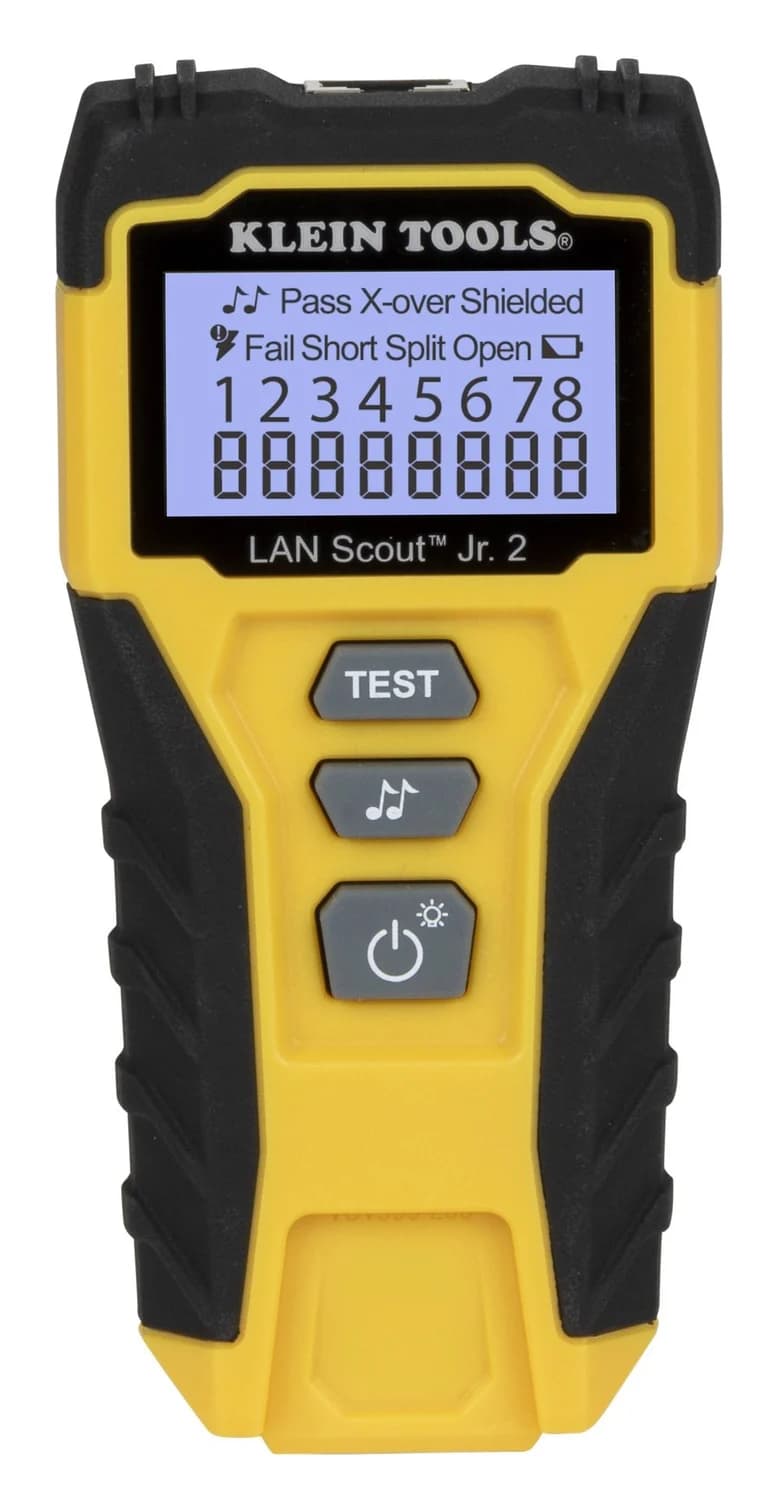
Choose the right Klein LAN cable tester: compare Jr. 2 wiremap with Pro Max length, PoE and reports, plus the remotes, probes and exact kit contents you need.
Buying guide · Cable Testers
How to Test Ethernet Cable: Wiremap, Split Pairs and Speed Checks
Test Ethernet cables and wall jacks, find opens, shorts and split pairs, isolate patch leads, and check link speed before replacing cable or buying a tester.