

Best picks
Best Anemometers for Vents, Ducts and Outdoor Air Speed
Choose an anemometer for exposed vents, narrow ducts or outdoor wind checks. Compare probe sizes, low-speed limits, accuracy, calibration and complete packages.
By thisMETER EditorialUpdated November 3, 20268 min read
On this page · Quick picks: start with access
For accessible HVAC vents, our first choice is the Extech AN100, with a remote vane, multipoint averaging and calculated CFM/CMM after area entry. Choose the Extech 407123 for a slimmer telescoping probe and slower stated air speeds, or the Extech 45158 for pocket wind, temperature and humidity checks. These recommendations follow the AN100 manual, 407123 manual and 45158 manual.
Quick picks: start with access
Compare specifications and all conditions
Exposed vent or accessible air stream
- Our pick
- Extech AN100
- Why choose it
- Separate vane, averaging and area-based CFM/CMM
- Main buying limit
- Large sensor head; the volume calculation needs a valid area and sampling method
Duct with restricted probe access
- Our pick
- Extech 407123
- Why choose it
- Telescoping thermal sensor; lowest stated starting speed here
- Main buying limit
- Full accuracy formula matters at slow speeds; confirm usable insertion reach
Pocket outdoor wind checks
- Our pick
- Extech 45158
- Why choose it
- Folding vane instrument, humidity, temperature and tripod mount
- Main buying limit
- Stated velocity range starts at 1.1 m/s; avoid buying it for faint drafts
Documented room or whole-system balancing
- Our pick
- Arrange an HVAC assessment first
- Why choose it
- Specify the required traverse or suitable outlet measurement method
- Main buying limit
- No single spot reading establishes an entire system's volume flow
Full comparison table
Swipe to compare. Row labels stay visible.
| Your measurement | Our pick | Why choose it | Main buying limit |
|---|---|---|---|
| Exposed vent or accessible air stream | Extech AN100 | Separate vane, averaging and area-based CFM/CMM | Large sensor head; the volume calculation needs a valid area and sampling method |
| Duct with restricted probe access | Extech 407123 | Telescoping thermal sensor; lowest stated starting speed here | Full accuracy formula matters at slow speeds; confirm usable insertion reach |
| Pocket outdoor wind checks | Extech 45158 | Folding vane instrument, humidity, temperature and tripod mount | Stated velocity range starts at 1.1 m/s; avoid buying it for faint drafts |
| Documented room or whole-system balancing | Arrange an HVAC assessment first | Specify the required traverse or suitable outlet measurement method | No single spot reading establishes an entire system's volume flow |
Scroll horizontally to see every column
| Your measurement | Our pick | Why choose it | Main buying limit |
|---|---|---|---|
| Exposed vent or accessible air stream | Extech AN100 | Separate vane, averaging and area-based CFM/CMM | Large sensor head; the volume calculation needs a valid area and sampling method |
| Duct with restricted probe access | Extech 407123 | Telescoping thermal sensor; lowest stated starting speed here | Full accuracy formula matters at slow speeds; confirm usable insertion reach |
| Pocket outdoor wind checks | Extech 45158 | Folding vane instrument, humidity, temperature and tripod mount | Stated velocity range starts at 1.1 m/s; avoid buying it for faint drafts |
| Documented room or whole-system balancing | Arrange an HVAC assessment first | Specify the required traverse or suitable outlet measurement method | No single spot reading establishes an entire system's volume flow |
The model manuals linked above support the instrument features. For the last row, TSI's duct-traverse note explains representative averaging, and Testo's outlet guidance explains the effect of turbulence and measurement funnels.
Compare range, probe size and accuracy
These are manufacturer specifications, not independently verified results. The accuracy column deliberately retains differences between Extech's manuals and datasheets.
AN100
- Sensor and access
- Nominal 72 mm remote vane; manual gives 76.2 mm external sensor-head diameter
- Velocity range
- 0.40–30.00 m/s
- Stated m/s display step
- 0.01 m/s
All specifications
- Published m/s accuracy
- Datasheet: ±3%; manual: ±(3% of reading + 0.20 m/s)
407123
- Sensor and access
- Thermal sensor on telescoping wand; manual gives 12 mm sensor diameter
- Velocity range
- 0.2–20 m/s
- Stated m/s display step
- 0.1 m/s in datasheet
All specifications
- Published m/s accuracy
- Datasheet: ±3%; manual: ±(3% of reading + 0.3 m/s), or ±(1% full scale + 3 digits), whichever is greater
45158
- Sensor and access
- Integrated 24 mm vane; the complete housing must reach the air stream
- Velocity range
- 1.1–20 m/s
- Stated m/s display step
- 0.1 m/s
All specifications
- Published m/s accuracy
- ±(3% of reading + 0.2 m/s)
Full comparison table
Swipe to compare. Row labels stay visible.
| Model | Sensor and access | Velocity range | Stated m/s display step | Published m/s accuracy |
|---|---|---|---|---|
| AN100 | Nominal 72 mm remote vane; manual gives 76.2 mm external sensor-head diameter | 0.40–30.00 m/s | 0.01 m/s | Datasheet: ±3%; manual: ±(3% of reading + 0.20 m/s) |
| 407123 | Thermal sensor on telescoping wand; manual gives 12 mm sensor diameter | 0.2–20 m/s | 0.1 m/s in datasheet | Datasheet: ±3%; manual: ±(3% of reading + 0.3 m/s), or ±(1% full scale + 3 digits), whichever is greater |
| 45158 | Integrated 24 mm vane; the complete housing must reach the air stream | 1.1–20 m/s | 0.1 m/s | ±(3% of reading + 0.2 m/s) |
Scroll horizontally to see every column
| Model | Sensor and access | Velocity range | Stated m/s display step | Published m/s accuracy |
|---|---|---|---|---|
| AN100 | Nominal 72 mm remote vane; manual gives 76.2 mm external sensor-head diameter | 0.40–30.00 m/s | 0.01 m/s | Datasheet: ±3%; manual: ±(3% of reading + 0.20 m/s) |
| 407123 | Thermal sensor on telescoping wand; manual gives 12 mm sensor diameter | 0.2–20 m/s | 0.1 m/s in datasheet | Datasheet: ±3%; manual: ±(3% of reading + 0.3 m/s), or ±(1% full scale + 3 digits), whichever is greater |
| 45158 | Integrated 24 mm vane; the complete housing must reach the air stream | 1.1–20 m/s | 0.1 m/s | ±(3% of reading + 0.2 m/s) |
Sources: AN100/AN200 datasheet, AN100 manual, 407123 datasheet, 407123 manual and 45158 manual. Confirm the applicable specification and revision with Extech when accuracy determines the purchase.
The 407123 starts at 0.2 m/s, the AN100 at 0.40 m/s, and the 45158 at 1.1 m/s. These lower endpoints describe range, not guaranteed discrimination of tiny changes near still air.
Source: Extech manuals and datasheets linked in the comparison table
Best for accessible vents: Extech AN100
The AN100 is our starting recommendation when you can place a separate vane in the air stream while keeping the display visible. Extech's datasheet lists a 120 cm cable, a 9V battery, protective holster and carrying case. Its manual documents averaging up to 20 readings in velocity or flow mode.
Its 0.01 m/s display step is finer than either pocket or thermal pick here, but the manual's fixed accuracy term remains 0.20 m/s. Do not use the extra decimal place as evidence that it can resolve an equally small real-world change accurately. The nominal vane size also differs from the housing clearance: plan around the manual's 76.2 mm outside diameter, rather than assuming the nominal vane will fit the same opening.
Buy the right version. The standard AN100 includes the vane package; AN100-NIST adds the listed certificate. AN200 is a separate model that adds an infrared surface thermometer. The shared datasheet assigns that IR feature specifically to AN200.
There is another documentation conflict: the datasheet lists 0.1 CFM/CMM resolution, while the manual lists 1. Verify that detail if volume display resolution matters to your workflow.
Check the AN100 package with Extech.
Best for narrow duct access: Extech 407123
Choose this model when a remote, slender sensor is the purchasing requirement. The US manual gives a 12 mm sensor diameter and identifies the velocity sensor as a glass-bead thermistor. Its 0.2 m/s starting range is lower than either vane pick, making it our candidate for slower duct airflow when the full error specification suits the task.
Check reach carefully. Both the datasheet and manual describe a maximum 7 ft (2.1 m) with cable. That is not a promise of that much rigid insertion depth. Ask for the usable extended wand length and clearance at the sensor head before ordering for a deep duct.
The datasheet lists the telescoping probe with cable, six AAA batteries and protective holster. Choose 407123-NIST when you need the listed calibration traceable to NIST; confirm the certificate covers the supplied probe and required measurement points.
For recording, the manual documents MIN/MAX memory and optional PC streaming using 407001-USB plus 407001-PRO software. The RECORD button is not proof of timestamped onboard logging. Check current software and computer compatibility before buying those extras. Follow the manual's covered-sensor zeroing, acclimation and airflow-direction instructions.
Check the 407123 package with Extech.
Best pocket wind meter: Extech 45158
The 45158 suits buyers who want the sensor and display together. Its manual specifies a 24 mm vane, 95 g weight, tripod mount and CR2032 battery. The series datasheet lists the included battery and lanyard, plus a folding protective housing that extends for reach.
Our main reservation for HVAC is the 1.1 m/s lower velocity limit. Choose it for wind or accessible air streams within its range; choose another instrument when slow drafts are the buying reason. A small vane alone does not make the complete folding instrument a narrow duct probe.
45118 versus 45158: the ordering table identifies 45118 as the temperature model and 45158 as the temperature-and-humidity model. For replacement impellers, it assigns 45156 to 45158 and 45116 to 45118. Check those model numbers before ordering a spare.
The documentation also differs on averaging: the older datasheet describes 5, 10 or 13-second intervals; the US manual describes reading-count averaging with 5 or 10-reading options. Match the supplied manual rather than assuming these are interchangeable modes.
Check the 45158 package with Extech.
How we choose
We compared manufacturer US manuals, model datasheets, sensor geometry, velocity limits, accuracy expressions, included accessories and calibration options, reviewed November 2, 2026. These are research-based recommendations; we have not physically tested the instruments. Our shortlist focuses on accessible vents, constrained ducts and pocket wind checks. Conflicting manufacturer specifications are identified above; our selection method explains the editorial approach.
Buying guide: velocity, CFM and a defensible method
Velocity is speed; volume flow also needs area. The Extech manuals give CFM = velocity in ft/min × area in ft², and CMM = velocity in m/s × area in m² × 60. AN100 performs an area-based calculation on the meter; the other picks' manuals explain a separate calculation. Entering area does not establish that your velocity sample represents the whole opening.
Averaging over time and sampling across an area solve different problems. TSI's traverse note describes measurements across the duct before multiplying average velocity by area. It warns that a center-only estimate is unreliable. Its rectangular log-Tchebycheff method calls for at least 25 points; AN100's 20-reading averaging function does not by itself satisfy that method. Choose a recording and calculation workflow that fits the required traverse.
An outlet is not automatically a convenient substitute for a duct traverse. Testo explains that turbulence and differing flow directions at outlets complicate the result, and describes using compatible measurement funnels with vane instruments. For acceptance reports or system balancing, commission an HVAC professional to select the method, access points and suitable equipment. Avoid claiming whole-system airflow from a quick grille check.
Read the whole error expression. AN100 and 407123 datasheets summarize accuracy as ±3%, while their manuals add fixed terms; 407123 also has a full-scale-and-digits alternative. A fixed term matters proportionally more at low speed. Use the full documented expression, operating limits and calibration information when deciding whether either instrument meets a tolerance.
The manuals specify 0–50°C operation for AN100 and 407123, and −15–50°C for 45158. AN100 and 45158 list below 80% RH; 407123 lists 80% maximum humidity. Keep these operating limits separate from air-temperature measuring ranges, and ask Extech for any additional accuracy conditions your job requires.
Compare complete packages before purchase
AN100 standard
- Documented contents
- Remote vane and cable, 9V battery, holster, case
- Confirm separately
- Standard versus AN100-NIST; the certificate and required calibration points
407123 standard
- Documented contents
- Telescoping probe and cable, six AAA batteries, holster
- Confirm separately
- Usable wand reach; 407123-NIST paperwork; optional PC cable/software
45158 standard
- Documented contents
- Integrated vane instrument, CR2032 battery, lanyard
- Confirm separately
- Tripod if needed; correct replacement impeller; calibration-service availability
Full comparison table
Swipe to compare. Row labels stay visible.
| Package | Documented contents | Confirm separately |
|---|---|---|
| AN100 standard | Remote vane and cable, 9V battery, holster, case | Standard versus AN100-NIST; the certificate and required calibration points |
| 407123 standard | Telescoping probe and cable, six AAA batteries, holster | Usable wand reach; 407123-NIST paperwork; optional PC cable/software |
| 45158 standard | Integrated vane instrument, CR2032 battery, lanyard | Tripod if needed; correct replacement impeller; calibration-service availability |
Scroll horizontally to see every column
| Package | Documented contents | Confirm separately |
|---|---|---|
| AN100 standard | Remote vane and cable, 9V battery, holster, case | Standard versus AN100-NIST; the certificate and required calibration points |
| 407123 standard | Telescoping probe and cable, six AAA batteries, holster | Usable wand reach; 407123-NIST paperwork; optional PC cable/software |
| 45158 standard | Integrated vane instrument, CR2032 battery, lanyard | Tripod if needed; correct replacement impeller; calibration-service availability |
Contents come from the linked model datasheets. The manuals document the tripod mount and calibration-service offer. Extech says traceable calibration is available for most products; request model-specific availability and certificate scope for the 45158. For paid reports, ask for the instrument/probe identity, calibration date, covered velocity points and uncertainty before buying a calibration package.
Match the access
Check the complete sensor-head clearance and usable wand reach.
Match the specification
Compare expected speed with the stated range and the full accuracy formula.
Match the method
Decide how representative readings and area will support the required volume-flow result.
Match the package
Confirm the included probe, batteries, calibration paperwork and any computer accessories.
For electrical HVAC troubleshooting, use our multimeter shortlist or clamp-meter guide. Select those instruments separately for the electrical measurements; keep airflow-method decisions with the anemometer purchase. Leave electrical panels to a licensed electrician.
Verdict
Buy AN100 first for accessible vents and its area-based flow workflow, 407123 when a slender remote probe and lower stated velocity range meet the job, or 45158 for pocket wind and humidity checks. For documented balancing, settle the measurement method and calibration requirements before choosing the package.
Frequently asked questions
What is the best anemometer for HVAC?
Our starting choice for accessible vents is the Extech AN100: its remote vane and averaging functions suit manual airflow checks, and it calculates CFM/CMM after area entry. For constrained duct access, choose the Extech 407123's smaller thermal sensor. Its lower range starts at 0.2 m/s, but its manual's full accuracy formula still applies. For commissioning or balancing, choose the measurement method and required documentation before the instrument.
Is a hot-wire anemometer better than a vane anemometer?
Choose for access and the expected velocity. In this shortlist, the thermal Extech 407123 has a 12 mm sensor and a lower stated range limit than either vane pick. The AN100's larger remote vane is our choice for exposed vents; the folding 45158 is our pocket choice. Those recommendations follow their geometry and specifications. A lower starting range does not establish a smaller measurement error.
Can an anemometer measure CFM at a vent?
The AN100 calculates CFM using velocity and an entered area; the other picks' manuals provide equations for a separate calculation. The difficult part is obtaining representative average velocity and the correct area. TSI warns that a center-only duct reading is unreliable, while Testo explains that turbulence and differing directions complicate outlet measurements. A CFM display alone does not validate the measurement or establish whole-system airflow.
Do I need the NIST version of an anemometer?
Choose calibration paperwork to meet the job's requirements. Extech lists AN100-NIST with a certificate and 407123-NIST with calibration traceable to NIST. Before ordering, request the certificate scope, covered probe, velocity points, uncertainty and date. For the 45158, ask about model-specific service availability; its manual offers traceable calibration for most Extech products without promising that every service applies to this model.
Related guides
Comparison · Multimeters
Fluke 101 vs 107: Current Ranges, Backlight and Regional Support
Compare the Fluke 101 and 107 by current inputs, backlight, accuracy and kit contents, with manual references and regional warranty checks before you buy.
Comparison · USB-C Power Meters
AVHzY CT-3 vs POWER-Z KM003C: Which USB Multimeter and Load Kit?
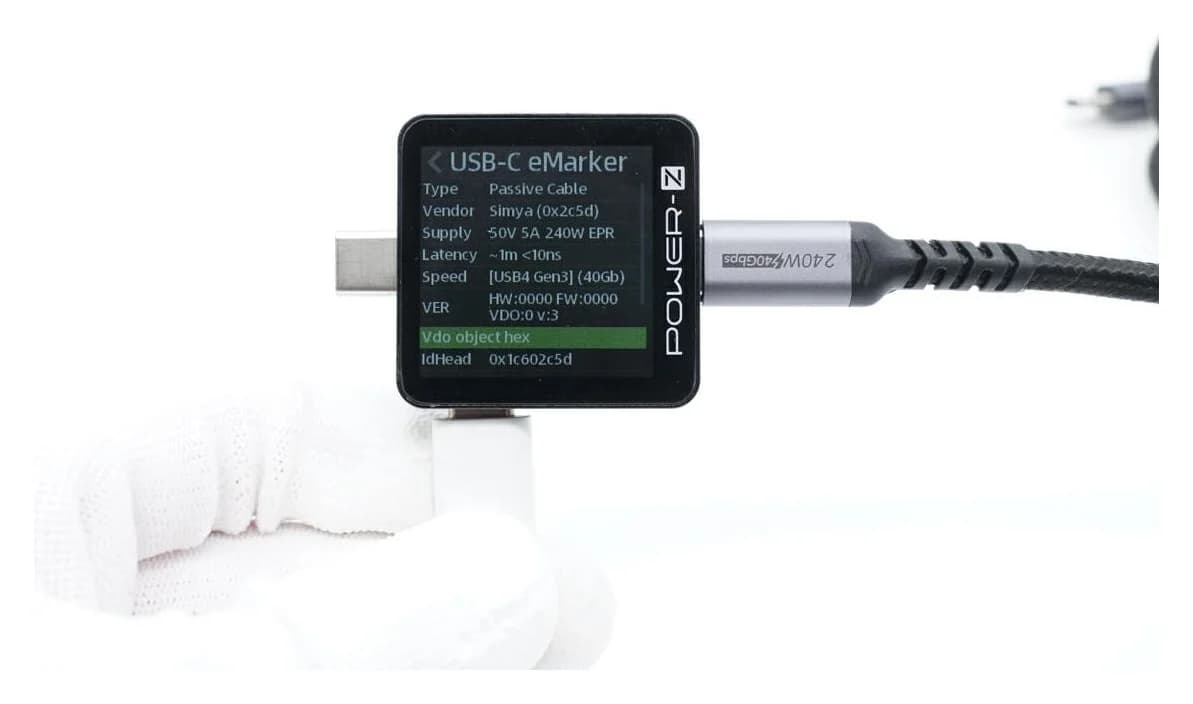
Compare AVHzY CT-3 and POWER-Z KM003C USB multimeters for EPR, offline logging, PC software and load kits. Avoid accessory mismatches and voltage-limit traps.
Best picks · Multimeters
Best Multimeters for Beginners: Choose a First Meter You Can Learn On
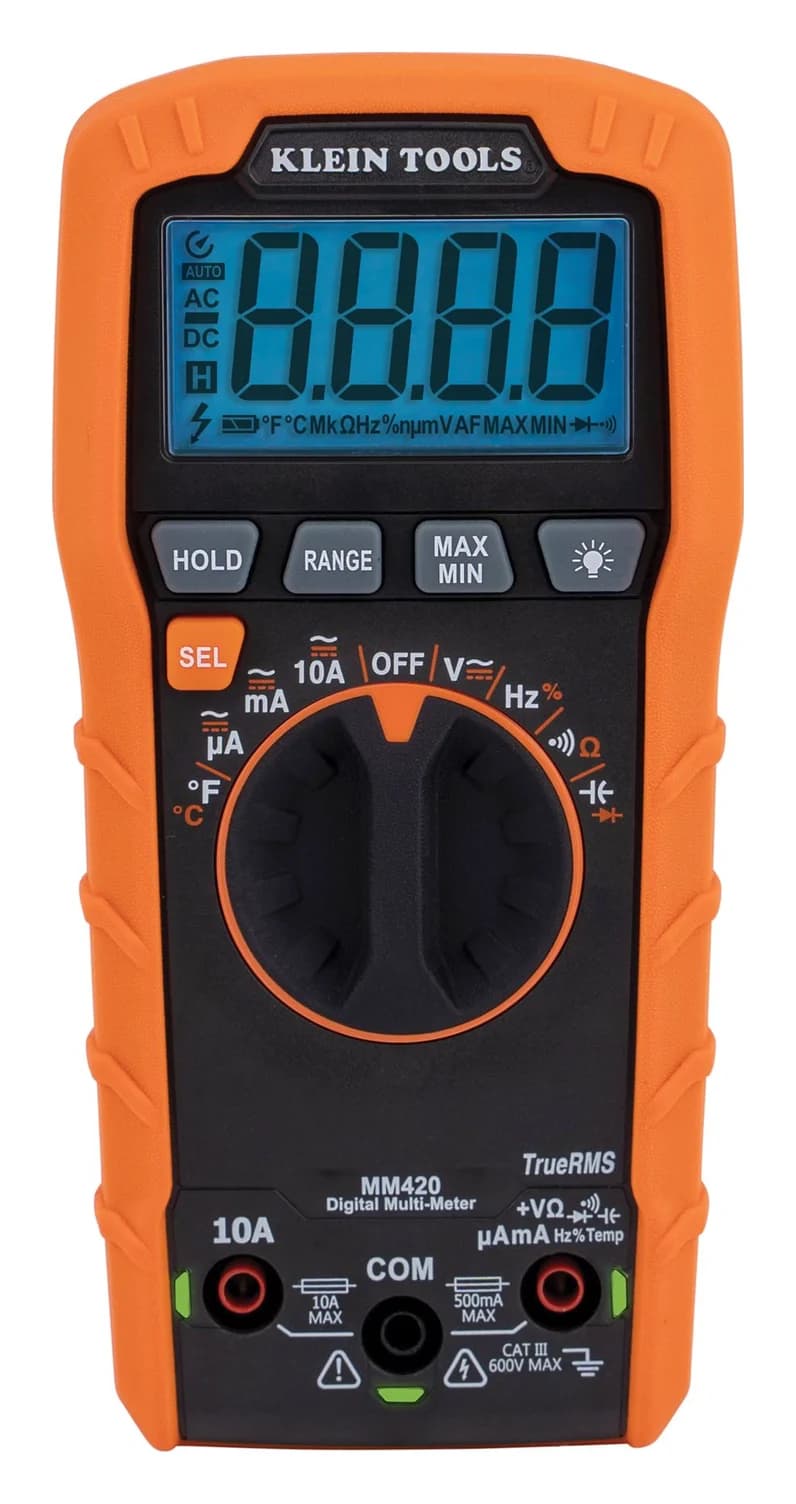
Choose a first multimeter by its controls, current ranges, jack reminders and included leads. Compare Klein MM420, MM325 and Fluke 107 for learning and gifts.