

Comparison
AVHzY CT-3 vs POWER-Z KM003C
Which USB Multimeter and Load Kit?
Compare AVHzY CT-3 and POWER-Z KM003C USB multimeters for EPR, offline logging, PC software and load kits. Avoid accessory mismatches and voltage-limit traps.
By thisMETER EditorialUpdated November 3, 20267 min read1 pick
Our recommendation: ChargerLAB KM003C
USB-C charger profiles, cable e-markers and EPR
Limit: No reverse-voltage protection, per ChargerLAB's manual
On this page · Our picks at a glance
Our picks at a glance
- 1
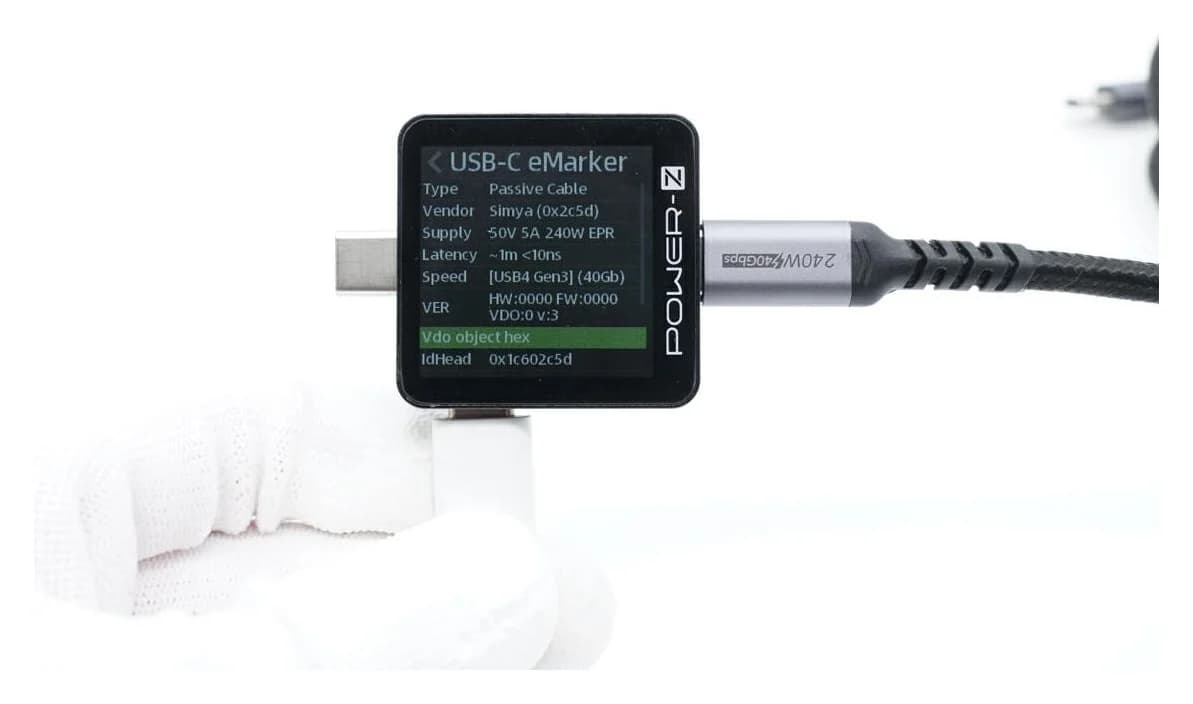
Choose for: USB-C charger profiles, cable e-markers and EPR
Check before buying: No reverse-voltage protection, per ChargerLAB's manual
For most USB-C charger and cable buyers, choose the POWER-Z KM003C: documented EPR support and a 50 V ceiling make it the clearer choice for high-power USB-C charging. Choose AVHzY CT-3 for Lua scripts, faster offline capture and a compatible SM-LD-00 load setup, after checking its voltage and package restrictions. These recommendations come from official product pages and manuals.
Quick picks: analyzer or charger-test kit?
Compare specifications and all conditions
USB-C charger profiles, cable e-markers and EPR
- Our choice
- POWER-Z KM003C
- Buying condition
- Use an appropriate EPR cable and plan on Windows for PC analysis
USB-A connections, Lua automation and faster offline capture
- Our choice
- AVHzY CT-3 standalone
- Buying condition
- Resolve the exact hardware's voltage limit before ordering
A meter plus a controllable charger load
- Our choice
- CT-3L+Load, product code CT3+Load (sm-ld-00)
- Buying condition
- Confirm the load revision and continuous-power rating
Adding a load to a compatible CT-3 already owned
- Our choice
- SM-LD-00 accessory
- Buying condition
- The maker explicitly excludes CT-3A
Full comparison table
Swipe to compare. Row labels stay visible.
| Your priority | Our choice | Buying condition |
|---|---|---|
| USB-C charger profiles, cable e-markers and EPR | POWER-Z KM003C | Use an appropriate EPR cable and plan on Windows for PC analysis |
| USB-A connections, Lua automation and faster offline capture | AVHzY CT-3 standalone | Resolve the exact hardware's voltage limit before ordering |
| A meter plus a controllable charger load | CT-3L+Load, product code CT3+Load (sm-ld-00) | Confirm the load revision and continuous-power rating |
| Adding a load to a compatible CT-3 already owned | SM-LD-00 accessory | The maker explicitly excludes CT-3A |
Scroll horizontally to see every column
| Your priority | Our choice | Buying condition |
|---|---|---|
| USB-C charger profiles, cable e-markers and EPR | POWER-Z KM003C | Use an appropriate EPR cable and plan on Windows for PC analysis |
| USB-A connections, Lua automation and faster offline capture | AVHzY CT-3 standalone | Resolve the exact hardware's voltage limit before ordering |
| A meter plus a controllable charger load | CT-3L+Load, product code CT3+Load (sm-ld-00) | Confirm the load revision and continuous-power rating |
| Adding a load to a compatible CT-3 already owned | SM-LD-00 accessory | The maker explicitly excludes CT-3A |
Comparison table: the differences that change the purchase
Voltage and current
- AVHzY CT-3
- Store: 0–26 V, 0–6 A; main page: 0–29 V, 0–6 A; voltage conflict unresolved
- POWER-Z KM003C
- 0–50 V, 6 A; maker specifies 240 W in PD
Documented PD negotiation
- AVHzY CT-3
- Manual: PD 2.0/3.0, including PPS
- POWER-Z KM003C
- Manual: PD 3.1 EPR/PPS; current product page advertises PD 3.2
Measurement connections
- AVHzY CT-3
- USB-A male/female and USB-C input/output
- POWER-Z KM003C
- USB-C plug/receptacle; separate USB-C HID port for PC/power
Offline recording
- AVHzY CT-3
- 1–100 samples/s; 12 MB shared with scripts
- POWER-Z KM003C
- Capacity/energy: up to 40 groups; curves: 10,000 points/group, 1–120 s save intervals
Computer workflow
- AVHzY CT-3
- Up to 1,000 samples/s, CSV export, Lua downloader and PD listener
- POWER-Z KM003C
- Up to 1,000 samples/s, curve import/export and PD/UFCS analysis
PC connection
- AVHzY CT-3
- Micro-USB PC port
- POWER-Z KM003C
- USB-C HID port
Load purchase
- AVHzY CT-3
- Optional SM-LD-00; incompatible with CT-3A
- POWER-Z KM003C
- Built-in load assists protocol detection; no comparable programmable bench-load rating documented
Full comparison table
Swipe to compare. Row labels stay visible.
| Capability | AVHzY CT-3 | POWER-Z KM003C |
|---|---|---|
| Voltage and current | Store: 0–26 V, 0–6 A; main page: 0–29 V, 0–6 A; voltage conflict unresolved | 0–50 V, 6 A; maker specifies 240 W in PD |
| Documented PD negotiation | Manual: PD 2.0/3.0, including PPS | Manual: PD 3.1 EPR/PPS; current product page advertises PD 3.2 |
| Measurement connections | USB-A male/female and USB-C input/output | USB-C plug/receptacle; separate USB-C HID port for PC/power |
| Offline recording | 1–100 samples/s; 12 MB shared with scripts | Capacity/energy: up to 40 groups; curves: 10,000 points/group, 1–120 s save intervals |
| Computer workflow | Up to 1,000 samples/s, CSV export, Lua downloader and PD listener | Up to 1,000 samples/s, curve import/export and PD/UFCS analysis |
| PC connection | Micro-USB PC port | USB-C HID port |
| Load purchase | Optional SM-LD-00; incompatible with CT-3A | Built-in load assists protocol detection; no comparable programmable bench-load rating documented |
Scroll horizontally to see every column
| Capability | AVHzY CT-3 | POWER-Z KM003C |
|---|---|---|
| Voltage and current | Store: 0–26 V, 0–6 A; main page: 0–29 V, 0–6 A; voltage conflict unresolved | 0–50 V, 6 A; maker specifies 240 W in PD |
| Documented PD negotiation | Manual: PD 2.0/3.0, including PPS | Manual: PD 3.1 EPR/PPS; current product page advertises PD 3.2 |
| Measurement connections | USB-A male/female and USB-C input/output | USB-C plug/receptacle; separate USB-C HID port for PC/power |
| Offline recording | 1–100 samples/s; 12 MB shared with scripts | Capacity/energy: up to 40 groups; curves: 10,000 points/group, 1–120 s save intervals |
| Computer workflow | Up to 1,000 samples/s, CSV export, Lua downloader and PD listener | Up to 1,000 samples/s, curve import/export and PD/UFCS analysis |
| PC connection | Micro-USB PC port | USB-C HID port |
| Load purchase | Optional SM-LD-00; incompatible with CT-3A | Built-in load assists protocol detection; no comparable programmable bench-load rating documented |
Sources: CT-3 store, main specifications, meter manual, PC manual, KM003C product page, current KM003C manual, KM003C launch description and load listing.
Why the voltage conflict matters: USB-IF identifies 28 V, 36 V and 48 V EPR fixed-voltage levels, corresponding to 140 W, 180 W and 240 W. CT-3's 26 V store specification cannot accommodate those voltages. Its alternative 29 V specification would still not establish EPR negotiation or full-voltage EPR capability. Our recommendation is KM003C for EPR; do not infer PD support from “USB 3.1” in CT-3's title, which its manual discusses as data signaling.
Best USB-C analyzer: POWER-Z KM003C
KM003C is our first choice when you want to inspect a charger's advertised power profiles, read a cable's e-marker and analyze USB PD traffic. Its product page documents those tests and the voltage ceiling; the manual explicitly lists EPR. For broader alternatives, use our USB-C power meter guide.
ChargerLAB
A USB-C power tester and USB PD protocol analyzer rated to 50 V and 6 A (240 W in PD) that reads cable e-markers, lists a charger's power profiles, detects and triggers fast-charge protocols, and logs to PC software.
Check package and model options
- 240 W max
- 50 V max
- 6 A max
- USB PD 3.2 (EPR, AVS), QC4+, QC5, AFC, FCP, SCP, PE, UFCS and more
Buy it for analysis, then choose the load separately. ChargerLAB attributes extra protocol-detection capabilities to a built-in load. That does not establish an adjustable high-power load comparable to the AVHzY accessory. Our reading of the documented functions: requesting a charger profile establishes negotiation; evaluating sustained output also requires a suitable load.
For EPR protocol tests, the manual describes cable simulation but says it is imperfect; where it fails, it calls for a 240 W cable in the receptacle. Do not assume the tester's own rating upgrades a cable. Our USB-C cable tester guide covers the separate cable-selection decision.
The support FAQ also discloses a hardware issue with some USB 2.0 peripherals, including mice and keyboards. Although the manual specifies USB4-capable measurement connectors, compatibility with every attached data device is not assured.
Best for Lua and faster offline capture: AVHzY CT-3
CT-3 earns its place through the combination of Lua programs that can run on boot, USB-A connections and faster offline logging. Its main specifications also list cable resistance testing, e-marker reading and a PC PD listener. Choose it when that workflow matters more than documented EPR support.
Both analyzers record offline. CT-3's manual permits 1–100 samples/s and lets you mount internal storage over USB. Its PC manual describes opening offline files and exporting CSV. KM003C also stores curves offline, but its documented interval starts at 1 second. Choose CT-3 for denser standalone capture; choose KM003C when its recording interval suits the charging session.
For either instrument, choose the interval around the event you need to see. A faster capture rate does not by itself establish better measurement accuracy or longer recording time. CT-3's memory is shared with programs; KM003C imposes the per-group point limit shown above.
CT-3's data pass-through also needs care: the manual says USB 3.1 support is partial and not guaranteed for every signal path, despite the product page's broader SuperSpeed wording. Avoid buying either analyzer as a guarantee that a particular dock or storage device will work through it.
Check the standalone CT-3 package at AVHzY.
Best matching load route: CT-3L+Load or SM-LD-00
The SM-LD-00 listing specifies 2.5–26 V, 0.05–6.7 A and 100 W continuous at 25°C ambient. AVHzY's CT-3 page documents constant-current and constant-power control from the meter or PC. The module's current rating does not raise CT-3's separately stated 6 A measurement limit; size the complete arrangement to its limiting component.
The sustained-power claim needs clarification. AVHzY's administrator download post instead describes 65 W (Max 100 W). These are conflicting maker descriptions. If sustained 100 W loading is the reason for buying, get the applicable revision and operating conditions confirmed before choosing this kit. Either description leaves the module unsuitable for EPR voltages above its voltage ceiling.
CT-3, code CT-3
- What the listing establishes
- Standalone meter listing
- What to avoid assuming
- The load is included
CT-3A, code CT-3A
- What the listing establishes
- Separately listed instrument
- What to avoid assuming
- SM-LD-00 fits; its listing explicitly says otherwise
CT-3L+Load, code CT3+Load (sm-ld-00)
- What the listing establishes
- Named meter-and-load package
- What to avoid assuming
- “L” establishes a newer hardware revision or EPR support
SM-LD-00, code sm-ld-00
- What the listing establishes
- Separate load accessory for CT3
- What to avoid assuming
- It works with CT-3A or KM003C
Full comparison table
Swipe to compare. Row labels stay visible.
| Official package | What the listing establishes | What to avoid assuming |
|---|---|---|
| CT-3, code CT-3 | Standalone meter listing | The load is included |
| CT-3A, code CT-3A | Separately listed instrument | SM-LD-00 fits; its listing explicitly says otherwise |
| CT-3L+Load, code CT3+Load (sm-ld-00) | Named meter-and-load package | “L” establishes a newer hardware revision or EPR support |
| SM-LD-00, code sm-ld-00 | Separate load accessory for CT3 | It works with CT-3A or KM003C |
Scroll horizontally to see every column
| Official package | What the listing establishes | What to avoid assuming |
|---|---|---|
| CT-3, code CT-3 | Standalone meter listing | The load is included |
| CT-3A, code CT-3A | Separately listed instrument | SM-LD-00 fits; its listing explicitly says otherwise |
| CT-3L+Load, code CT3+Load (sm-ld-00) | Named meter-and-load package | “L” establishes a newer hardware revision or EPR support |
| SM-LD-00, code sm-ld-00 | Separate load accessory for CT3 | It works with CT-3A or KM003C |
One more naming trap: the old meter manual calls its module SM-LD-01, while the current store sells SM-LD-00. Use the current accessory's exact identifier and compatibility statement; do not silently treat those labels as interchangeable.
- Yes: CT-3 plus its documented compatible load: the AVHzY bench route
- No: CT-3A plus SM-LD-00: explicitly excluded by the accessory listing
- Partly: Continuous maximum-power loading: resolve the maker's conflicting ratings first
Buying guide: software, power and the usable package
Plan the computer before buying for logs or protocol analysis. POWER-Z's FAQ says Windows 10 or later in its connection troubleshooting answer. Its manual's version history records Windows 7 support integrated into the PC software, without a separate Windows 7 release. The manual lists Windows / Mac OS software, with Mac OS marked as in development. The manual calls HID driver-free; the FAQ discusses automatic driver installation and a manual fallback. Follow the current support instructions for your system.
AVHzY's download thread provides PC software and a Windows 7 workaround driver package (shizuku_workaround_driver_for_win7.zip), but its fetched manuals do not establish a current Windows/macOS/Linux support matrix. Treat native Mac and Linux software support as unconfirmed for this purchase.
Record the revision and firmware. The AVHzY thread lists 10067.zip as CT-3 firmware and 10020.zip as PC software. Its UI manual is V1.00.00 and explicitly warns that hardware and firmware revisions may differ. The newest tester entry in the fetched POWER-Z changelog is V2.0.7; its newest PC entry is V2.5.1. Those release notes include offline-recording fixes, so record your installed versions when comparing logs. A download filename does not identify the board revision shipped in a US package.
Budget for the connection, not an assumed box inventory. The fetched AVHzY package descriptions and KM003C product text do not provide a complete included-cable list. Confirm it before checkout. CT-3's PC connection requires a micro-USB data cable; KM003C uses its USB-C HID port for PC connection and auxiliary power. Its manual requires sustained HID power for protocol tests. Have the appropriate data lead, power source and test cable ready.
For ordinary CT-3 pass-through measurement, the manual instructs you to turn the PD communication switch off after trigger/listener use. Follow the separate listener instructions when analyzing traffic. It also prohibits adding another test device to spare measurement ports while monitoring a connection.
Match the instrument
Select KM003C for documented EPR or CT-3 for its Lua and offline-capture workflow.
Match the accessory
Check the exact meter code, load compatibility and confirmed operating limits.
Match the computer and cables
Verify host support, data cable, auxiliary power and the package's packing list.
How we choose
We compared official store listings, manuals, support FAQs and firmware notes, fetched November 2, 2026. We prioritized documented negotiation, voltage limits, offline recording and the exact load package. We have no physical measurements to report; compatibility gaps and contradictory maker statements remain identified. See how we choose.
Verdict
Buy KM003C for USB-C/EPR analysis. Buy CT-3 for Lua, USB-A and faster offline capture. Choose the named CT-3L+Load package or compatible SM-LD-00 accessory only after resolving sustained-load requirements; CT-3A is excluded from that accessory path. If you're comparing FNIRSI instead, use our separate KM003C vs FNB58 comparison.
Frequently asked questions
Which USB multimeter should I buy: AVHzY CT-3 or POWER-Z KM003C?
Choose KM003C for USB-C charger and cable analysis, especially EPR: its manual documents EPR and its product page specifies up to 50 V. Choose CT-3 for Lua programming, USB-A connections and offline logging up to 100 samples per second. For a load kit, select the documented CT-3-compatible SM-LD-00 package; the accessory listing explicitly excludes CT-3A.
Can the AVHzY CT-3 test 140 W or 240 W EPR charging?
We would buy KM003C for that job. AVHzY's CT-3 store listing specifies 26 V while its main page says 29 V, and its manual describes PD 2.0/3.0 rather than EPR. USB-IF specifies 28 V for 140 W and 48 V for 240 W. The SM-LD-00 load's separate 26 V ceiling also rules it out for those EPR voltages.
Does POWER-Z KM003C record offline without a computer?
Yes. Its current manual documents up to 40 stored capacity/energy data groups. For curve recording, its storage settings specify a save interval from 1 to 120 seconds and up to 10,000 points per group. You import the stored curves into the PC software for analysis. CT-3 also records offline, with a documented rate of 1 to 100 samples per second and shared internal storage for logs and scripts.
Does SM-LD-00 work with CT-3A, and is it included with CT-3?
The official accessory listing says it does not support CT-3A. AVHzY lists standalone CT-3, CT-3A, CT-3L+Load and the load module separately, so check the exact package. The bundle's product code is CT3+Load (sm-ld-00). Its title does not establish a newer analyzer revision, and buying CT-3A first is unsuitable if your plan depends on adding this load.
Can I use either USB analyzer with a Mac or Linux computer?
POWER-Z's connection troubleshooting FAQ says Windows 10 or later, while its manual's version history records Windows 7 support integrated into the PC software. The manual lists Windows / Mac OS software with Mac OS marked as in development. AVHzY publishes PC software and a Windows 7 workaround driver, but the fetched manuals do not establish a current host compatibility matrix. Confirm your required operating system with the maker before buying for computer-based analysis.
ChargerLAB KM003C
AmazonRelated guides
Comparison · USB-C Power Meters
Plugable VAMETER3 vs METER3-1MF: Which USB-C Power Meter?
Choose between Plugable's detachable VAMETER3 and METER3-1MF meter cable, with clear advice on reach, displays, 240W charging, data, video and PD analysis.
Comparison · USB-C Power Meters
Plugable USBC-VAMETER3 vs Klein ET920: Which USB Power Meter?
Choose a USB power meter for EPR laptop charging or USB-A and USB-C accessories. Compare Plugable VAMETER3 and Klein ET920 connections, memory and limits.
Comparison · USB-C Power Meters
POWER-Z KM003C vs FNIRSI FNB58: PD, EPR and Cable Checks
Compare POWER-Z KM003C and FNIRSI FNB58 for EPR and cable checks, with clear picks, voltage limits, connector paths, firmware and Bluetooth variant advice.