

Comparison
Fluke 323 vs 325: When DC Current Justifies the Upgrade
Choose the right Fluke clamp meter: AC versus DC current, accuracy at the same load, temperature-probe limits, and standard, CAL and reconditioned packages.
By thisMETER EditorialUpdated November 3, 20269 min read1 pick
Our recommendation: Fluke 323
Best for AC current checks
Limit: No DC current, so it can't read car, solar or battery current
On this page · Our picks at a glance
Our picks at a glance
- 1
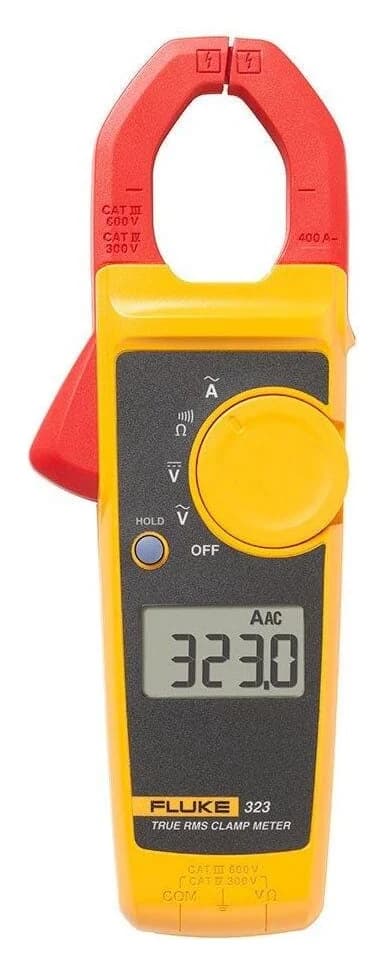
Choose for: Best for AC current checks
Check before buying: No DC current, so it can't read car, solar or battery current
Choose the Fluke 323 for AC current checks if you do not need the extra functions; choose the Fluke 325 for DC jaw current, a backlight, temperature, capacitance, frequency or Min/Max. The 325 is the more versatile Fluke clamp meter, but both top out at 400 A and carry the same CAT III 600 V / CAT IV 300 V ratings. The upgrade buys capability and finer low-range current resolution, rather than a higher current ceiling or safety category.
Quick picks
Compare specifications and all conditions
AC load checks, voltage and continuity
- Our pick
- Fluke 323
- What decides it
- Covers those functions without the extra modes
AC and DC load current, plus broader troubleshooting
- Our pick
- Fluke 325
- What decides it
- Adds DC jaw current, temperature, capacitance, frequency, backlight and Min/Max
Tiny DC battery drain
- Our pick
- Choose a different measurement tool
- What decides it
- The 325's current resolution and accuracy need more scrutiny than its DC label
Full comparison table
Swipe to compare. Row labels stay visible.
| Your requirement | Our pick | What decides it |
|---|---|---|
| AC load checks, voltage and continuity | Fluke 323 | Covers those functions without the extra modes |
| AC and DC load current, plus broader troubleshooting | Fluke 325 | Adds DC jaw current, temperature, capacitance, frequency, backlight and Min/Max |
| Tiny DC battery drain | Choose a different measurement tool | The 325's current resolution and accuracy need more scrutiny than its DC label |
Scroll horizontally to see every column
| Your requirement | Our pick | What decides it |
|---|---|---|
| AC load checks, voltage and continuity | Fluke 323 | Covers those functions without the extra modes |
| AC and DC load current, plus broader troubleshooting | Fluke 325 | Adds DC jaw current, temperature, capacitance, frequency, backlight and Min/Max |
| Tiny DC battery drain | Choose a different measurement tool | The 325's current resolution and accuracy need more scrutiny than its DC label |
Fluke 323 vs 325: specifications that change the decision
These are manufacturer specifications from Fluke's 323 page, 325 page and shared users manual. Current ranges are jaw measurements; voltage uses test leads.
Fluke 323
- AC jaw-current ranges
- 400.0 A
- DC jaw-current ranges
- None
- Current resolution
- 0.1 A
All specifications
- AC current accuracy, 45–65 Hz
- ±(2% of reading + 5 digits)
- AC current accuracy, 65–400 Hz
- ±(2.5% of reading + 5 digits)
- DC current accuracy
- Not applicable
- True RMS AC voltage and current
- Yes
- AC / DC voltage range
- 600.0 V / 600.0 V
- Resistance ranges
- 400.0 Ω / 4000 Ω
- Continuity beeper threshold
- ≤70 Ω
- Capacitance ranges
- None
- Frequency with jaw
- None
- Contact temperature
- None
- Backlight / data hold / Min/Max
- No / yes / no
- Maximum conductor diameter
- 30 mm
- Dimensions
- 207 × 75 × 34 mm
- Weight
- 265 g
- Safety markings
- CAT III 600 V / CAT IV 300 V
- Warranty
- Two years
Fluke 325
- AC jaw-current ranges
- 40.00 A / 400.0 A
- DC jaw-current ranges
- 40.00 A / 400.0 A
- Current resolution
- 0.01 A / 0.1 A, by range
All specifications
- AC current accuracy, 45–65 Hz
- ±(2% of reading + 5 digits)
- AC current accuracy, 65–400 Hz
- ±(2.5% of reading + 5 digits)
- DC current accuracy
- ±(2% of reading + 5 digits)
- True RMS AC voltage and current
- Yes
- AC / DC voltage range
- 600.0 V / 600.0 V
- Resistance ranges
- 400.0 Ω / 4000 Ω / 40.00 kΩ
- Continuity beeper threshold
- ≤30 Ω
- Capacitance ranges
- 100.0 μF / 1000 μF
- Frequency with jaw
- 5.0–500.0 Hz; current trigger limits apply
- Contact temperature
- Meter: −10.0 to 400.0 °C; included probe: up to 260 °C
- Backlight / data hold / Min/Max
- Yes / yes / yes
- Maximum conductor diameter
- 30 mm
- Dimensions
- 207 × 75 × 34 mm
- Weight
- 283 g
- Safety markings
- CAT III 600 V / CAT IV 300 V
- Warranty
- Two years
Full comparison table
Swipe to compare. Row labels stay visible.
| Specification | Fluke 323 | Fluke 325 |
|---|---|---|
| AC jaw-current ranges | 400.0 A | 40.00 A / 400.0 A |
| DC jaw-current ranges | None | 40.00 A / 400.0 A |
| Current resolution | 0.1 A | 0.01 A / 0.1 A, by range |
| AC current accuracy, 45–65 Hz | ±(2% of reading + 5 digits) | ±(2% of reading + 5 digits) |
| AC current accuracy, 65–400 Hz | ±(2.5% of reading + 5 digits) | ±(2.5% of reading + 5 digits) |
| DC current accuracy | Not applicable | ±(2% of reading + 5 digits) |
| AC / DC voltage range | 600.0 V / 600.0 V | 600.0 V / 600.0 V |
| True RMS AC voltage and current | Yes | Yes |
| Resistance ranges | 400.0 Ω / 4000 Ω | 400.0 Ω / 4000 Ω / 40.00 kΩ |
| Continuity beeper threshold | ≤70 Ω | ≤30 Ω |
| Capacitance ranges | None | 100.0 μF / 1000 μF |
| Frequency with jaw | None | 5.0–500.0 Hz; current trigger limits apply |
| Contact temperature | None | Meter: −10.0 to 400.0 °C; included probe: up to 260 °C |
| Backlight / data hold / Min/Max | No / yes / no | Yes / yes / yes |
| Maximum conductor diameter | 30 mm | 30 mm |
| Dimensions | 207 × 75 × 34 mm | 207 × 75 × 34 mm |
| Weight | 265 g | 283 g |
| Safety markings | CAT III 600 V / CAT IV 300 V | CAT III 600 V / CAT IV 300 V |
| Warranty | Two years | Two years |
Scroll horizontally to see every column
| Specification | Fluke 323 | Fluke 325 |
|---|---|---|
| AC jaw-current ranges | 400.0 A | 40.00 A / 400.0 A |
| DC jaw-current ranges | None | 40.00 A / 400.0 A |
| Current resolution | 0.1 A | 0.01 A / 0.1 A, by range |
| AC current accuracy, 45–65 Hz | ±(2% of reading + 5 digits) | ±(2% of reading + 5 digits) |
| AC current accuracy, 65–400 Hz | ±(2.5% of reading + 5 digits) | ±(2.5% of reading + 5 digits) |
| DC current accuracy | Not applicable | ±(2% of reading + 5 digits) |
| AC / DC voltage range | 600.0 V / 600.0 V | 600.0 V / 600.0 V |
| True RMS AC voltage and current | Yes | Yes |
| Resistance ranges | 400.0 Ω / 4000 Ω | 400.0 Ω / 4000 Ω / 40.00 kΩ |
| Continuity beeper threshold | ≤70 Ω | ≤30 Ω |
| Capacitance ranges | None | 100.0 μF / 1000 μF |
| Frequency with jaw | None | 5.0–500.0 Hz; current trigger limits apply |
| Contact temperature | None | Meter: −10.0 to 400.0 °C; included probe: up to 260 °C |
| Backlight / data hold / Min/Max | No / yes / no | Yes / yes / yes |
| Maximum conductor diameter | 30 mm | 30 mm |
| Dimensions | 207 × 75 × 34 mm | 207 × 75 × 34 mm |
| Weight | 265 g | 283 g |
| Safety markings | CAT III 600 V / CAT IV 300 V | CAT III 600 V / CAT IV 300 V |
| Warranty | Two years | Two years |
The different continuity thresholds matter: a silent 325 can still be looking at a resistance that would make the 323 beep. Read resistance when the actual value matters rather than treating the beeper as a universal pass/fail test.
Pick the Fluke 323 for AC current checks
The 323 is our pick when your job list is AC load current, AC/DC voltage, resistance and continuity. Its True RMS AC measurement and data hold cover the basics, and its jaw takes the same conductor diameter as the 325. If you already have temperature and capacitance on another instrument, check whether the 325 would duplicate functions you carry.
Fluke
A basic True RMS clamp meter rated CAT III 600V and CAT IV 300V that measures AC current to 400 A, AC and DC voltage to 600 V, resistance and continuity; it doesn't measure DC current.
Check package and model options
- 600 V max
- 400 A max
- CAT III 600V, CAT IV 300V
The limitations are specific: no DC jaw current, backlight, temperature, capacitance, frequency or Min/Max. A DC voltage reading does not tell you DC load current. Neither calibration paperwork nor a different package adds those missing functions.
Pick the Fluke 325 for DC current and broader troubleshooting
The 325 is the choice when measuring DC load current is essential. Its 40.00 A range also gives smaller display increments than the 323, on both AC and DC. The backlight and Min/Max are useful reasons to upgrade even if you rarely measure DC; temperature, capacitance and the higher resistance range may also reduce the functions you need from a separate meter.
Fluke's standard US 325, part 5065866, includes TL75 test leads, a Type K thermocouple, installed AAA batteries and a soft case. The manufacturer names the included probe by type here, not by an accessory model number; do not assume a particular separately sold probe is in the box.
The trade-off is that its extra modes do not improve every reading. It has the same upper current limit, jaw size and safety ratings as the 323, and its low-current limits deserve attention before buying it for battery diagnostics.
See the standard Fluke 325 and package contents at Fluke
Resolution versus accuracy: compare the same current
The manual specifies AC current accuracy for both as ±(2% of reading + 5 digits) at 45–65 Hz. Fluke's accuracy and resolution explanation distinguishes the smallest displayed increment from the allowed error; the digits term counts increments of the last displayed place. A finer display alone is not proof of a more accurate result.
Take a hypothetical 100 A reading within the 45–65 Hz band. Both instruments use their 400.0 A range, with 0.1 A resolution. The calculated basic tolerance is identical:
Percentage contribution
- Fluke 323
- 2% × 100 A = 2.0 A
- Fluke 325
- 2% × 100 A = 2.0 A
Digits contribution
- Fluke 323
- 5 × 0.1 A = 0.5 A
- Fluke 325
- 5 × 0.1 A = 0.5 A
Basic tolerance, adding both terms
- Fluke 323
- ±2.5 A
- Fluke 325
- ±2.5 A
Full comparison table
Swipe to compare. Row labels stay visible.
| Calculation at the same current | Fluke 323 | Fluke 325 |
|---|---|---|
| Percentage contribution | 2% × 100 A = 2.0 A | 2% × 100 A = 2.0 A |
| Digits contribution | 5 × 0.1 A = 0.5 A | 5 × 0.1 A = 0.5 A |
| Basic tolerance, adding both terms | ±2.5 A | ±2.5 A |
Scroll horizontally to see every column
| Calculation at the same current | Fluke 323 | Fluke 325 |
|---|---|---|
| Percentage contribution | 2% × 100 A = 2.0 A | 2% × 100 A = 2.0 A |
| Digits contribution | 5 × 0.1 A = 0.5 A | 5 × 0.1 A = 0.5 A |
| Basic tolerance, adding both terms | ±2.5 A | ±2.5 A |
These are calculations from the specification, not measured results. The 325's benefit appears on its 40.00 A range, where each digit is 0.01 A rather than the 323's 0.1 A. The percentage term remains the same, but the five-digit contribution falls from half an amp to five hundredths of an amp. Once both instruments use the upper range, that advantage disappears.
Those basic totals are not the full allowance in every situation. The manual adds 2% for current position sensitivity, and a temperature coefficient of 0.1 × specified accuracy per degree Celsius above 28 °C or below 18 °C. Keep the frequency band, conductor position and temperature conditions attached to any accuracy comparison.
DC zeroing and the tiny-load trap
The 325 has an AC/DC & ZERO control, illustrated in the users manual. Fluke's Hall Effect explanation explains that Earth's magnetic field and nearby magnetic fields can create offsets, which is why DC clamps need zeroing. Follow the 325 manual's control sequence before a DC measurement; zeroing compensates offset, not the published resolution or accuracy allowance.
The low-range increment of 0.01 A is ten milliamps. Five such increments alone are fifty milliamps, before adding the percentage term. That is why we would not choose the 325 solely to decide whether a very small sleeping battery load is acceptable: a displayed small value can be overwhelmed by the specified uncertainty. Look for documented DC milliamp accuracy at your actual decision threshold, rather than buying on maximum amps.
- Yes: DC jaw-current measurement is available
- Yes: Zeroing compensates magnetic offset
- No: A fine display increment guarantees equally fine accuracy
- No: A near-zero current reading proves a circuit is safe to touch
Fluke explicitly warns against using a current measurement to establish that a circuit is safe to touch. Its clamp-reading guidance also explains why load-current measurement needs an individual conductor: enclosing outgoing and return conductors can cancel their magnetic fields. The clamp meter versus multimeter guide helps choose the measurement approach; this comparison is not a live-wiring procedure.
Temperature, capacitance and frequency: read the limits
The 325's meter temperature range and its included probe rating are different. Its temperature accuracy is ±(1% + 8 digits), excluding thermocouple error, according to the manual.
For capacitance, the manual specifies 100.0 μF and 1000 μF ranges, with 0.1 μF and 1 μF resolution. Those are range limits and display increments, not a guarantee of useful precision on a tiny capacitor. Fluke's brochure abbreviates capacitance as “100.0 μF to 1000 μF”; the product page and manual clarify the two ranges, so do not read that shorthand as a minimum measurable capacitance.
The manual specifically calls frequency “Frequency with Jaw”. Its 5.0–500.0 Hz range requires at least 10 A from 5–10 Hz, 5 A from 10–100 Hz, and 10 A from 100–500 Hz. Do not assume a frequency reading is available on an arbitrarily small current simply because the frequency is within range.
Standard, CAL, reconditioned and combo packages
Use the full model and Fluke part number to compare packages. Fluke's US model lists distinguish the following:
Standard
- Fluke 323 part
- 5065521
- Fluke 325 part
- 5065866
- What changes
- Standard meter and listed accessories
CAL
- Fluke 323 part
- 5160572
- Fluke 325 part
- 5160474
- What changes
- Adds a traceable calibration certificate with data from Fluke
R-FLUKE reconditioned
- Fluke 323 part
- 4391103
- Fluke 325 part
- 4391126
- What changes
- Reconditioned to original factory specifications; Fluke lists a two-year warranty
Full comparison table
Swipe to compare. Row labels stay visible.
| Package | Fluke 323 part | Fluke 325 part | What changes |
|---|---|---|---|
| Standard | 5065521 | 5065866 | Standard meter and listed accessories |
| CAL | 5160572 | 5160474 | Adds a traceable calibration certificate with data from Fluke |
| R-FLUKE reconditioned | 4391103 | 4391126 | Reconditioned to original factory specifications; Fluke lists a two-year warranty |
Scroll horizontally to see every column
| Package | Fluke 323 part | Fluke 325 part | What changes |
|---|---|---|---|
| Standard | 5065521 | 5065866 | Standard meter and listed accessories |
| CAL | 5160572 | 5160474 | Adds a traceable calibration certificate with data from Fluke |
| R-FLUKE reconditioned | 4391103 | 4391126 | Reconditioned to original factory specifications; Fluke lists a two-year warranty |
The 325 CAL lists the same leads, thermocouple, batteries and case as the standard 325, plus the certificate. Pick it when your workplace requires that documentation. A certificate does not turn a 323 into a DC clamp or add modes to either instrument. For reconditioned packages, confirm the accessory manifest: their short model descriptions do not enumerate everything in the standard box.
For the 323, the page's box list names a quick reference guide, while its model list says user's manual; both list test leads and a soft case. Confirm which printed documentation accompanies the package if that matters.
The 117/323 electrician's kit, part 4296041, pairs a 117 multimeter with a 323; it still does not supply DC jaw current. Its overview names TL175 leads and a TPAK hanger, but the box list uses a generic silicone-lead description and omits the hanger. Confirm those accessories before comparing it with standalone instruments. Our gifts for electricians guide covers the broader kit decision.
Match the measurement
Choose the 323 for AC jaw current, or the 325 when its extra functions are needed.
Check documentation requirements
Select CAL when traceable calibration data are required.
Match the complete box
Check standard versus reconditioned condition, the full part number and included accessories.
When another clamp fits better
Consider the Fluke 324 if you want temperature, capacitance and a backlight while keeping AC-only jaw current. Fluke's series brochure confirms those features; the shared manual reserves DC current and frequency for the 325. The 324 is an intermediate function choice, not a substitute for DC capability.
For smaller DC loads, larger conductors or a higher current range, use our brand-neutral best clamp meters guide. Both models here have a 30 mm jaw limit and a 400 A ceiling. Both carry CAT III 600 V / CAT IV 300 V markings; the category and voltage apply together, and the manual limits a setup to its lowest-rated component. Follow the maker's manual for mains work and leave panels and service equipment to a licensed electrician.
How we choose
This comparison uses Fluke's US product pages, shared users manual, series brochure and technical guidance. We have not physically tested these instruments. Recommendations follow documented functions and limits; the tolerance example is arithmetic from published specifications. Package descriptions are US-specific, and documentation conflicts are preserved above. Read our measurement policy for the distinction between specifications, calculations and future measured results.
Verdict
Buy the 323 when AC current, voltage, resistance and continuity cover your work. Buy the 325 when DC jaw current or its extra troubleshooting functions solve a real gap. Choose the package afterward, and do not let a calibration certificate or a finer display substitute for the measurement capability and accuracy your job needs.
Frequently asked questions
Can the Fluke 323 measure DC amps?
No. The 323 measures DC voltage through its test leads, but its jaw-current function measures AC only. The Fluke 325 adds DC current through the jaws, with 40.00 A and 400.0 A ranges. Choose the 325 when DC load current is a requirement; AC/DC voltage wording on a 323 package does not give it DC clamp capability.
Is the Fluke 325 more accurate than the 323?
At 45–65 Hz, both specify AC current accuracy of ±(2% of reading + 5 digits). The 325 has finer resolution on its 40.00 A range, so the digits contribution is smaller there. On the shared 400.0 A range, the resolution and basic accuracy specification are the same. The 325 is an upgrade in functions and low-range resolution, not a universal accuracy upgrade.
Is the Fluke 325 suitable for parasitic battery-drain testing?
Its DC-current capability alone does not establish suitability for tiny sleeping loads. The smallest display increment is 0.01 A, and its accuracy includes five of those increments plus a percentage of the reading. Zeroing removes magnetic offset but does not remove that uncertainty. For small parasitic loads, choose equipment with documented DC milliamp resolution and accuracy appropriate to the diagnostic threshold.
What is the difference between the Fluke 325 and 325 CAL?
Fluke lists the standard 325 as part 5065866 and the 325 CAL as part 5160474. The CAL package adds a traceable calibration certificate with data from Fluke to the meter and accessories. It does not add a measurement function. Fluke separately lists R-FLUKE-325 as reconditioned, so confirm the full model and part number when comparing packages.
Fluke 323
AmazonRelated guides
Buying guide · Clamp Meters
How to Use a Clamp Meter: AC, DC Zeroing and Wrong Readings
Learn how to use a clamp meter for AC and DC current: choose jaws or leads, zero DC offset, use a line splitter, and troubleshoot zero or unstable readings.
Comparison · Clamp Meters
Clamp Meter vs Multimeter: Choose by Current Range and Job
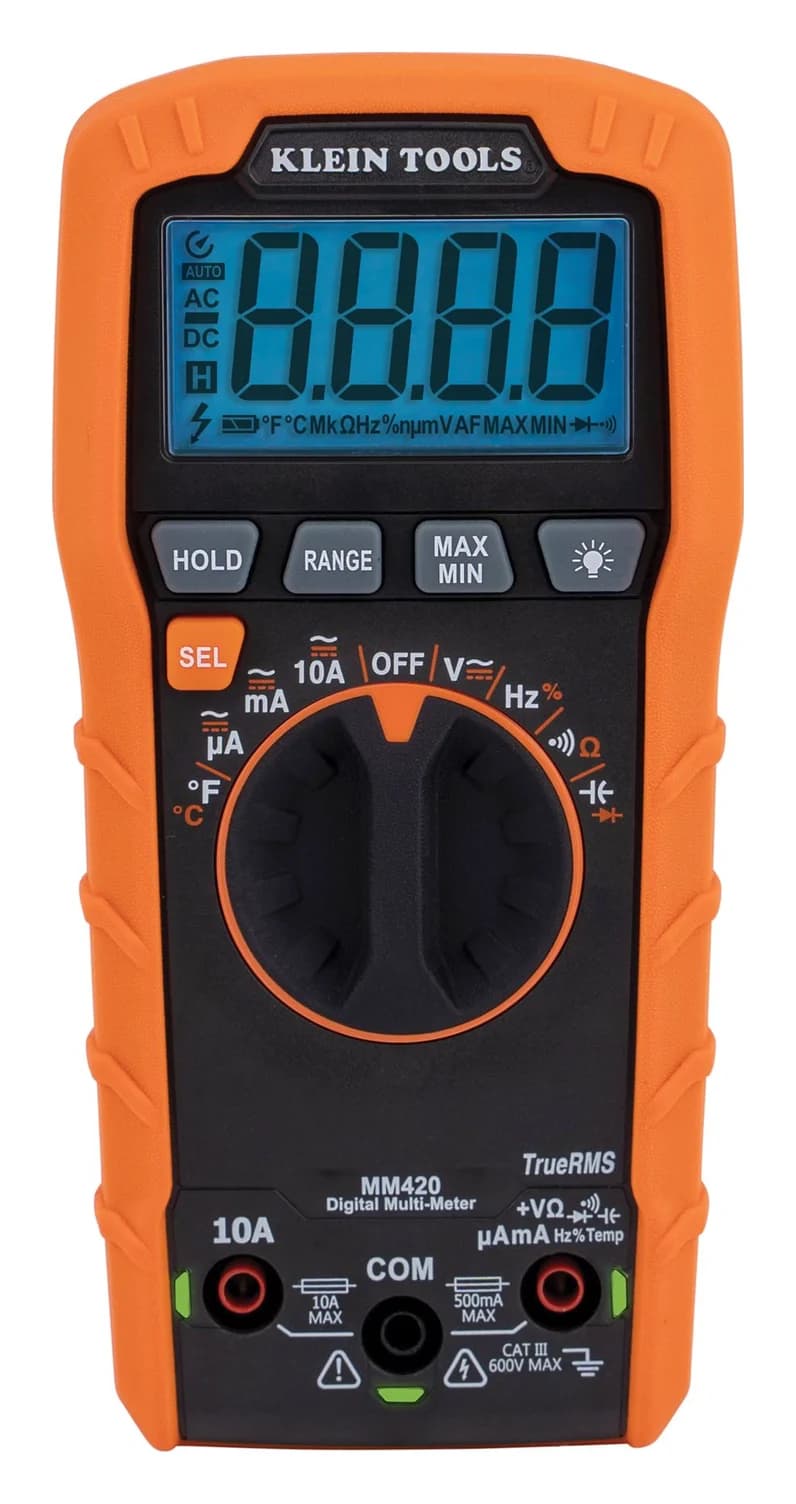
Choose a clamp meter or multimeter by AC/DC current, small-current resolution and lead functions, with clear Klein and Fluke picks and an appliance alternative.
Best picks · Clamp Meters
Best Clamp Meters: AC-Only vs AC/DC, and When You Need True RMS
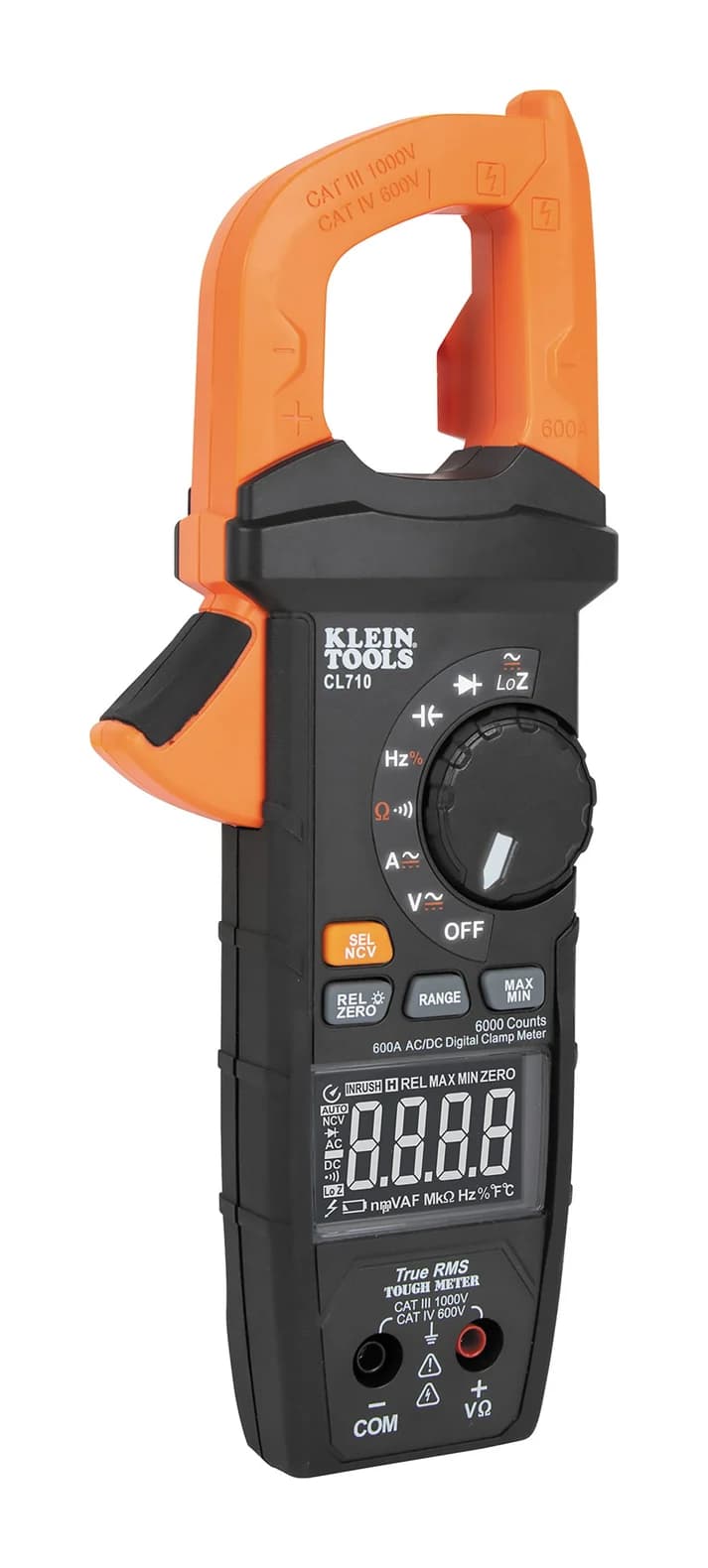
Clamp meters picked by job: Klein's AC/DC CL710 and CL390 and Fluke's AC-only 323. Why DC current needs an AC/DC clamp, and why you clamp one wire, not a cord.