

Best picks
Best Stud Finders in 2026
Whole-Stud Scanners, Metal Detectors and Live Wire Safety
Pick a stud finder that actually works: whole-stud LED scanners, deep metal detectors and live-wire-aware models, with detection depths from the makers' own pages.
By thisMETER EditorialUpdated November 6, 202611 min read6 picks
On this page · Our picks at a glance
Our picks at a glance
- 1
TV, shelves, cabinets on drywall
Choose for: TV, shelves, cabinets on drywall
Limit: No live wire detection; pair it with a voltage tester
- 2
Drywall plus live wire warning
Choose for: Drywall plus live wire warning
Limit: 1.7 in depth; not for metal-mesh plaster
- 3
Lath and plaster, tile, concrete
Choose for: Lath and plaster, tile, concrete
Limit: Metal only; no wood or AC detection
Show all 6 picks
- 4
Mixed renovation walls
Choose for: Mixed renovation walls
Limit: Wood mode stops at 30 mm; confirm your region's variant
- 5
Simple drywall shelving, low budget
Choose for: Simple drywall shelving, low budget
Limit: AC depth not specified by DeWalt
- 6
Basic edge finding in drywall
Choose for: Basic edge finding in drywall
Limit: Marked out of stock on Zircon's page at checking; confirm availability
For hanging a TV, shelves or cabinets on drywall, the Franklin Sensors ProSensor 710 is the stud finder to get: 13 sensors light a 13-LED strip that shows the full width of the stud, with no calibration step. If you also want a live wire warning, step up to the Franklin ProSensor M210; for deep metal in tile, plaster or concrete, choose Zircon's MetalliScanner m40; and for material classing on mixed walls, the Bosch GMS 120-27 names what it found. The DeWalt DW0150 is the inexpensive center-find pick. Recommendations are based on maker specifications and manuals, checked November 5, 2026.
- 4 inFerrous metal depth of the Zircon m40, the deepest single mode on this page
- 21LEDs on the Franklin M210 display, showing full stud width at once
- 13Sensors on the Franklin 710, its patented multi-sensor strip
Quick picks: match the tool to the wall and the fastener
Compare specifications and all conditions
TV, shelves, cabinets on drywall
- Our pick
- Franklin 710
- What earns its place
- 13 sensors, full stud width, no calibration
- What to check before buying
- No live wire detection; pair it with a voltage tester
Drywall plus live wire warning
- Our pick
- Franklin M210
- What earns its place
- 21 LEDs, live wire meter, bubble level, stud center indicator
- What to check before buying
- 1.7 in depth; not for metal-mesh plaster
Lath and plaster, tile, concrete
- Our pick
- Zircon MetalliScanner m40
- What earns its place
- Ferrous metal to 4 in, two scan widths
- What to check before buying
- Metal only; no wood or AC detection
Mixed renovation walls
- Our pick
- Bosch GMS 120-27
- What earns its place
- Classifies metal, wood substructures, live cables to 120 mm
- What to check before buying
- Wood mode stops at 30 mm; confirm your region's variant
Simple drywall shelving, low budget
- Our pick
- DeWalt DW0150
- What earns its place
- Center-find at 1-1/2 in, AC detection, auto-calibration, AAA batteries included
- What to check before buying
- AC depth not specified by DeWalt
Basic edge finding in drywall
- Our pick
- Zircon StudSensor e50
- What earns its place
- DeepScan to 1-1/2 in, WireWarning to 2 in, SpotLite pointer
- What to check before buying
- Marked out of stock on Zircon's page at checking; confirm availability
Full comparison table
Swipe to compare. Row labels stay visible.
| Your job | Our pick | What earns its place | What to check before buying |
|---|---|---|---|
| TV, shelves, cabinets on drywall | Franklin 710 | 13 sensors, full stud width, no calibration | No live wire detection; pair it with a voltage tester |
| Drywall plus live wire warning | Franklin M210 | 21 LEDs, live wire meter, bubble level, stud center indicator | 1.7 in depth; not for metal-mesh plaster |
| Lath and plaster, tile, concrete | Zircon MetalliScanner m40 | Ferrous metal to 4 in, two scan widths | Metal only; no wood or AC detection |
| Mixed renovation walls | Bosch GMS 120-27 | Classifies metal, wood substructures, live cables to 120 mm | Wood mode stops at 30 mm; confirm your region's variant |
| Simple drywall shelving, low budget | DeWalt DW0150 | Center-find at 1-1/2 in, AC detection, auto-calibration, AAA batteries included | AC depth not specified by DeWalt |
| Basic edge finding in drywall | Zircon StudSensor e50 | DeepScan to 1-1/2 in, WireWarning to 2 in, SpotLite pointer | Marked out of stock on Zircon's page at checking; confirm availability |
Scroll horizontally to see every column
| Your job | Our pick | What earns its place | What to check before buying |
|---|---|---|---|
| TV, shelves, cabinets on drywall | Franklin 710 | 13 sensors, full stud width, no calibration | No live wire detection; pair it with a voltage tester |
| Drywall plus live wire warning | Franklin M210 | 21 LEDs, live wire meter, bubble level, stud center indicator | 1.7 in depth; not for metal-mesh plaster |
| Lath and plaster, tile, concrete | Zircon MetalliScanner m40 | Ferrous metal to 4 in, two scan widths | Metal only; no wood or AC detection |
| Mixed renovation walls | Bosch GMS 120-27 | Classifies metal, wood substructures, live cables to 120 mm | Wood mode stops at 30 mm; confirm your region's variant |
| Simple drywall shelving, low budget | DeWalt DW0150 | Center-find at 1-1/2 in, AC detection, auto-calibration, AAA batteries included | AC depth not specified by DeWalt |
| Basic edge finding in drywall | Zircon StudSensor e50 | DeepScan to 1-1/2 in, WireWarning to 2 in, SpotLite pointer | Marked out of stock on Zircon's page at checking; confirm availability |
Two kinds of stud finder, and why it matters
Edge finders (Zircon e50, DeWalt DW0100) hunt the stud's edge: you scan, mark, turn 90 degrees, scan again and split the distance. Center finders (DeWalt DW0150) jump straight to the middle. Whole-stud scanners (Franklin) read a strip of wall at once and display the stud's width on a row of LEDs, so double studs and off-center layouts show up as the shape they are, not a series of confusing beeps. The specs below come from each maker's own product page.
Best overall for drywall: Franklin Sensors ProSensor 710
Franklin's ProSensor 710 page lists 13 patented sensors, a 13 LED display, 1.6 in detection depth, a printed ruler and made in the USA assembly. With no calibration required, it is the pick that removes the classic stud-finder failure modes: there is no calibration to lose and no single edge reading to misinterpret.
- Whole-stud display: 13 sensors read the wall at once and light the LEDs across the stud's full width
- Center marking: in certain models the middle LED turns green to indicate the stud's center
- Ruler on the body for spacing shelf standards and mounting holes
- The 710 is Franklin's original stud finder; the maker's own description points buyers wanting live wire detection to the M210
The trade-offs: no live wire detection, a 1.6 in depth that suits drywall rather than deep assembly, and no LCD material detail. Buy a 710, not the 710+ (a separate listing), unless you want the updated version.
Check price on Amazon
Best whole-stud finder with live wire detection: Franklin ProSensor M210
Franklin calls the M210 its top-of-the-line model. It keeps the 13 precision sensors and adds a 21 LED display, 1.7 in detection depth, a built-in bubble level, a stud center indicator and live wire detection to warn you of live wires.
- 21-LED display shows the full width of studs, double studs and irregular configurations other stud finders cannot detect
- Live wire meter warns of live wires; pair it with a proper voltage tester before drilling
- Bubble level and pencil caddy for marking a level mounting line in one pass
- No calibration required; made in the USA
The trade-offs: Franklin specifies no detection depth for the live wire meter, and the LED strip replaces an LCD, so there's no material name on screen. It also costs more than the 710, which is the better buy when wire detection isn't needed.
Check price on Amazon
Best deep metal scanner: Zircon MetalliScanner m40
The m40 page is the deep-metal answer: it locates ferrous (magnetic) metal up to 4 in (10 cm) deep and non-ferrous (non-magnetic) metal up to 2 in (5 cm) deep in wood, drywall, paneling, tile, plaster, concrete and other non-metallic surfaces. Depth numbers are for the first LED: 1/2 in rebar at 4 in (102 mm), 1/2 in copper pipe at 2 in (51 mm).
- Two scan positions: Pinpoint Scan for screws and nails, Wide Scan for walls or concrete; red LEDs light progressively, with a blue coil light and audio tone on target
- Lath and plaster trick: Zircon says the m40 finds studs in lath and plaster walls (without metal mesh) by mapping the nails that attach the wood lath to the studs
- Also finds plumbing, ductwork, rebar, nails and screws, and is Zircon's suggested tool for scanning reclaimed lumber for hidden metal
- 9V alkaline battery (not included); 3.9 oz (111 g) without battery.
The trade-offs: it is a metal-only scanner with no wood stud mode and no live AC detection, and Zircon warns depth and accuracy vary with mineral content, moisture, texture and consistency of the wall materials. For ferrous metal in concrete, the m40's 4 in is the deepest here; for copper pipe, the Bosch GMS 120-27's 120 mm goes deeper than the m40's 2 in. Zircon links no Amazon listing from its own page, so we link the maker's page until the owner confirms the ASIN: see the m40 on Zircon.
Best multi-material detector: Bosch GMS 120-27 Professional
Bosch's GMS 120-27 page (order number 0.601.081.700) lists what it detects and how deep: magnetic metals (e.g. iron) to 100 mm, non-magnetic metals (e.g. copper) to 120 mm, live cables to 50 mm and wooden substructures to 30 mm. It doesn't just beep: it identifies the center of the detected object and its material characteristics, and a colour-coded marking hole lets you mark through the tool.
- Material identification: live object, magnetic metal, non-magnetic metal and non-metal material, shown on the display
- Max detection depth 120 mm, with the live cable mode at 50 mm
- Job-site build: IP54 dust and splash protection and a shock-absorbing rubber casing
- Runs on 2 x AA batteries (a Li-Ion variant exists), approx. 0.29 kg, pouch included
The trade-offs: wooden substructures max out at 30 mm, the shallowest mode, and the page marks Bosch Radar Technology: No, so deeper radar models are a different line. We could not find a current plain "GMS 120" on Bosch's site: the current line lists the GMS 120-27 and GMS 100-M, so check the exact model name on the box. Bosch links no Amazon listing from its own page; see the GMS 120-27 on Bosch Professional.
Best inexpensive center finder: DeWalt DW0150
DeWalt's DW0150 page lists a center detect stud finder with a 1-1/2 in detection depth for wood and metal, AC and live wire detection, constant auto-calibration, an audible alert and directional LED arrows, a center marking channel, and 2 AAA batteries included. Instead of finding the edge and doing the two-scan dance, it locates the center directly, even when held at an angle, per DeWalt.
- Center-find technology marks the stud's center, not its edge
- AC and live wire detection for added safety
- Constant auto-calibration means there's no calibration step to lose
- 3 Year Limited Warranty, 1 Year Free Service, 90 Days Satisfaction Guaranteed
The trade-offs: DeWalt publishes no voltage or depth detail for the AC detection (unlike Zircon's WireWarning spec), and 1-1/2 in is drywall depth, not deep-assembly depth. The related DW0100 is the 3/4 in version. DeWalt links no Amazon listing from its own page; see the DW0150 on DeWalt.
Best basic edge finder: Zircon StudSensor e50
Zircon's e50 page locates the edges of wood and metal studs and joists behind walls, floors and ceilings: StudScan mode to 3/4 in (19 mm), DeepScan to 1 1/2 in (38 mm), and WireWarning detection of live, unshielded wiring up to 2 in (51 mm) deep. Zircon also specifies position accuracy: typically within 1/8 in (3 mm) at StudScan depth and within 3/16 in (5 mm) at DeepScan depth, using the dual scan-and-mark procedure.
- SpotLite pointer shines an arrow-shaped beam on the wall to mark the target
- Over-the-stud indication warns when a scan started in the wrong place; TruCal shows when the tool is calibrated and ready
- WireWarning: typically 90-250 V at 50-60 Hz within 6 in (152 mm) of a hot unshielded wire in drywall
- 9V alkaline battery (not included); indoor use only
The trade-offs: it finds edges, so the centered mark takes two scans plus arithmetic, and Zircon notes depth and accuracy vary with moisture, content of materials, wall texture and paint. Zircon's page listed the e50 as Out of Stock when we checked, so confirm availability (and the price) before planning around it. Zircon links no Amazon listing from its own page; see the e50 on Zircon.
How the scanning specs compare
These are makers' stated detection-depth specifications, not our measurements. Wood-stud depth is the number that matters through drywall; metal depth matters through tile, plaster and concrete.
Franklin 710
- Wood/stud depth
- 1.6 in
- Metal depth
- Not specified
- Live wire (AC)
- No
All specifications
- Finding style
- Whole stud, 13 LEDs
Franklin M210
- Wood/stud depth
- 1.7 in
- Metal depth
- Not specified
- Live wire (AC)
- Yes (live wire meter)
All specifications
- Finding style
- Whole stud, 21 LEDs, center indicator
Zircon StudSensor e50
- Wood/stud depth
- Up to 1 1/2 in (DeepScan)
- Metal depth
- StudScan reads metal studs too
- Live wire (AC)
- Yes, unshielded wire to 2 in
All specifications
- Finding style
- Edge, dual scan-and-mark
Bosch GMS 120-27
- Wood/stud depth
- 30 mm wooden substructures
- Metal depth
- 100 mm magnetic / 120 mm non-magnetic
- Live wire (AC)
- Yes, live cables to 50 mm
All specifications
- Finding style
- Center find plus material classing
Zircon MetalliScanner m40
- Wood/stud depth
- No
- Metal depth
- 4 in ferrous / 2 in non-ferrous
- Live wire (AC)
- No
All specifications
- Finding style
- Metal, two scan widths
DeWalt DW0150
- Wood/stud depth
- 1-1/2 in
- Metal depth
- 1-1/2 in for metal
- Live wire (AC)
- Yes (depth unspecified)
All specifications
- Finding style
- Center find, auto-calibration
Full comparison table
Swipe to compare. Row labels stay visible.
| Model | Wood/stud depth | Metal depth | Live wire (AC) | Finding style |
|---|---|---|---|---|
| Franklin 710 | 1.6 in | Not specified | No | Whole stud, 13 LEDs |
| Franklin M210 | 1.7 in | Not specified | Yes (live wire meter) | Whole stud, 21 LEDs, center indicator |
| Zircon StudSensor e50 | Up to 1 1/2 in (DeepScan) | StudScan reads metal studs too | Yes, unshielded wire to 2 in | Edge, dual scan-and-mark |
| Bosch GMS 120-27 | 30 mm wooden substructures | 100 mm magnetic / 120 mm non-magnetic | Yes, live cables to 50 mm | Center find plus material classing |
| Zircon MetalliScanner m40 | No | 4 in ferrous / 2 in non-ferrous | No | Metal, two scan widths |
| DeWalt DW0150 | 1-1/2 in | 1-1/2 in for metal | Yes (depth unspecified) | Center find, auto-calibration |
Scroll horizontally to see every column
| Model | Wood/stud depth | Metal depth | Live wire (AC) | Finding style |
|---|---|---|---|---|
| Franklin 710 | 1.6 in | Not specified | No | Whole stud, 13 LEDs |
| Franklin M210 | 1.7 in | Not specified | Yes (live wire meter) | Whole stud, 21 LEDs, center indicator |
| Zircon StudSensor e50 | Up to 1 1/2 in (DeepScan) | StudScan reads metal studs too | Yes, unshielded wire to 2 in | Edge, dual scan-and-mark |
| Bosch GMS 120-27 | 30 mm wooden substructures | 100 mm magnetic / 120 mm non-magnetic | Yes, live cables to 50 mm | Center find plus material classing |
| Zircon MetalliScanner m40 | No | 4 in ferrous / 2 in non-ferrous | No | Metal, two scan widths |
| DeWalt DW0150 | 1-1/2 in | 1-1/2 in for metal | Yes (depth unspecified) | Center find, auto-calibration |
Source: each maker's product page (linked in the product cards)
How we choose
We compared maker product pages, spec tables and instruction-manual references, checked November 5, 2026, and we did not physically test these tools. Where a maker publishes accuracy and depth limits (Zircon's position accuracy, Bosch's per-material depths), we quote them; where a spec is missing (Franklin's live wire depth, DeWalt's AC detection depth), we say so instead of guessing. Discontinued or replaced models are flagged, and ASINs the makers don't publish are left for the owner to confirm. Our selection method explains the process.
Buying guide: read the wall, then the tool
Match the sensor to the wall. Drywall over wood studs is edge-finder and whole-stud territory. Lath and plaster defeats most edge finders: Zircon's route is mapping the lath nails with the m40. Tile, plaster and concrete need metal depth, which is where 4 in ferrous (m40) or 100-120 mm (Bosch) earn their keep.
Center finding saves a step and a mistake. Edge finders need two scans and a midpoint mark; center finders (DW0150, GMS 120-27, Franklin's green center LED) give you the middle directly. Mounting loads land on the center, so the edge-only workflow is where beginner errors hide.
Live wire detection is a warning, not a clearance. WireWarning (e50) and live cable modes (GMS 120-27) flag unshielded wiring, but shielded cable, low-EMI runs and wiring behind metal can stay silent. Our non-contact voltage tester guide covers the confirmation step before you drill; panel and circuit work belong to a licensed electrician.
Depth specs are per material, and walls vary. Zircon states it plainly: sensing depth and accuracy can vary due to moisture, content of materials, wall texture and paint. Buy a depth margin, and treat a single beep as a hint, not a fact.
Read the mode
Pick the mode for the wall (stud, deep, metal) rather than trusting one default scan.
Calibrate on clear wall
Edge finders calibrate away from studs, per their manuals; auto-calibrating models do this step for you.
Scan slowly and flat
Keep the tool flat against the wall and move slowly; a lifted corner is a false reading.
Mark, turn, re-scan
Mark the first indication, turn 90 degrees and scan again from the other side to confirm the same edge.
Verify before drilling
Confirm live-wire findings with a voltage tester and anchor in the stud's center, not its edge.
FAQs about false positives, depth limits and batteries
Why do cheap stud finders give false positives? Lost calibration and fast scanning. The e50 attacks the first with TruCal's calibration indication and over-the-stud alert; the DW0150 and Franklins remove the step entirely. Both Zircon and DeWalt warn wall texture and moisture change readings, so verify any single reading with a second pass in the other direction.
What batteries do these take? The 710 and M210 are maker-listed with no battery detail we could confirm; the e50 and m40 take 9V alkaline batteries, not included, per Zircon. The DW0150 ships with 2 AAA batteries included, and the GMS 120-27 runs on 2 x AA or a Li-Ion pack, per Bosch.
Can these find joists and rebar in floors and ceilings? The e50 is rated for walls, floors and ceilings; the m40 is Zircon's tool for rebar in concrete. Check the depth budget: 1/2 in rebar reads to 4 in (102 mm) on the m40, while a wooden substructure reads only to 30 mm on the Bosch.
New to electrical checks around the home? Our outlet tester guide covers the plug-in checks, and the multimeter guide goes deeper.
Verdict
For drywall, buy the Franklin ProSensor 710: 13 sensors and a 13-LED strip show the full stud, no calibration, 1.6 in deep. Add wire warnings with the M210, go deep on metal with the Zircon m40, class materials with the Bosch GMS 120-27, or keep it simple and cheap with the DeWalt DW0150. Anchor in stud centers, verify live wires with a real voltage tester, and buy depth margin for anything thicker than drywall.
Frequently asked questions
Why does my stud finder say there's a stud everywhere?
Edge finders need a calibration step and a slow, flat scan, and they drift on textured or thick walls. A whole-stud scanner like the Franklin 710 sidesteps this: 13 sensors read the wall at once and light a strip of LEDs, so a misread sensor shows up as a gap rather than a false stud. Zircon also publishes an over-the-stud indication on the e50 to warn when a scan started in the wrong place, and both makers note depth and accuracy vary with moisture, texture and paint.
Can a stud finder find live wires?
Some can flag them, none of them replaces a voltage tester. Franklin's M210 has a live wire meter, Zircon's e50 indicates live unshielded wiring up to 2 in deep, and the Bosch GMS 120-27 classifies live cables to 5 cm (50 millimetres) deep. Always confirm with a non-contact voltage tester before cutting or drilling, and leave panel work to a licensed electrician. Our guide to non-contact voltage testers covers the confirmation step.
Do stud finders work on plaster and lath walls?
Electronic edge finders struggle with the metal mesh and thickness variation in plaster. Zircon's MetalliScanner m40 solves it differently: it finds the pattern of nails that attach the wood lath to the studs, so you map the studs from their fasteners, and it reads through plaster, tile and concrete. For drywall over wood studs, a multi-sensor scanner like the Franklin 710 is simpler.
How deep can a stud finder detect?
It depends on what's being detected. Through drywall, wood studs show up at 1.5 to 1.7 in on the picks here (DeWalt DW0150, Zircon e50's DeepScan mode, Franklin M210). Metal goes deeper: the m40 reads ferrous metal to 4 in and the Bosch GMS 120-27 to 100 mm magnetic and 120 mm non-magnetic. Wood substructures are the shallowest target, 30 mm on the Bosch, because wood is the least distinct thing in a wall.
What is a whole stud finder, and is it worth it?
A whole stud finder reads many points across the wall at once instead of hunting one edge. Franklin's 710 uses 13 sensors and a 13-LED strip to show the stud's full width, including double studs and off-center configurations, with no calibration required. It costs more than a basic edge finder but removes the two main failure modes: lost calibration and edge-only readings that miss the stud's center.
What's a good stud finder for mounting a TV?
You need the stud center, a comfortable depth margin, and a wire check. The Franklin M210 covers all three: a 21-LED display, a stud center indicator and a live wire meter, plus a bubble level for marking the mounting line. Anchor into the stud center, not the edge, and confirm the wire path before drilling, since live cables and stud edges read very differently from each other.
TV, shelves, cabinets on drywall
Franklin 710
Related guides
Buying guide · Voltage & Outlet Testers
Phase Rotation Testers: Which One for Three-Phase Work?
Pick a phase rotation tester for three-phase motors, panels and installations: live-circuit and unpowered checks, voltage and frequency ranges, CAT ratings and lead design, from maker specs.
Buying guide · Voltage & Outlet Testers
Circuit Breaker Locator Buying Guide: Find the Right Breaker Safely
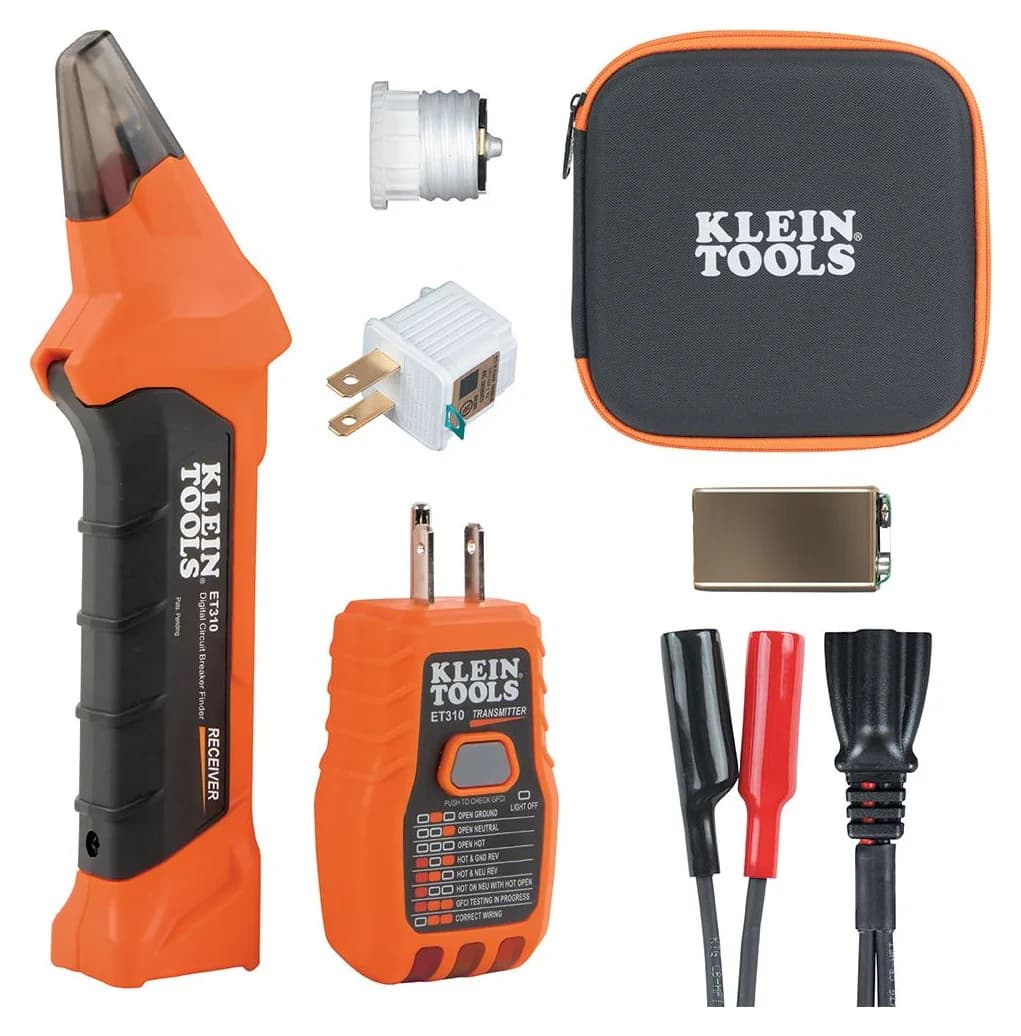
Choose a circuit breaker locator for outlet, lighting and panel jobs. Compare the Klein ET310, ET450, Fluke 2062 and IDEAL 61-535 kits before you buy.
Buying guide · Voltage & Outlet Testers
Breaker Finder Kit Buying Guide: Compare What Is Actually Included
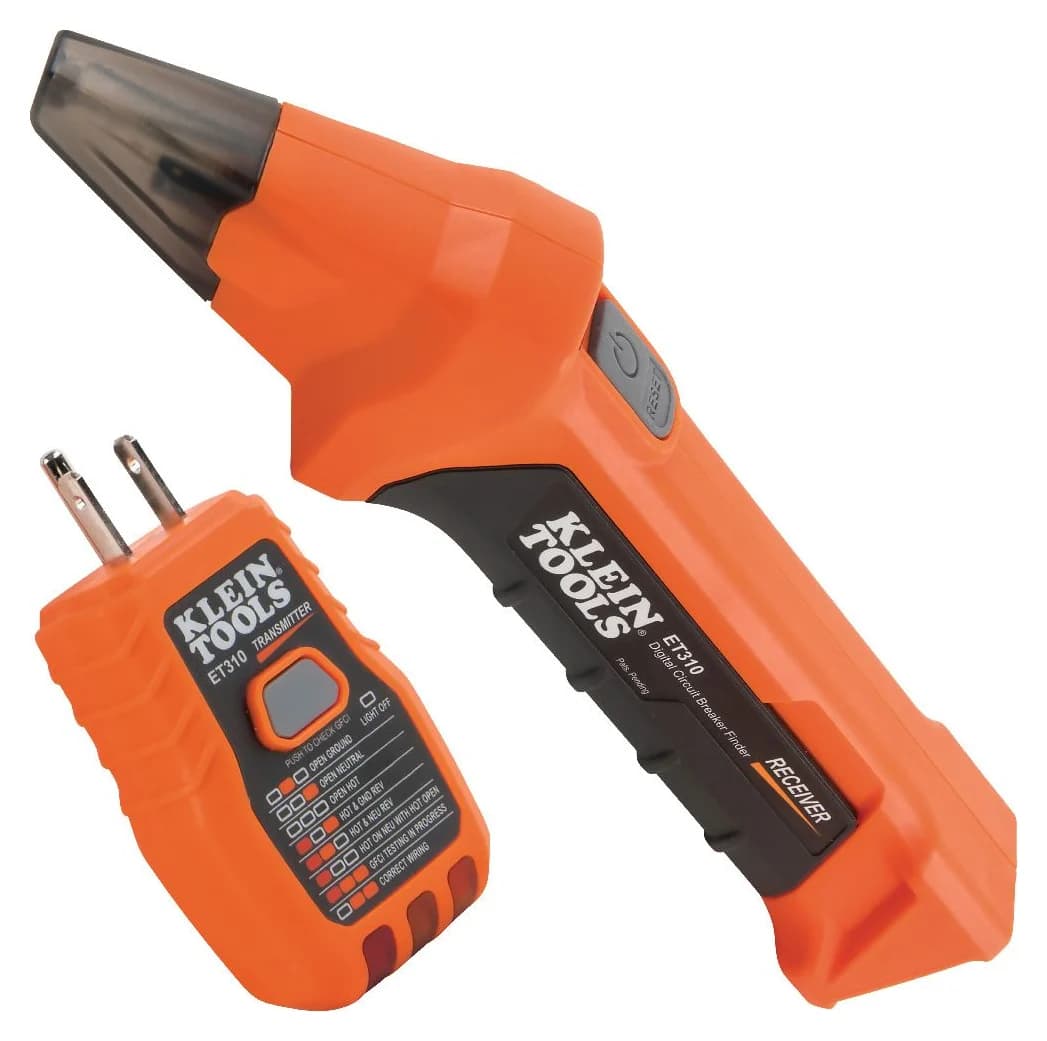
Compare breaker finder kits by included transmitters, receivers, adapters, leads, batteries and cases, so you pay for the package your job needs.