

Buying guide
Phase Rotation Testers
Which One for Three-Phase Work?
Pick a phase rotation tester for three-phase motors, panels and installations: live-circuit and unpowered checks, voltage and frequency ranges, CAT ratings and lead design, from maker specs.
By thisMETER EditorialUpdated November 6, 202612 min read5 picks
On this page · Our picks at a glance
Our picks at a glance
- 1
Best live-circuit tester
Choose for: Best live-circuit tester
Limit: CAT III 600 V / CAT IV 300 V covers the connection point; no battery to maintain
- 2
- 3
Best non-contact pick
Choose for: Best non-contact pick
Limit: 45-65 Hz only — not for 400 Hz supplies; supplied with test leads and alligator clips, so follow the manual
Show all 5 picks
- 4
Best budget tester
Choose for: Best budget tester
Limit: 50/60Hz only; 5-minute limit above 500 V; no LCD
- 5
For electricians and technicians connecting three-phase motors, panels and generators, the Fluke 9040 is the live-circuit phase rotation tester we'd start with: 40-700 V, 15-400 Hz, an LCD indication, and CAT III 600 V / CAT IV 300 V ratings, powered by the circuit under test. If your job is motors specifically, the Amprobe PRM-6 adds wireless rotation detection on running motors and a shaft-spin check on disconnected ones; the Extech PRT200 is the non-contact pick for high-voltage industrial panels, and the Kyoritsu KEW 8031 is the simple budget workhorse, with IDEAL's 61-521 covering commissioning checks. Recommendations are based on maker specifications and manuals, checked November 5, 2026 — we have not physically tested these instruments.
- 700 VHighest three-phase-to-phase voltage the Fluke 9040 and PRM-6 are specified for
- 400 HzFrequency ceiling of the Fluke 9040's live rotation measurement
- CAT IV 600 VSafety marking of the PRT200 and PRM-6, the strongest ratings among these picks
Quick picks: buy for the check you actually make
Compare specifications and all conditions
Live sequence on panels and supplies
- Our pick
- Fluke 9040
- What earns its place
- 40-700 V, 15-400 Hz; LCD; powered from the circuit under test
- What to check before buying
- CAT III 600 V / CAT IV 300 V covers the connection point; no battery to maintain
Motor rotation, before and after wiring
- Our pick
- Amprobe PRM-6
- What earns its place
- Wireless rotation sensing on running motors; shaft-spin check on disconnected motors; 1-700 V lead-based motor connection
- What to check before buying
- Live wiring checks are 40-700 V (16-60 Hz) or 50-700 V (60-400 Hz); two AAA batteries to keep stocked
Non-contact sequence on high-voltage panels
- Our pick
- Extech PRT200
- What earns its place
- 75-1000 VAC, 45-65 Hz; titled a non-contact tester; CAT IV 600 V
- What to check before buying
- 45-65 Hz only — not for 400 Hz supplies; supplied with test leads and alligator clips, so follow the manual
Budget sequence and open-phase checks
- Our pick
- Kyoritsu KEW 8031
- What earns its place
- 110-600 V AC; rotating-disk and lamp indication in one small unit
- What to check before buying
- 50/60Hz only; 5-minute limit above 500 V; no LCD
Commissioning conveyor and pump installs
- Our pick
- IDEAL 61-521
- What earns its place
- Sequence, motor rotation and open phase in one unit; three color-coded alligator clips
- What to check before buying
- The maker page lists CAT III 300 V, but the supplied instructions specify CAT III 600 V
Full comparison table
Swipe to compare. Row labels stay visible.
| The check | Our pick | What earns its place | What to check before buying |
|---|---|---|---|
| Live sequence on panels and supplies | Fluke 9040 | 40-700 V, 15-400 Hz; LCD; powered from the circuit under test | CAT III 600 V / CAT IV 300 V covers the connection point; no battery to maintain |
| Motor rotation, before and after wiring | Amprobe PRM-6 | Wireless rotation sensing on running motors; shaft-spin check on disconnected motors; 1-700 V lead-based motor connection | Live wiring checks are 40-700 V (16-60 Hz) or 50-700 V (60-400 Hz); two AAA batteries to keep stocked |
| Non-contact sequence on high-voltage panels | Extech PRT200 | 75-1000 VAC, 45-65 Hz; titled a non-contact tester; CAT IV 600 V | 45-65 Hz only — not for 400 Hz supplies; supplied with test leads and alligator clips, so follow the manual |
| Budget sequence and open-phase checks | Kyoritsu KEW 8031 | 110-600 V AC; rotating-disk and lamp indication in one small unit | 50/60Hz only; 5-minute limit above 500 V; no LCD |
| Commissioning conveyor and pump installs | IDEAL 61-521 | Sequence, motor rotation and open phase in one unit; three color-coded alligator clips | The maker page lists CAT III 300 V, but the supplied instructions specify CAT III 600 V |
Scroll horizontally to see every column
| The check | Our pick | What earns its place | What to check before buying |
|---|---|---|---|
| Live sequence on panels and supplies | Fluke 9040 | 40-700 V, 15-400 Hz; LCD; powered from the circuit under test | CAT III 600 V / CAT IV 300 V covers the connection point; no battery to maintain |
| Motor rotation, before and after wiring | Amprobe PRM-6 | Wireless rotation sensing on running motors; shaft-spin check on disconnected motors; 1-700 V lead-based motor connection | Live wiring checks are 40-700 V (16-60 Hz) or 50-700 V (60-400 Hz); two AAA batteries to keep stocked |
| Non-contact sequence on high-voltage panels | Extech PRT200 | 75-1000 VAC, 45-65 Hz; titled a non-contact tester; CAT IV 600 V | 45-65 Hz only — not for 400 Hz supplies; supplied with test leads and alligator clips, so follow the manual |
| Budget sequence and open-phase checks | Kyoritsu KEW 8031 | 110-600 V AC; rotating-disk and lamp indication in one small unit | 50/60Hz only; 5-minute limit above 500 V; no LCD |
| Commissioning conveyor and pump installs | IDEAL 61-521 | Sequence, motor rotation and open phase in one unit; three color-coded alligator clips | The maker page lists CAT III 300 V, but the supplied instructions specify CAT III 600 V |
Tap a label to explore. You can also hover or use your keyboard.
CAT IIPlug-in appliances & tools
Receptacle-connected loads, such as household appliances and portable tools. The category describes the measurement environment; it does not give permission to work on live equipment.
Sources: 1: CAT II includes household appliances, portable tools and other receptacle-connected loads.CAT IIIFixed wiring & distribution
The distribution part of the building installation, including distribution-panel devices and fixed-installation equipment. This is a different environment from a plug-in appliance.
Sources: 2: CAT III includes equipment in fixed installations and distribution-panel devices.CAT IVUtility meter & service entry
The origin of the low-voltage installation, including electricity meters and the service entrance. Fluke also identifies the run between the meter and panel as CAT IV.
Sources: 3: CAT IV includes electricity meters, the service entrance and the run between meter and panel.Illustrative locations, not a testing procedure. Match both the measurement category and voltage rating to the job. The lowest-rated meter, lead, probe or accessory limits the setup.
Source notes5 references
CAT II includes household appliances, portable tools and other receptacle-connected loads.
media.fluke.com — source for CAT II includes household appliances, portable tools and other receptacle-connected loads.Appliance, portable tools, and other household and similar
CAT III includes equipment in fixed installations and distribution-panel devices.
media.fluke.com — source for CAT III includes equipment in fixed installations and distribution-panel devices.distribution panel devices
CAT IV includes electricity meters, the service entrance and the run between meter and panel.
media.fluke.com — source for CAT IV includes electricity meters, the service entrance and the run between meter and panel.Electricity meters, primary overcurrent protection equipment
Probes, test leads and adapters need the correct measurement category, voltage and amperage ratings.
assets.fluke.com — source for Probes, test leads and adapters need the correct measurement category, voltage and amperage ratings.Use only correct measurement category (CAT), voltage, and amperage
The lowest-rated component limits the measurement-category rating of the setup.
assets.fluke.com — source for The lowest-rated component limits the measurement-category rating of the setup.Do not exceed the Measurement Category (CAT) rating of the lowest
Best live-circuit tester: Fluke 9040
The 9040 is the instrument for checking phase rotation on the supply side. Fluke's 9040 page describes it as effective for measuring phase rotation in all areas where three phase supplies are used to feed motors, drives and electrical systems, and specifies a 40-700 V voltage range and a 15-400 Hz frequency range — the 400 Hz ceiling matters for aircraft and special industrial supplies, a point Fluke's own review section echoes. Power comes from the unit under test, so there is no battery to service.
- Indication: 3-phase indication and phase rotation direction on a clear LCD display
- Safety: CAT III, 600 V and CAT IV, 300V; conforms to EN 61010 and EN 61557-7
- Ruggedness: IP 40 dust/water resistance; operating temperature 0°C to 40°C
- Included: 3 self-retaining test probes, 3 alligator clips, user manual (9040; 9040EUR also adds 3 Slim-Reach test probes; 9040UK uses 3 fused test probes)
- Size and warranty: 124 x 61 x 27 mm, 200 g, 2-year warranty
The product page says the included probes have a variable clamping range for safe contact, also in industrial sockets. Fluke's 9040 manual lists the package contents as 3 self-retaining test probes, 3 alligator clips and a user manual. Note: Fluke's US store currently lists the 9040 as its Phase Rotation Indicator; its part number is quoted in the specs above.
Best for motor rotation: Amprobe PRM-6
The PRM-6 covers both halves of the motor question: supply sequence and motor rotation direction. Amprobe's PRM-6 page lists 3-phase wire sequence indication with test leads, plus non-contact, wireless motor rotation detection on running motors — useful when a motor runs too fast to read the shaft visually or the shaft is not visible — and rotation indication of disconnected motors when spinning the shaft by hand.
- Live rotation measurement: 40-700 V from 16-60 Hz, 50-700 V from 60-400 Hz
- Motor connection with leads: 1-700 V, 2-400 Hz
- Error displays: missing phase, one input connected to neutral or PE
- Safety: CAT IV 600 V; conforms to EN 61010-1, EN 61010-031, EN 61557-1, EN 61557-7; IP 40; 1 m drop-proof rubber casing
- Power and build: 2 AAA batteries; backlit LCD; .38 lb (.17 kg) including battery
- Included: 3 test probes, 3 alligator clips, carrying bag, 2 AAA batteries
Amprobe positions it for anyone installing or connecting 3-phase motors and systems, and highlights the wireless mode for fast-running motors. It was a NECA Showstopper winner in 2015.
Best non-contact pick: Extech PRT200
Extech titles the PRT200 a non-contact phase sequence tester. Its PRT200 datasheet specifies 75 to 1000VAC input voltage with 45 to 65Hz frequency range, LEDs for phase orientation (clockwise or counter-clockwise) and whether each phase is live, a beeper that sounds intermittently when correct phase is detected and continuously if phase is reversed, and three built-in 30" test leads with alligator clips.
- Indication: LED and audible phase-sequence indication; no static-induction method or conductor-size limit is stated
- Safety: CAT IV-600V rating; fully insulated alligator clips with wide jaws
- Handling: back-cover magnet for attachment to an AC distribution panel; adjustable Hi/Lo LED brightness for dim or bright conditions
- Power and build: 4 AA batteries; low battery warning; 118 x 69 x 38 mm; 13 oz (370 g)
- Included: three built-in 30" test leads with large color-coded alligator clips, four AA batteries, pouch case
The trade-offs: the 45-65 Hz frequency range excludes 400 Hz supplies, and the supplied test leads and alligator clips mean the non-contact title does not eliminate circuit attachment — read the manual for the required procedure.
Best budget tester: Kyoritsu KEW 8031
The 8031 is the straightforward, low-cost way to check a three-phase source. Kyoritsu's 8031 page lists a wide range of 3-phase power source from 110 to 600V, with open phase and phase sequence checked in one unit by rotating disk and lamps: clockwise means positive phase, counter-clockwise reversed.
- Voltage: 110 to 600V AC (50/60Hz); time limit above 500 V of 5 minutes
- Indication: rotating disk plus lamps; no battery in the specification
- Safety: IEC 61010-1 CAT Ⅳ 300V, CAT Ⅲ 600V, pollution degree 2
- Build: small, lightweight and portable, designed for maximum ease of operation and ruggedness; approx. 350 g; 106 (L) x 75 (W) x 40 (D) mm
- Leads: 1.5 m fixed cord, L1(U) red / L2(V) white / L3(W) blue
- Included: 9095 carrying case and instruction manual
Two cautions from the page itself: the operational frequency is 50/60Hz only, so this is the wrong pick for 400 Hz systems, and the disk-based indication is coarser than an LCD. Kyoritsu lists two other phase indicators alongside the 8031 (CE type), one of them non-contact; the CE-type specification is the one quoted here.
Best for commissioning: IDEAL 61-521
For installer workflows — conveyor lines, pump systems and interconnected drivers, in IDEAL's words — the 61-521 puts the three commissioning checks in one unit. IDEAL's 3-Phase Motor Rotation Tester page lists identifying three-phase sequence, motor rotation indication, and an open phase check, and says the tester meets IEC-1010 (EN61010) safety requirements for use up to 600V.
- Functions: 3-phase sequence, motor rotation indication, open phase check
- Included: three color-coded alligator clips and a nylon carrying case
- Lead set: IDEAL's TL-521 Test Lead Set for Phase Rotation Testers is sold separately in the same category
- Warranty: limited 2-year
- Specs from the manual: 100-600 VAC at 10-400 Hz for phase-presence indication; 1-600 VAC at 2-400 Hz for phase rotation and motor rotation; one 9 V IEC 6LR61 battery, with low-battery indication
- Physical: black and yellow; no display features (no backlight, data hold or dual LCD) listed
One specification to read carefully: IDEAL's product page lists CAT III 300 V in Key Specifications and use up to 600V in the description, but the supplied 61-521 instructions specify CAT III 600 V — use the rating and limitations in the supplied instructions and follow the marking on the unit. The 61-520 3-Phase Sequence Tester in the same line indicates phase sequence and continuity instantly for use up to 600V, without the motor-rotation function.
How phase rotation testers compare
Fluke 9040
- CAT rating
- CAT III 600 V / CAT IV 300 V
- Live sequence range
- 40-700 V
- Important limit
- Match category and voltage; the lowest-rated lead or accessory limits the assembly.
All specifications
- Frequency
- 15-400 Hz
- Motor rotation check
- No
- Power
- From unit under test
- What it's for
- Broad live-circuit indication
Amprobe PRM-6
- CAT rating
- CAT IV 600 V
- Live sequence range
- 40-700 V (16-60 Hz); 50-700 V (60-400 Hz)
- Important limit
- Match category and voltage; the lowest-rated lead or accessory limits the assembly.
All specifications
- Frequency
- 2-400 Hz (motor connection)
- Motor rotation check
- Wireless on running motors; shaft-spin on disconnected
- Power
- 2 AAA
- What it's for
- Motor install and commissioning
Extech PRT200
- CAT rating
- CAT IV-600 V
- Live sequence range
- 75-1000 VAC
- Important limit
- Match category and voltage; the lowest-rated lead or accessory limits the assembly.
All specifications
- Frequency
- 45-65 Hz
- Motor rotation check
- No
- Power
- 4 AA
- What it's for
- Non-contact checks on industrial panels
Kyoritsu KEW 8031
- CAT rating
- CAT IV 300V / CAT III 600V
- Live sequence range
- 110-600 V AC
- Important limit
- Match category and voltage; the lowest-rated lead or accessory limits the assembly.
All specifications
- Frequency
- 50/60Hz
- Motor rotation check
- No
- Power
- None listed
- What it's for
- Budget open-phase and sequence checks
IDEAL 61-521
- CAT rating
- CAT III 600 V (per supplied instructions; page key spec says CAT III 300 V)
- Live sequence range
- 1-600 VAC (phase rotation and motor rotation); 100-600 VAC (phase presence)
- Important limit
- Match category and voltage; the lowest-rated lead or accessory limits the assembly.
All specifications
- Frequency
- 2-400 Hz (phase rotation and motor rotation); 10-400 Hz (phase presence)
- Motor rotation check
- Yes (motor rotation indication)
- Power
- 1 x 9 V
- What it's for
- Sequence, rotation and open phase in one unit
Full comparison table
Swipe to compare. Row labels stay visible.
| Tester | Live sequence range | Frequency | Motor rotation check | CAT rating | Power | What it's for |
|---|---|---|---|---|---|---|
| Fluke 9040 | 40-700 V | 15-400 Hz | No | CAT III 600 V / CAT IV 300 V | From unit under test | Broad live-circuit indication |
| Amprobe PRM-6 | 40-700 V (16-60 Hz); 50-700 V (60-400 Hz) | 2-400 Hz (motor connection) | Wireless on running motors; shaft-spin on disconnected | CAT IV 600 V | 2 AAA | Motor install and commissioning |
| Extech PRT200 | 75-1000 VAC | 45-65 Hz | No | CAT IV-600 V | 4 AA | Non-contact checks on industrial panels |
| Kyoritsu KEW 8031 | 110-600 V AC | 50/60Hz | No | CAT IV 300V / CAT III 600V | None listed | Budget open-phase and sequence checks |
| IDEAL 61-521 | 1-600 VAC (phase rotation and motor rotation); 100-600 VAC (phase presence) | 2-400 Hz (phase rotation and motor rotation); 10-400 Hz (phase presence) | Yes (motor rotation indication) | CAT III 600 V (per supplied instructions; page key spec says CAT III 300 V) | 1 x 9 V | Sequence, rotation and open phase in one unit |
Scroll horizontally to see every column
| Tester | Live sequence range | Frequency | Motor rotation check | CAT rating | Power | What it's for |
|---|---|---|---|---|---|---|
| Fluke 9040 | 40-700 V | 15-400 Hz | No | CAT III 600 V / CAT IV 300 V | From unit under test | Broad live-circuit indication |
| Amprobe PRM-6 | 40-700 V (16-60 Hz); 50-700 V (60-400 Hz) | 2-400 Hz (motor connection) | Wireless on running motors; shaft-spin on disconnected | CAT IV 600 V | 2 AAA | Motor install and commissioning |
| Extech PRT200 | 75-1000 VAC | 45-65 Hz | No | CAT IV-600 V | 4 AA | Non-contact checks on industrial panels |
| Kyoritsu KEW 8031 | 110-600 V AC | 50/60Hz | No | CAT IV 300V / CAT III 600V | None listed | Budget open-phase and sequence checks |
| IDEAL 61-521 | 1-600 VAC (phase rotation and motor rotation); 100-600 VAC (phase presence) | 2-400 Hz (phase rotation and motor rotation); 10-400 Hz (phase presence) | Yes (motor rotation indication) | CAT III 600 V (per supplied instructions; page key spec says CAT III 300 V) | 1 x 9 V | Sequence, rotation and open phase in one unit |
Sources: Fluke 9040, Amprobe PRM-6, Extech PRT200 datasheet, Kyoritsu 8031, IDEAL 61-521. All figures are maker specifications; we have not measured any of them.
How we choose
We compared maker product pages, official datasheets and instruction manuals, checked November 5, 2026: voltage and frequency ranges, indication method, motor-rotation capability, marked CAT ratings, power source and included accessories. Where a maker's page conflicts with its supplied instructions — IDEAL's CAT III 300 V key spec alongside its CAT III 600 V instructions — we follow the supplied instructions. These are research-based recommendations; we have not physically tested the instruments. Our selection method explains the process.
How to choose a phase rotation tester
Match the voltage and frequency to the system. A 480 V industrial panel, a low-voltage commercial supply and a 400 Hz aircraft system are different jobs. The 9040 covers 40-700 V at 15-400 Hz; the PRT200 goes higher in voltage (75 to 1000VAC) but only at 45-65 Hz; the PRM-6's live modes cover 40-700 V from 16-60 Hz and 50-700 V from 60-400 Hz; the 8031 stops at 600 V AC and 50/60Hz. Exceeding neither the voltage range nor the marked category is a safety matter, not a performance one.
Decide whether you need motor rotation, not just supply sequence. Sequence on the supply answers "which way will this motor spin if I wire it this way." Motor rotation modes answer "which way does this motor actually spin." The PRM-6 checks both — leads for wiring, wireless sensing for running motors, shaft-spin for disconnected ones — and the 61-521 combines sequence, rotation and open phase. If you only commission panels, a supply-only tester is enough.
Weigh contact vs non-contact indication. The PRT200's static-induction indication reduces direct contact with live parts at industrial voltages. Its safety category (CAT IV-600 V) and insulated clips are the rated boundaries; non-contact does not mean no leads at all, so follow its manual. If you want a more general no-touch check on single-phase circuits, see our voltage tester guide.
Check errors, displays and batteries for daily work. A backlit LCD (PRM-6) reads in dim panels; lamps and a rotating disk (8031) are visible in bright light but carry less detail. The PRM-6's error displays (missing phase, one input connected to neutral or PE) catch wiring mistakes a simple clock/anticlock indication misses. Battery-free testers (9040, powered from the unit under test) never spoil a job with dead cells.
- Yes: Fluke 9040 — 400 Hz supplies
- Yes: Amprobe PRM-6 — wireless rotation sensing on running motors
- Yes: Extech PRT200 — indication without direct contact, up to 1000 VAC
- Yes: Kyoritsu 8031 — open-phase and sequence in one low-cost unit
- No: Extech PRT200 — 400 Hz supplies (45-65 Hz only)
- No: Kyoritsu 8031 — 400 Hz supplies (50/60Hz only)
- Partly: IDEAL 61-521 — safety category: CAT III 300 V in key specs, use up to 600V in the description
Identify the supply
Confirm the system's voltage and frequency fall inside the tester's specified range.
Check the sequence
Connect per the maker's manual and read the clockwise/counter-clockwise indication.
Check the motor
Verify motor rotation — shaft-spin or wireless — before coupling the load.
Confirm the rating
Make sure the tester's CAT rating covers the connection point, and leave service-entrance equipment to a licensed electrician.
Leads and terminals. Three clips or probes, color-coded per phase, are standard here: the 8031's 1.5 m cord is fixed (L1 red, L2 white, L3 blue); the 9040 includes 3 self-retaining probes with a variable clamping range for industrial sockets and 3 alligator clips; IDEAL's TL-521 lead set appears as a separate item in the maker category. Lead condition and rating are part of the safety setup, as with any tester — the same point our multimeter test leads guide makes for leads generally.
FAQs About Rotation, Wiring Errors, and Motor Startup
Will swapping two phases fix a reversed motor?
Yes — reversing any two supply connections reverses a three-phase motor's rotation. The reason to confirm sequence and rotation first is exactly the risk Amprobe documents: improper connections can cause motors to rotate in reverse, potentially damaging the motor and the equipment it is powering. With the PRM-6 you can re-check the running motor's direction wirelessly after re-termination.
Why does one phase sometimes read "missing" on my tester?
A genuinely open phase is one possibility, but so is a measurement setup error. The PRM-6's error displays distinguish missing phase from one input connected to neutral or PE; the 8031 and 61-521 include open-phase checks. If the tester is outside its specified voltage or frequency range, its indication is not trustworthy — the 8031, for instance, is specified for 50/60Hz supplies only. Verify with a meter; our multimeter guides cover voltage checks.
Do I need a rotation tester if I have a multimeter?
A multimeter can confirm phase-to-phase voltages, but not the sequence relationship between them; a dedicated tester gives a direct clockwise/counter-clockwise answer plus live-phase and open-phase indication in seconds. For motor work, the rotation modes (wireless, shaft-spin) are functions a multimeter does not have at all. If you commission three-phase systems more than once in a while, a rotation tester earns its place in the bag next to the meter.
Verdict
The Fluke 9040 is the general-purpose answer for live three-phase supplies — wide voltage and frequency ranges, LCD clarity and no batteries. Choose the Amprobe PRM-6 when motors are the job, the Extech PRT200 for non-contact checks at industrial voltages, the Kyoritsu KEW 8031 for a simple, inexpensive open-phase and sequence tool, and the IDEAL 61-521 for installer commissioning checks. Buy for the exact check you make, and match the CAT rating to where you connect.
Frequently asked questions
What does a phase rotation tester actually tell you?
It shows the phase sequence — clockwise or counter-clockwise — of a three-phase supply, and usually whether all three phases are present. Amprobe explains that improper connections can cause motors to rotate in reverse, potentially damaging the motor and the equipment it powers. Testers like the KEW 8031 indicate the direction with a rotating disk and lamps; LCD models such as the Fluke 9040 display the 3-phase indication and rotation direction. Sequence alone is not a full voltage or insulation test.
Can I check motor rotation with the motor disconnected?
Yes, with the right model. The Amprobe PRM-6 indicates motor rotation of disconnected motors when the shaft is spun by hand, and also senses rotation on running motors without test leads. The IDEAL 61-521 combines sequence, motor rotation indication and an open phase check. Testers that only measure a live supply's sequence, such as a basic live-circuit indicator, cannot confirm a disconnected motor's rotation.
Will a reversed phase rotation damage a motor?
It can. Amprobe's product documentation states that improper connections can cause motors to rotate in reverse direction, potentially damaging the motor and the equipment it is powering — pumps and conveyors are the classic cases. Checking sequence before first energizing, and rotation direction before connecting the load, is the exact purpose of these testers. Follow the maker's manual and lockout procedures for the live-circuit measurement.
What voltage and frequency do these testers cover?
Live-circuit ranges differ: the Fluke 9040 covers 40-700 V at 15-400 Hz; the Extech PRT200 covers 75-1000 VAC at 45-65 Hz; the KEW 8031 covers 110 to 600 V AC at 50/60Hz; and the PRM-6's motor-connection mode spans 1-700 V at 2-400 Hz, per each maker's specification. Match the system you work on — 400 Hz appears in aircraft and special supplies — and never exceed the marked CAT rating.
Do phase rotation testers need batteries?
Some do not: the Fluke 9040 is powered from the unit under test, and the KEW 8031 makes no battery claim in its specification. The PRM-6 uses two AAA batteries and the Extech PRT200 four AA batteries; the PRM-6's wireless mode can sense running-motor rotation without test leads. A battery-powered tester still needs the marked voltage present for a live sequence check.
What safety category should the tester carry?
The CAT rating must cover where you connect it. The PRT200 and PRM-6 are marked CAT IV 600 V; the Fluke 9040 is CAT III, 600 V and CAT IV, 300V; the KEW 8031 is CAT IV 300V, CAT III 600V. As with any tester, the leads and clips are part of the rated setup, and work on service-entrance equipment should be left to a licensed electrician.
Best live-circuit tester
Fluke 9040
Related guides
Best picks · Voltage & Outlet Testers
Best Stud Finders in 2026: Whole-Stud Scanners, Metal Detectors and Live Wire Safety
Pick a stud finder that actually works: whole-stud LED scanners, deep metal detectors and live-wire-aware models, with detection depths from the makers' own pages.
Buying guide · Voltage & Outlet Testers
Circuit Breaker Locator Buying Guide: Find the Right Breaker Safely
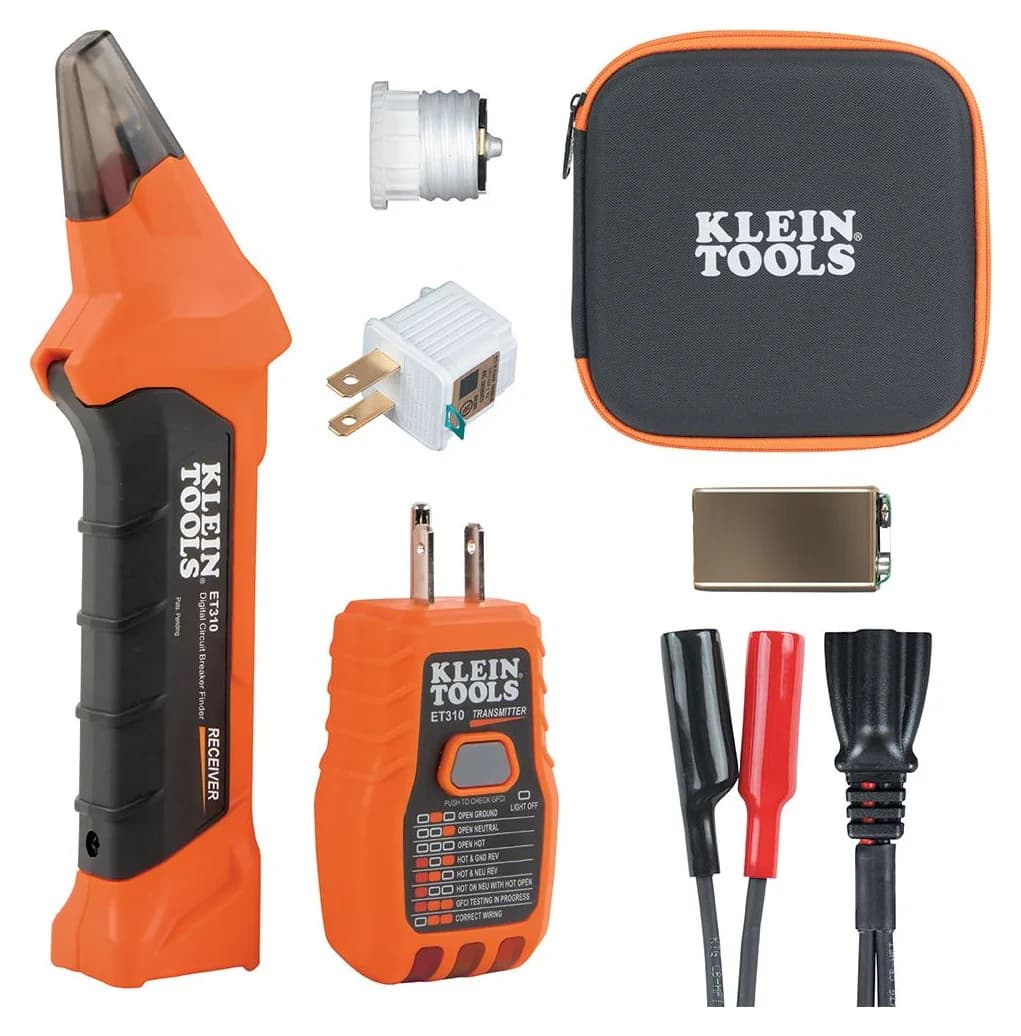
Choose a circuit breaker locator for outlet, lighting and panel jobs. Compare the Klein ET310, ET450, Fluke 2062 and IDEAL 61-535 kits before you buy.
Buying guide · Voltage & Outlet Testers
Breaker Finder Kit Buying Guide: Compare What Is Actually Included
Compare breaker finder kits by included transmitters, receivers, adapters, leads, batteries and cases, so you pay for the package your job needs.