

Best picks
AA Battery Testers: Alkaline, NiMH and 9 V Compatibility
Choose an AA battery tester by chemistry: compare ZTS alkaline, NiMH, lithium and 9 V support, case kits and when a multimeter gives you the answer you need.
By thisMETER EditorialUpdated November 2, 20268 min read1 picks
Our picks at a glance
- See on Amazon1
Voltage-check alternative
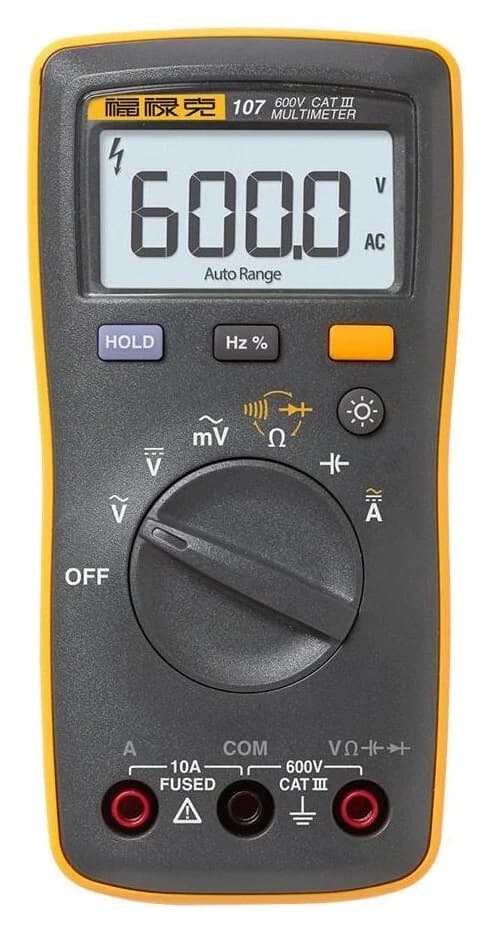
Fluke 107 Pocket Digital Multimeter600V max · 10A max · 6000 counts · CAT III 600V
For sorting AA and AAA alkaline or NiMH batteries, our default is the ZTS MINI-9RL, which also supports listed rechargeable 9 V types. Choose the MINI-MBT for its listed cylindrical lithium batteries, or the MBT-1 for lithium AA/AAA and coin cells. Use an existing multimeter for a voltage question, while keeping that reading separate from a capacity assessment.
Recommendations use official specifications and manuals, checked November 2, 2026; we have not physically evaluated these instruments.
thisMETER is reader-supported: when you buy through our links, we may earn a commission at no extra cost to you. As an Amazon Associate, thisMETER earns from qualifying purchases.
Quick picks
| Pick | Choose it for | Test method | Main buying trap |
|---|---|---|---|
| ZTS MINI-9RL | AA/AAA alkaline or NiMH, plus rechargeable 9 V | Pulse load; LED indication | No lithium AA/AAA or coin cells listed |
| ZTS MINI-MBT | AA/AAA plus CR123/CR2 and listed Li-ion cells | Pulse load; LED indication | Rechargeable 9 V is absent from its list |
| ZTS MBT-1 | The broadest size/chemistry coverage here | Pulse load; LED indication | Its 9 V list still says alkaline/carbon zinc |
| Fluke 107 | A voltage check and other meter work | DC voltage reading | A voltage reading is not a remaining-capacity percentage |
For vehicle starting batteries, use our car battery tester guide. This page selects tools for loose household cells.
Chemistry-by-size compatibility: read this before buying
Listed means the maker names that battery type; not listed means we would not buy that tester for it. The matrix follows the MINI-9RL list, MINI-MBT list and MBT-1 list, with the MBT-1 data sheet restricting its cylindrical Li-ion entry to non-regulated types.
| Battery chemistry and size | MINI-9RL | MINI-MBT | MBT-1 |
|---|---|---|---|
| 1.5 V alkaline: AA, AAA, C, D, N | Listed | Listed | Listed |
| 1.2 V NiMH/NiCd: AA, AAA, C, D | Listed | Listed | Listed |
| 9 V alkaline or carbon zinc | Listed | Listed | Listed |
| 9 V NiMH rechargeable; 8.4 V nominal specified for MINI-9RL | Listed | Not listed | Not listed |
| 9 V Li-ion rechargeable | Listed | Not listed | Not listed |
| 1.5 V primary lithium: AA L91, AAA L92 | Not listed | Not listed | Listed |
| 3 V cylindrical lithium: CR123, CR2 | Not listed | Listed | Listed |
| 3.6 V Li-ion: RCR123A, 18500, 17650, 18650 | Not listed | Listed | Listed; non-regulated type |
| 3 V lithium coin: CR2032, CR2025, CR2016 | Not listed | Not listed | Listed |
| 1.5 V button: LR44, A76, 357, 303 | Not listed | Not listed | Listed |
| 12 V alkaline: A23 | Not listed | Not listed | Listed |
AA size therefore does not establish support for lithium AA batteries: neither Mini lists the L91/L92 types. Regulated rechargeable lithium AA cells are also absent from these lists; don't substitute the alkaline or NiMH contact just because the battery fits. ZTS explicitly excludes lithium coin cells from the MINI-MBT's cylindrical-lithium terminal in its FAQ.
- Yes: Alkaline AA/AAA and NiMH AA/AAA: listed on all the ZTS picks
- Partly: Rechargeable 9 V: listed on MINI-9RL, absent from the other two lists
- No: Lithium AA/AAA: absent from both Mini lists
- No: MINI-MBT cylindrical-lithium contact: not for coin cells
Best default for AA/AAA and rechargeable 9 V: ZTS MINI-9RL
We would start here for a drawer of alkaline and NiMH cells, especially with rechargeable 9 V batteries alongside them. Its official list covers those chemistries explicitly, including 9 V Li-ion and NiMH; the NiMH entry specifies 8.4 V nominal. This is the reason for our recommendation, rather than a claim that it measures AA batteries better than the other picks.
ZTS specifies an approximately 2-second pulse-load cycle and a five-LED display. The tester needs four AAA batteries, supplied separately. Its limitation is the missing lithium AA/AAA, cylindrical-lithium and coin-cell coverage; choose another model when those formats are on your list.
Best compact option for cylindrical lithium: ZTS MINI-MBT
The MINI-MBT keeps the alkaline and NiMH/NiCd coverage and adds CR123/CR2 lithium plus the listed 3.6 V Li-ion formats: RCR123A, 18500, 17650 and 18650. Pick it when those cells matter more than rechargeable 9 V support.
It also uses four AAA batteries, supplied separately, with five LEDs and an approximately 2-second test. The trade-off is specific: its 9 V entry names alkaline and carbon zinc, not NiMH or Li-ion. Nor does the word “lithium” extend its compatibility to lithium AA/AAA, coin cells or phone battery packs; ZTS explicitly excludes phone packs in its FAQ.
Best for lithium AA/AAA, coin and button cells: ZTS MBT-1
The MBT-1 is our choice for a mixed collection: it adds L91/L92 lithium AA/AAA, listed lithium coin and button cells, and A23 alkaline batteries to the core household coverage. It uses four AA batteries, supplied separately, and a six-LED display; ZTS specifies 2–3 seconds, depending on battery type.
It does not replace the MINI-9RL for every task: rechargeable 9 V batteries are absent from its list. Its data sheet also says its listed cylindrical Li-ion cells must be non-regulated types.
One coverage conflict matters: the data sheet includes CRV3, while the product page and operating manual list CR123 and CR2 without CRV3. Obtain model-specific confirmation before buying it for CRV3.
Voltage-check alternative: Fluke 107
If you already own a multimeter, use it when the question is the battery's voltage. For a broader tool purchase, the Fluke 107 measures DC voltage and also offers resistance and continuity; its standard package includes TL75 leads, installed AAA batteries and a SmartStrap.
Fluke
Fluke 107 Pocket Digital Multimeter
A palm-size 6,000-count multimeter rated CAT III 600V that measures AC and DC voltage and current to 600 V and 10 A, plus resistance, capacitance, frequency and duty cycle; it is not True RMS.
Comes in 3 versions: see which to buy
- 600V max
- 10A max
- 6000 counts
- CAT III 600V
Follow its DC-voltage procedure and our multimeter tutorial for low-voltage checks. We would not buy it solely to obtain a battery-capacity percentage: its voltage function gives a voltage reading, not a capacity percentage. Energizer says open-circuit voltage is only a rough guide to remaining alkaline service life and describes a loaded closed-circuit voltage check as more accurate.
How we choose
We compared official compatibility lists, manuals, test methods and package contents. Awards express which documented feature fits each job; they do not rank measured accuracy. We use Energizer's battery handbooks to qualify capacity claims, retain disagreements between ZTS documents, and recommend only explicitly listed chemistry/size combinations. ZTS currently lists the household models as in stock on its product index.
See How we choose and How we measure for our research policy.
Buying guide: interpret the result and choose the package
Pulse load versus a voltage reading
ZTS says its testers examine whether a battery maintains specified voltage levels while delivering current, with load magnitude varying by battery type. Its LED percentage is the maker's remaining-capacity indication.
Energizer's alkaline handbook explains why a load matters: an open-circuit reading can mislead, and an appropriate loaded-voltage check gives a better indication. It also says commercial battery testers calibrate load and voltage for chemistry and size. That supports choosing a suitable test contact, rather than treating every small battery as interchangeable.
For rechargeables, keep expectations narrower. Energizer's NiMH handbook explains that the flat voltage plateau and other dependencies prevent accurate state-of-charge assessment by voltage sensing. Our interpretation: use the ZTS result to screen supported cells; these documents do not establish exact remaining mAh or guaranteed runtime. The MBT-1 manual also notes that usable capacity depends on discharge rate, temperature and cutoff voltage.
Tester only, OutFit or case only?
The maker's pages distinguish these packages; an OutFit adds a soft case rather than changing the tester's chemistry coverage.
| Tester only | OutFit kit number | Contents added by the kit |
|---|---|---|
| MINI-9RL | KT-MINI9RL | Soft case |
| MINI-MBT | KT-MINI | Soft case |
| MBT-1 | KT-MBT1 | Soft case |
The Mini data sheet identifies SC-MINI, and the MBT-1 data sheet identifies SC-MBT1, as case accessories with the tester excluded. Check the full package name before ordering a gift; the testers' internal batteries are separately required. Our electrician and engineer gift guide covers broader tool choices.
A holiday battery-sorting routine
Start with the compatibility matrix and the contact labels. The Mini manual says to keep terminals clean and maintain firm contact throughout the running LEDs; interrupted contact calls for waiting several seconds and restarting. For used cells, ZTS recommends two or more consecutive tests, several seconds apart, because rested batteries may recover. With the MBT-1, its manual recommends waiting at least 20 minutes off the charger before checking NiMH or Li-ion rechargeables.
Separate by chemistry and size
Match each cell to the maker's list and the correct labeled contact.
Maintain contact
Check clean terminals and hold firmly until the test cycle finishes.
Retest used cells
Make two or more consecutive checks, waiting several seconds between them.
Rest charged cells as directed
MBT-1 instructions specify at least 20 minutes off the charger for NiMH and Li-ion.
A low rechargeable result is a prompt to investigate. ZTS's FAQ names aging, incomplete charging and dirty contacts as possible reasons. If a Mini will not begin a test, its manual says to check internal-battery installation, contact and a known-good battery; a completely discharged cell may not start the cycle. Silence alone is therefore not a useful sorting verdict.
For alkaline-powered devices, Energizer advises replacing all used batteries together with new ones of the specified size and type. Sorting loose cells is not a reason to mix a partly used cell into a fresh replacement set.
Verdict
Choose MINI-9RL for alkaline/NiMH AA and AAA plus supported rechargeable 9 V batteries; choose MINI-MBT for its listed cylindrical lithium formats. Choose MBT-1 when lithium AA/AAA, coin or button cells justify its broader list, remembering that its rechargeable 9 V support is not established. Use a multimeter for voltage questions, and read every pulse-load percentage as a screening indication with the limits above.
Frequently asked questions
Which AA battery tester works with alkaline and NiMH batteries?
ZTS lists AA and AAA alkaline and NiMH/NiCd batteries for the MINI-9RL, MINI-MBT and MBT-1. Our default is the MINI-9RL when you also use rechargeable 9 V batteries. Choose the MINI-MBT for its listed cylindrical lithium formats, or the MBT-1 for lithium AA/AAA and coin cells. Select the contact for the battery's chemistry; an AA label alone does not establish compatibility.
Can I test rechargeable 9 V batteries with the MINI-MBT?
The MINI-MBT list specifies 9 V alkaline and carbon-zinc batteries; it does not list rechargeable 9 V types. The MINI-9RL explicitly supports 9 V Li-ion and NiMH rechargeables, with the NiMH type described as 8.4 V nominal on its product page. The MBT-1 also lists only alkaline and carbon zinc for its 9 V position. Choose by chemistry rather than the snap connector.
Will a battery tester tell me the exact capacity of a NiMH AA?
ZTS describes its LED result as a percentage of remaining capacity from a pulse-load test. Treat that as a screening indication rather than measured mAh or guaranteed runtime. Energizer explains that NiMH voltage sensing cannot accurately determine state of charge because of the flat voltage plateau and other dependencies. These documents give us no basis to promise exact capacity from a brief LED test.
Can the MINI-MBT test a CR2032 coin cell?
No: ZTS explicitly says the MINI-MBT's lithium terminal is for cylindrical batteries, not lithium coin cells. The MBT-1 lists CR2032 and has a designated coin-cell position. The MINI-9RL's list also omits coin cells. Match the exact battery code and chemistry to the compatibility list instead of treating equal nominal voltage or physical contact as permission to test.
Related guides
Battery Load Tester vs Conductance Tester: Which Do You Need?
Choose a battery load tester or conductance tester with clear picks, chemistry support, CCA limits and cooling rules, plus when a free shop test makes sense.
Updated November 2, 2026Read
Best Outlet and GFCI Testers (and What They Can't Tell You)
Outlet and GFCI testers compared: Klein's RT250 shows voltage and GFCI trip time, the RT210 shows lights. What each can and can't find, and how to test a GFCI.
Updated November 2, 2026Read
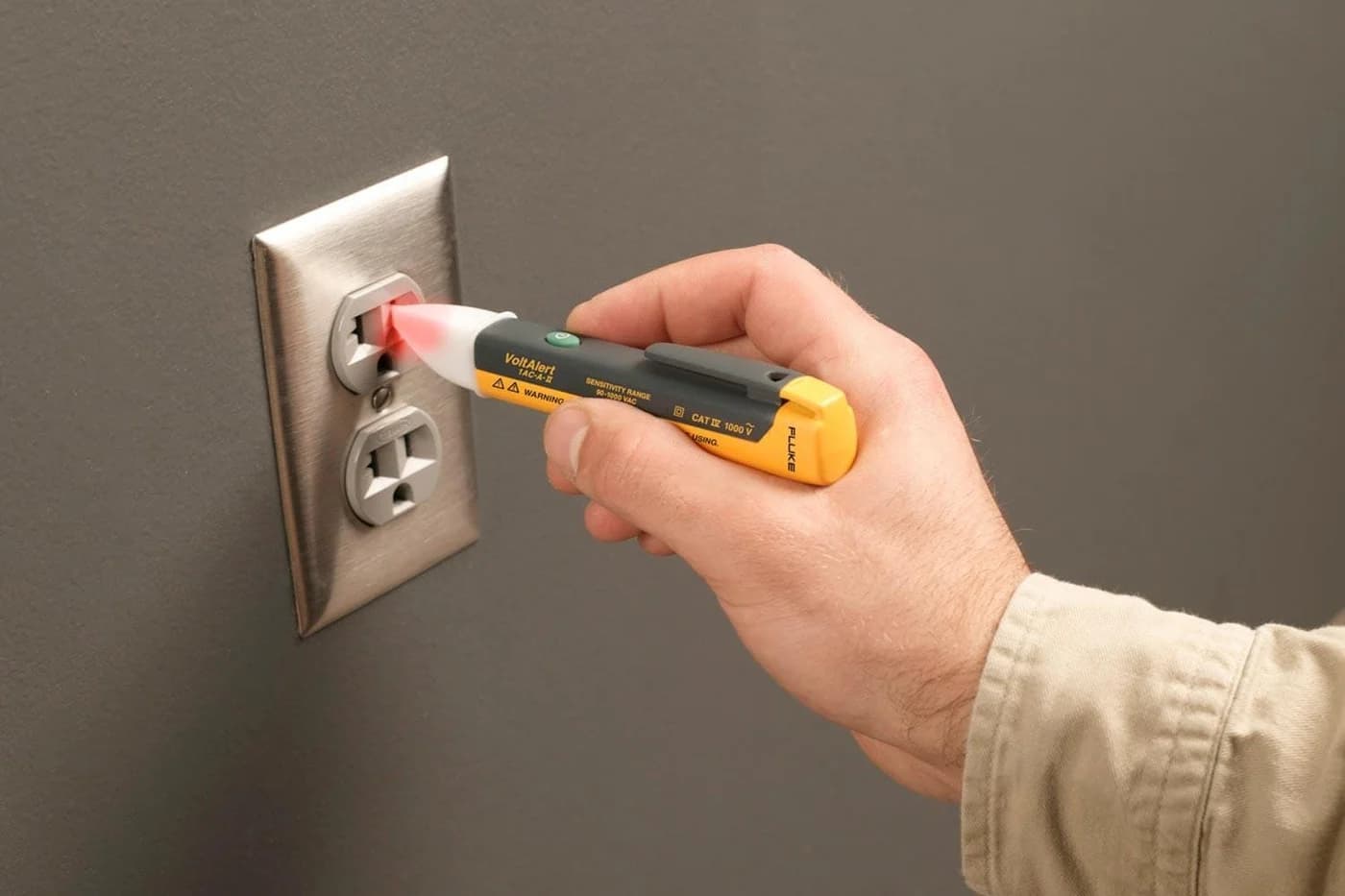
Best Non-Contact Voltage Testers (and Why Silence Doesn't Prove a Wire Is Dead)
Non-contact voltage testers picked by job: Klein's dual-range NCVT3P, the one-button NCVT1P and the self-testing Fluke 1AC II, plus what no pen can detect.
Updated November 2, 2026Read