

Comparison
Klein CL390 vs CL710
Which Klein Clamp Meter Should You Buy?
Choose the right Klein clamp meter: CL390 for HVAC microamps and temperature, CL710 for LoZ and higher ranges, with manual limits and buying traps explained.
By thisMETER EditorialUpdated November 3, 20268 min read2 picks
Our recommendation: Klein Tools CL390
DC microamps and contact temperature in one clamp meter
Limit: Rated CAT III 600V only: not for service-entrance (CAT IV) work
On this page · Our picks at a glance
Our picks at a glance
- 1
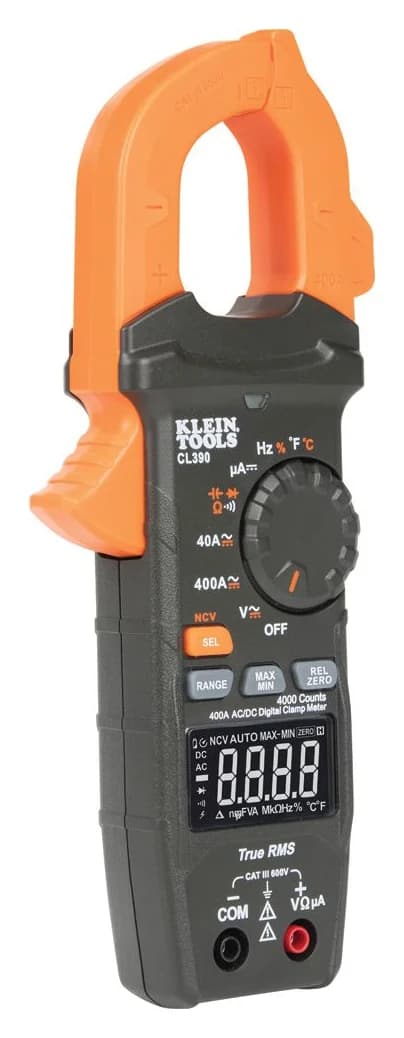
Choose for: DC microamps and contact temperature in one clamp meter
Limit: Rated CAT III 600V only: not for service-entrance (CAT IV) work
- 2
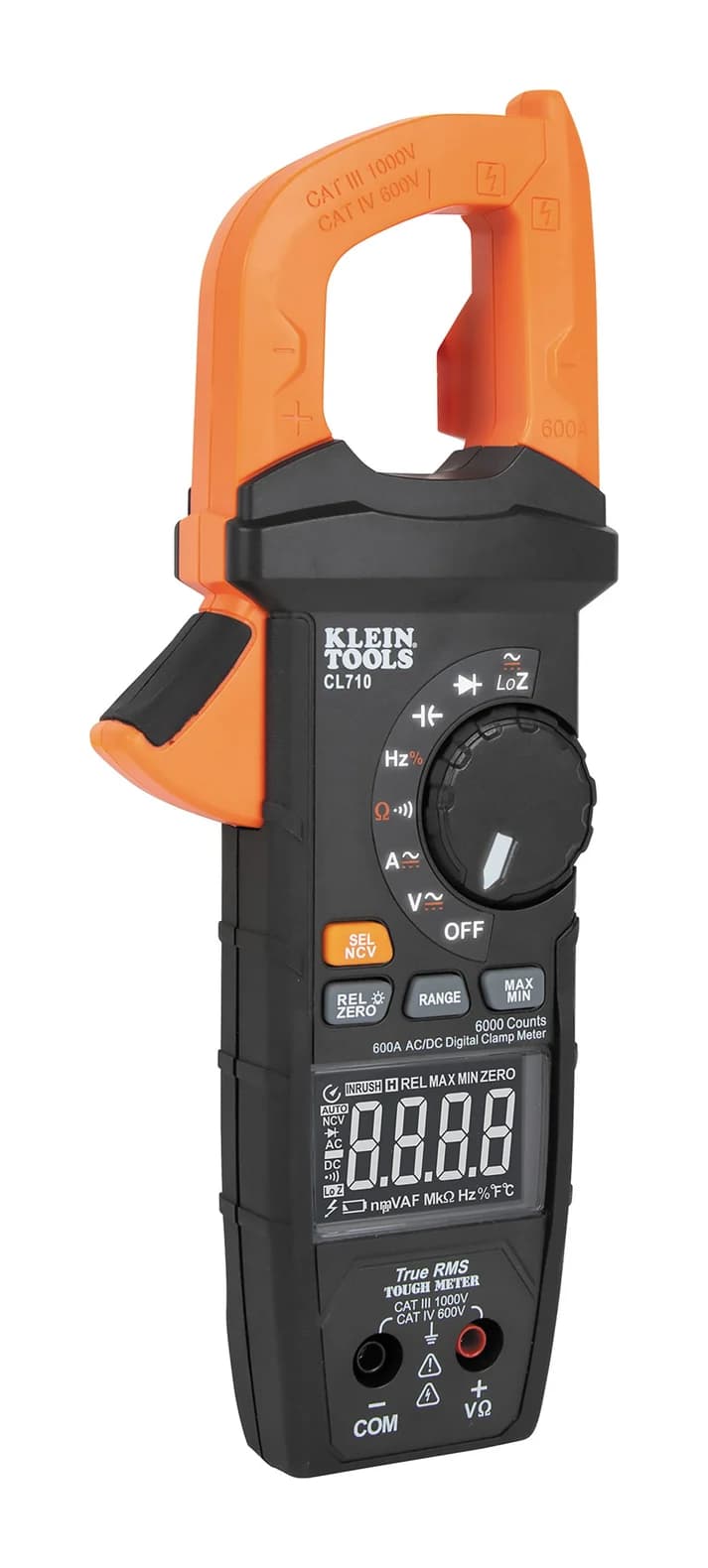
Choose for: LoZ, higher electrical ranges and an illuminated dial
Limit: No documented temperature or DC microamp function
Choose the Klein CL390 for HVAC work needing its 200 µA DC lead range and contact temperature measurement. Choose the CL710 for general electrical work needing 600 A AC/DC clamp current, LoZ and higher CAT markings; it gives up the CL390's documented microamp and temperature functions.
These are manufacturer specifications, checked against the CL390 manual and CL710 manual. Our recommendations follow the functions you need, rather than model-number order.
- 200 µA DCCL390's separate test-lead range
- 600 A AC/DCCL710's maximum specified clamp-current range
Quick picks
Compare specifications and all conditions
DC microamps and contact temperature in one clamp meter
- Our pick
- CL390
- The deciding trade-off
- Those functions are documented; LoZ is not
LoZ, higher electrical ranges and an illuminated dial
- Our pick
- CL710
- The deciding trade-off
- No documented temperature or DC microamp function
Keeping HVAC functions while adding LoZ
- Our pick
- Compare CL810 before switching
- The deciding trade-off
- A separate model with microamps, temperature, LoZ, inrush and a worklight
Full comparison table
Swipe to compare. Row labels stay visible.
| Your priority | Our pick | The deciding trade-off |
|---|---|---|
| DC microamps and contact temperature in one clamp meter | CL390 | Those functions are documented; LoZ is not |
| LoZ, higher electrical ranges and an illuminated dial | CL710 | No documented temperature or DC microamp function |
| Keeping HVAC functions while adding LoZ | Compare CL810 before switching | A separate model with microamps, temperature, LoZ, inrush and a worklight |
Scroll horizontally to see every column
| Your priority | Our pick | The deciding trade-off |
|---|---|---|
| DC microamps and contact temperature in one clamp meter | CL390 | Those functions are documented; LoZ is not |
| LoZ, higher electrical ranges and an illuminated dial | CL710 | No documented temperature or DC microamp function |
| Keeping HVAC functions while adding LoZ | Compare CL810 before switching | A separate model with microamps, temperature, LoZ, inrush and a worklight |
The first two are our comparison picks. The CL810 is an alternative to investigate if neither feature set fits. For a broader shortlist, see our best clamp meters.
CL390 vs CL710: specifications side by side
Klein's CL390 product page and CL710 product page supply the headline specifications below; the linked manuals supply current resolution and operating limits.
AC/DC clamp ranges
- Klein CL390
- 40 A and 400 A
- Klein CL710
- 60 A and 600 A
Lower-range current resolution
- Klein CL390
- 0.01 A
- Klein CL710
- 10 mA, equivalent to 0.01 A
Minimum clamp current
- Klein CL390
- 0.3 A AC or DC, per manual
- Klein CL710
- No minimum stated in current specification table
DC microamps through leads
- Klein CL390
- 200 µA range; 0.1 µA resolution
- Klein CL710
- No
Contact temperature
- Klein CL390
- −40 to 1000°C meter range; included probe only below 230°C
- Klein CL710
- No function documented; thermocouple bullet conflicts with specifications
LoZ voltage mode
- Klein CL390
- Not documented
- Klein CL710
- Yes; observe the manual's 600 V warning below
Regular AC/DC voltage range
- Klein CL390
- Up to 600 V
- Klein CL710
- Up to 1000 V
Display / True RMS
- Klein CL390
- 4,000 counts; reverse contrast; yes
- Klein CL710
- 6,000 counts; transflective reverse contrast; yes
Jaw opening, per product pages
- Klein CL390
- 1.6 in / 4.1 cm
- Klein CL710
- 1.4 in / 3.6 cm
CAT markings
- Klein CL390
- CAT III 600V
- Klein CL710
- CAT IV 600V / CAT III 1000V
Capacitance range maximum
- Klein CL390
- 4,000 µF
- Klein CL710
- 6,000 µF
Built-in non-contact voltage detection
- Klein CL390
- Yes, in jaw
- Klein CL710
- Yes, in jaw
Full comparison table
Swipe to compare. Row labels stay visible.
| Capability | Klein CL390 | Klein CL710 |
|---|---|---|
| AC/DC clamp ranges | 40 A and 400 A | 60 A and 600 A |
| Lower-range current resolution | 0.01 A | 10 mA, equivalent to 0.01 A |
| Minimum clamp current | 0.3 A AC or DC, per manual | No minimum stated in current specification table |
| DC microamps through leads | 200 µA range; 0.1 µA resolution | No |
| Contact temperature | −40 to 1000°C meter range; included probe only below 230°C | No function documented; thermocouple bullet conflicts with specifications |
| LoZ voltage mode | Not documented | Yes; observe the manual's 600 V warning below |
| Regular AC/DC voltage range | Up to 600 V | Up to 1000 V |
| Display / True RMS | 4,000 counts; reverse contrast; yes | 6,000 counts; transflective reverse contrast; yes |
| Jaw opening, per product pages | 1.6 in / 4.1 cm | 1.4 in / 3.6 cm |
| CAT markings | CAT III 600V | CAT IV 600V / CAT III 1000V |
| Capacitance range maximum | 4,000 µF | 6,000 µF |
| Built-in non-contact voltage detection | Yes, in jaw | Yes, in jaw |
Scroll horizontally to see every column
| Capability | Klein CL390 | Klein CL710 |
|---|---|---|
| AC/DC clamp ranges | 40 A and 400 A | 60 A and 600 A |
| Lower-range current resolution | 0.01 A | 10 mA, equivalent to 0.01 A |
| Minimum clamp current | 0.3 A AC or DC, per manual | No minimum stated in current specification table |
| DC microamps through leads | 200 µA range; 0.1 µA resolution | No |
| Contact temperature | −40 to 1000°C meter range; included probe only below 230°C | No function documented; thermocouple bullet conflicts with specifications |
| LoZ voltage mode | Not documented | Yes; observe the manual's 600 V warning below |
| Regular AC/DC voltage range | Up to 600 V | Up to 1000 V |
| Display / True RMS | 4,000 counts; reverse contrast; yes | 6,000 counts; transflective reverse contrast; yes |
| Jaw opening, per product pages | 1.6 in / 4.1 cm | 1.4 in / 3.6 cm |
| CAT markings | CAT III 600V | CAT IV 600V / CAT III 1000V |
| Capacitance range maximum | 4,000 µF | 6,000 µF |
| Built-in non-contact voltage detection | Yes, in jaw | Yes, in jaw |
The higher-current meter has the smaller jaw. Check conductor fit separately from electrical range; the CL710's larger current ceiling does not make it physically roomier.
Best for HVAC functions: Klein Tools CL390
Klein Tools
A 4,000-count True RMS clamp meter that measures AC and DC current to 400 A, voltage to 600 V and DC microamps, with non-contact voltage detection in the jaw and a thermocouple for temperature.
Check package and model options
- 600 V max
- 400 A max
- 4,000 counts
- CAT III 600V
The CL390 is our pick when the reason for buying is a missing microamp or temperature function. Klein documents AC/DC clamp current up to 400 A, voltage up to 600 V, a 200 µA DC lead range, K-type temperature, capacitance, continuity and diode testing. You can keep that collection of functions without assuming that a higher model number retains them.
Its temperature headline needs qualification. The meter's specified range reaches 1000°C, but the current manual limits the supplied thermocouple to temperatures below 230°C / 446°F. Higher temperatures require an appropriately rated K-type probe. The meter range alone does not establish what the included probe can tolerate. See the temperature instructions.
The main sacrifice is LoZ: Klein documents no such mode for the CL390. Its safety marking is CAT III 600V. If LoZ is already the feature you miss, buying this model will not fill that gap.
Best for general electrical work: Klein Tools CL710
Klein Tools
A 6,000-count True RMS clamp meter that measures AC and DC current to 600 A and voltage to 1000 V, with a low-impedance mode and non-contact voltage detection in the jaw.
Check package and model options
- 1,000 V max
- 600 A max
- 6,000 counts
- CAT IV 600V, CAT III 1000V
Choose the CL710 when higher ranges and LoZ solve your actual problem. Its documented ceilings are 600 A AC/DC and 1000 V AC/DC in the regular voltage function, with CAT IV 600V / CAT III 1000V markings. Klein also lists an illuminated dial and a transflective reverse-contrast display. That is a useful combination if your temperature and microamp needs are already covered elsewhere.
Does the CL710 really include temperature?
The CL710 page contradicts itself. A feature bullet includes a thermocouple, but the specification table shows a dash for temperature range, says “No” for DC microamps, and omits a thermocouple from its included-items list. The manual provides no temperature or microamp measurement function.
Our buying recommendation is to treat both functions as unavailable. Do not buy a thermocouple expecting it to add an undocumented temperature mode. For the combination of these functions with LoZ, investigate the separately specified CL810.
Jaw amps and lead microamps are different measurements
Both meters measure AC and DC amps with their jaws. The CL390's 200 µA DC function instead uses test leads connected in series, according to its manual; its instructions prohibit more than 200 µA on that function. It is not a general-purpose amp input through the leads.
That distinction explains the HVAC pick. Fluke's HVAC clamp manual identifies DC microamps as a flame-rod test function and directs technicians to the heating equipment's documentation for the desired value. Our HVAC recommendation applies that task requirement to Klein's documented functions.
For jaw measurements, the CL710 manual specifies a single conductor, rather than a cable containing both live and neutral wires. It identifies a line splitter as the accessory for that situation. Follow the meter and equipment manuals; the clamp meter vs multimeter guide covers the broader tool choice.
Small current: resolution, accuracy and zeroing
The CL390's 40 A range resolves 0.01 A; the CL710's 60 A range resolves 10 mA. Those are the same display increment. The CL710's extra display counts therefore do not provide a finer lower-range current step.
The manuals specify lower-range AC/DC current accuracy as ±(2.0% of reading + 9 digits) for the CL390 and ±(2.0% + 8 digits) for the CL710. “Digits” means increments of the least significant displayed digit, added to the percentage allowance. At small readings, that allowance matters: display resolution is not a promise of equally small measurement error.
Klein explicitly gives the CL390 a 0.3 A AC/DC minimum measurable clamp current. The CL710 current specification table does not supply an equivalent minimum. A 10 mA display step alone is insufficient evidence that it measures a load that small accurately. For small battery-drain work, choose an instrument whose specified low-current performance fits the task.
Both manuals describe DC zeroing to subtract a displayed offset before a current measurement. The CL710 manual requires repeating the procedure if the DC current range changes. The CL390 manual adds an easily missed restriction: do not use DC current with a magnetic hanger attached, because the magnet can interfere. Follow the relevant manual's zeroing instructions.
Also keep the frequency specifications separate. Both manuals give 50–60 Hz for AC clamp-current specifications and 45–400 Hz for AC voltage. Do not apply the wider voltage bandwidth to jaw-current accuracy. These are Klein's stated limits, not measurements by thisMETER.
LoZ and CAT markings: read the limits together
Klein describes the CL710's LoZ mode as a way to identify and eliminate ghost or stray voltages. It is a distinct voltage function, with its own accuracy specifications in the manual.
The same manual defines CAT III around the distribution part of a building's low-voltage mains installation and CAT IV at its source. The CL710's markings are CAT IV 600V / CAT III 1000V; the CL390 is CAT III 600V. Match both the category and voltage to the work, and follow the lead-shield requirements in each manual. Leave panel and service-equipment work to a licensed electrician.
Both have non-contact detection, but Klein warns that voltage may still be present when it gives no indication. Treat NCV as an indication feature, not proof that a circuit is safe to touch.
Variants, boxes and nearby model names
Check the exact model and accessory list before ordering:
- CL390 standard package: Klein lists a carrying case, test leads with CAT III/CAT IV caps, a thermocouple, instructions and three AAA batteries. The magnetic hanger is optional.
- CL710 standard package: the specification list includes right-angle input test leads, a storage pouch, instructions and three AAA batteries. The thermocouple conflict above is a reason to use the documented functions, rather than the accessory bullet, as your buying criterion.
- CL810: a separate meter, not a CL710 accessory bundle. Its official specifications include DC microamps, temperature, LoZ, inrush measurement and an integrated worklight. A lighted CL710 dial does not supply those functions.
- CL380: an older model. Klein's CL380 page says it is no longer in production and identifies the CL390 as the newer model. Check the model printed on the meter when comparing bundles.
Buying guide: what switching actually changes
For an existing CL390 owner considering the CL710, the documented changes are:
- Yes: Gain LoZ and an illuminated dial
- Yes: Gain higher current and voltage ranges and higher CAT markings
- No: Give up documented DC microamp and contact-temperature functions
- Partly: Check conductor fit: the CL710 has the smaller specified jaw opening
Keep the CL390 if temperature and microamps are the functions you would otherwise have to replace. Choose the CL710 if those are covered and LoZ or its electrical ranges fill a real gap. If you need both collections of functions in the same instrument, compare the CL810 before buying either.
How we choose
This comparison uses Klein's official product pages, the manuals linked from those pages and its clamp-meter selection guide. We checked function lists, range tables, included accessories and specific operating warnings, and retained the document conflicts that could change a buying decision. Fluke's manual supplies the application context for flame-rod microamps. We have not physically tested these meters; accuracy and ratings are manufacturer specifications. See How we choose and How we measure for the site's approach.
Verdict
Buy the CL390 for its microamp and temperature functions. Buy the CL710 for LoZ, higher electrical ranges and its CAT markings. Existing CL390 owners should treat the CL710 as a change in capabilities: confirm which functions your work needs before replacing the meter.
Frequently asked questions
Which Klein clamp meter is better for HVAC, CL390 or CL710?
Our pick between these two is the CL390 because its documented functions include DC microamps through test leads, contact temperature and capacitance. The CL710 offers LoZ and higher clamp-current and voltage ranges, but its specification table says no DC microamps and gives no temperature range. If you need both sets of functions, compare the separate CL810 model.
Does the Klein CL710 measure temperature?
Klein's CL710 feature bullets mention an included thermocouple, but the same page's specifications show no temperature range and omit the thermocouple from the included-items list. Its manual also documents no temperature function. We would not buy the CL710 for temperature measurement; choose a model whose manual explicitly supports it, such as the CL390 or CL810.
Can the CL390 or CL710 measure small battery drain?
Do not choose either solely from its display increments. Klein specifies a 0.3 A minimum clamp current for the CL390. The CL710's lower range displays 10 mA increments, but its current table gives no equivalent minimum-current specification. The CL390's separate 200 µA DC lead input has a different connection method and limit; it is not a general battery-drain current input.
Is the CL710 a direct upgrade from the CL390?
It depends on the missing capability. The CL710 adds LoZ, higher current and voltage ranges, a lighted dial and higher CAT markings. It gives up the CL390's documented DC microamp and temperature functions, and Klein lists a smaller jaw opening. Keep the CL390 if those lead functions matter more than the CL710's additions.
Klein Tools CL390
AmazonRelated guides
Comparison · Clamp Meters
Milwaukee 2235 vs 2236 vs 2237: Which Clamp Meter Fits?
Choose a Milwaukee clamp multimeter: compare 2235-20, 2236-20 and 2237-20 for AC/DC jaw current, HVAC microamps, temperature, probe limits and package contents.
Best picks · Clamp Meters
Best DC Clamp Meters for Cars, RVs and Battery Systems
Choose a DC clamp meter by its useful low-current range, accuracy and jaw size. Compare Fluke, Klein and Amprobe for car, RV and battery checks before buying.
Buying guide · Clamp Meters
How to Use a Clamp Meter: AC, DC Zeroing and Wrong Readings
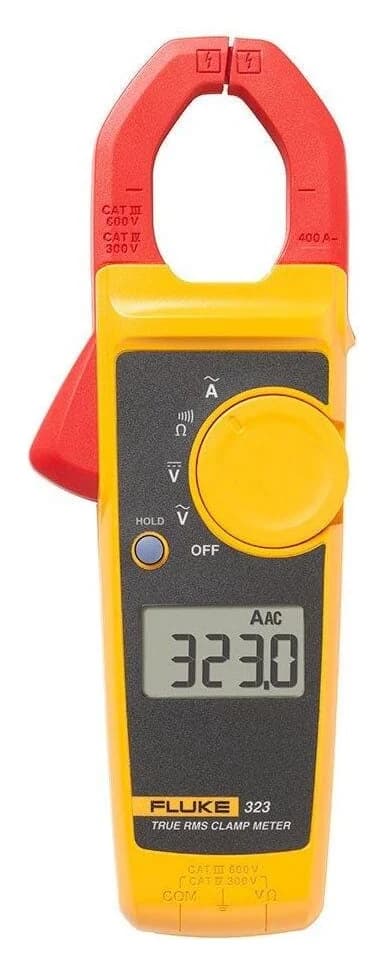
Learn how to use a clamp meter for AC and DC current: choose jaws or leads, zero DC offset, use a line splitter, and troubleshoot zero or unstable readings.