

Buying guide
USB Electronic Loads for Charger Testing
Choose the Complete Kit
Choose a USB tester kit that actually loads a charger. Compare Siglent and B&K loads, PD triggers, cable limits, logging and the wiring each setup still needs.
By thisMETER EditorialUpdated November 3, 20268 min read1 pick
On this page · Our picks at a glance
Our picks at a glance
- 1
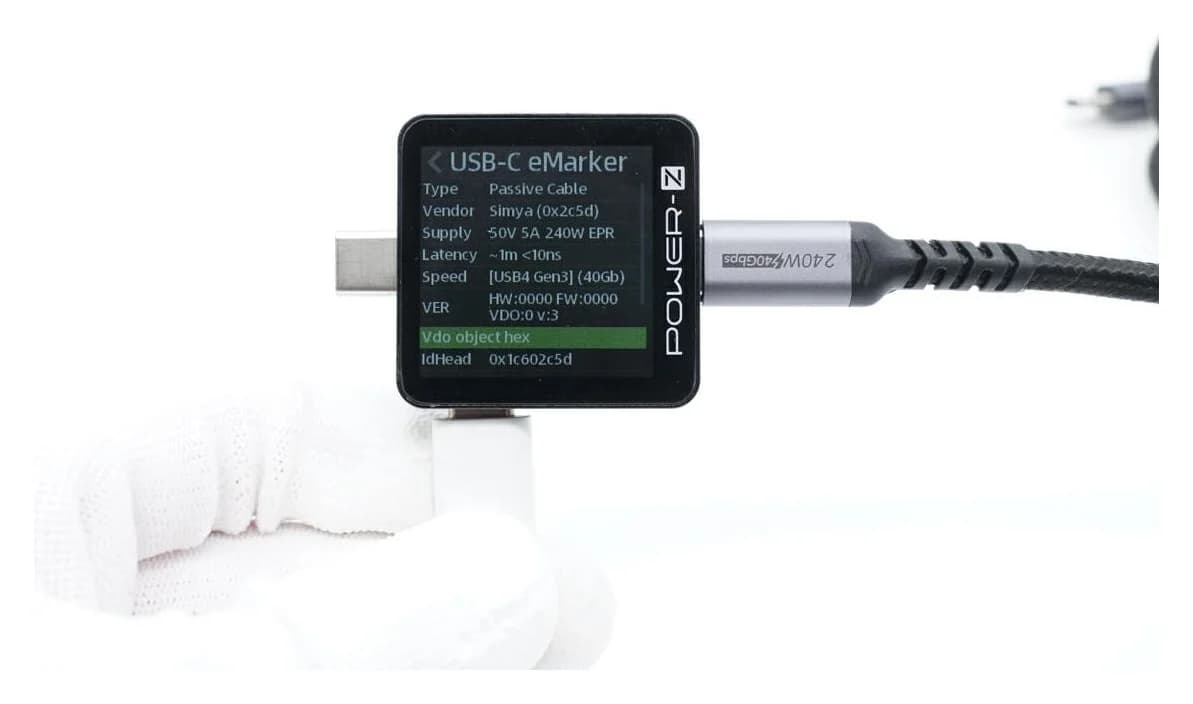
Choose for: Read USB voltage, current, PDOs and cable identity
Check before buying: No reverse-voltage protection, per ChargerLAB's manual
For repeatable USB charger loading, start with the Siglent SDL1020X, a 200 W bench load, and add a POWER-Z SINK240 PD trigger/breakout plus a properly terminated cable fixture. Choose the 150 W B&K Precision 8600 when it fits an existing bench workflow; add the KM003C for USB readout and protocol work. These are recommendations from Siglent's specifications, B&K's model table and ChargerLAB's trigger documentation, not physical test results.
Quick picks: buy the functions your test needs
Compare specifications and all conditions
Hold a repeatable load or run load steps
- Pick
- SDL1020X
- Buying condition
- Include the PD trigger, USB cable and DC harness
Extend an existing B&K workflow
- Pick
- 8600, without a suffix
- Buying condition
- Its lower power ceiling and conflicting GPIB documentation matter
Request USB PD voltages and expose DC outputs
- Pick
- SINK240
- Buying condition
- A trigger board still needs a separate load and terminated leads
Read USB voltage, current, PDOs and cable identity
- Pick
- KM003C
- Buying condition
- Optional alongside the load's own readback; PC needed for its PC analysis
Full comparison table
Swipe to compare. Row labels stay visible.
| Your job | Pick | Buying condition |
|---|---|---|
| Hold a repeatable load or run load steps | SDL1020X | Include the PD trigger, USB cable and DC harness |
| Extend an existing B&K workflow | 8600, without a suffix | Its lower power ceiling and conflicting GPIB documentation matter |
| Request USB PD voltages and expose DC outputs | SINK240 | A trigger board still needs a separate load and terminated leads |
| Read USB voltage, current, PDOs and cable identity | KM003C | Optional alongside the load's own readback; PC needed for its PC analysis |
Scroll horizontally to see every column
| Your job | Pick | Buying condition |
|---|---|---|
| Hold a repeatable load or run load steps | SDL1020X | Include the PD trigger, USB cable and DC harness |
| Extend an existing B&K workflow | 8600, without a suffix | Its lower power ceiling and conflicting GPIB documentation matter |
| Request USB PD voltages and expose DC outputs | SINK240 | A trigger board still needs a separate load and terminated leads |
| Read USB voltage, current, PDOs and cable identity | KM003C | Optional alongside the load's own readback; PC needed for its PC analysis |
The Siglent operating-mode description explains that CC sinks a set current and CP dissipates a set power. SINK240 requests the supply profile; KM003C provides readout and protocol functions. Keep those roles distinct:
- Yes: Load: creates the controlled current demand
- Yes: PD trigger: requests an available supply profile
- Yes: Meter: reports electrical values and protocol information
- Partly: One instrument may combine functions; check its documented operating mode
If the question is simply what your phone draws, start with our USB-C power-meter guide. Buy a load when you want to choose the demand yourself.
Best starting bench load: Siglent SDL1020X
The North American SDL1020X package offers 150 V, 30 A and 200 W input limits, remote sense, and USB/LAN/RS232 control. Its dynamic modes include CC up to 25 kHz and CP up to 12.5 kHz. Those are separate mode limits, not a promise of arbitrary full-scale steps at the headline frequency.
Choose the exact suffix. The detailed datasheet gives SDL1020X voltage readback resolution of 0.1 mV on the 36 V range, becoming 1 mV on the 150 V range, and 0.1 mA current readback. SDL1020X-E gives 1 mV / 1 mA readback. Both have 1 mA CC programming resolution; their CC programming accuracy differs too. Readback resolution is neither setting resolution nor accuracy. Choose X-E if those specifications meet your tolerances; choose X when finer readback justifies the upgrade.
The shop's feature list repeats CR where its description lists CP; the description and datasheet document CC/CV/CR/CP.
The standard package lists a power cord, USB cable, calibration certificate and quick-start guide. The SDL-Cable power leads are optional; the datasheet specifies M6/M6 terminals, so do not assume they attach directly to a USB trigger board. View the exact SDL1020X package.
Alternative for an existing bench: B&K Precision 8600
The 8600 model row specifies 120 V, 30 A, 150 W and one channel. B&K documents CC/CV/CR/CW operation, CC transients up to 25 kHz, list operation, remote voltage sensing, USBTMC and RS232. Choose it for a workflow built around those interfaces and controls; it offers less dissipation capacity than SDL1020X.
8600 and 8600B need separate purchase checks. The current datasheet's ordering table puts 8600 under “With GPIB” and 8600B under “Without GPIB.” The linked manual instead says GPIB is for “B series only.” Get written confirmation of the exact interface configuration if GPIB is the reason to buy.
Readback documents conflict as well: the datasheet gives 0.1 mV / 1 mV voltage resolution by range; the manual gives 1 mV / 10 mV. Neither is settled here. The manual's package list names the load, power cord and calibration certificate; do not assume power leads or a PC cable are included. View B&K's exact 8600 page.
PD trigger and breakout: POWER-Z SINK240
SINK240 combines PD negotiation with Type-C input/output and positive/negative output terminals. It supports fixed EPR profiles through 48 V, with button-operated profile selection. It is a component for a load fixture, not the dissipative load.
Its limitations matter for programmable-supply work. The maker describes PPS polling sequences rather than a general precision voltage setpoint interface, and explicitly marks its AVS mode unusable at present despite broad PD support wording. Choose a documented programmable controller for arbitrary PPS or AVS sweeps. Here, use SINK240 for its documented fixed-profile selection. View the trigger board.
Optional USB readout: ChargerLAB POWER-Z KM003C
ChargerLAB
A USB-C power tester and USB PD protocol analyzer rated to 50 V and 6 A (240 W in PD) that reads cable e-markers, lists a charger's power profiles, detects and triggers fast-charge protocols, and logs to PC software.
Check package and model options
- 240 W max
- 50 V max
- 6 A max
- USB PD 3.2 (EPR, AVS), QC4+, QC5, AFC, FCP, SCP, PE, UFCS and more
The KM003C page lists voltage/current measurement, PDO and e-marker tests, 50 V / 6 A, and 240 W in PD. Those are tester capabilities; they do not increase the load or cable ratings.
ChargerLAB also documents an independent PC protocol-trigger module. That does not establish an interchangeable bare-wire connection kit. For the fixture below, leave KM003C in passive readout mode and let SINK240 negotiate. Its manual requires downstream devices disconnected before the charging-protocol scan; never run that scan through the assembled fixture.
The support FAQ recommends Windows 10 or later and describes driver installation with the PC software; the manual calls the HID port driver-free and describes macOS software as in development. Plan on the supported Windows route for PC analysis. Check price on Amazon.
Compare the usable operating envelope
All voltage, current and power limits apply together. The low-voltage limits below come from the Siglent datasheet and B&K manual.
SDL1020X
- Maximum V / A / W
- 150 V / 30 A / 200 W
- Minimum operating voltage at stated current
- 0.15 V at 5 A; 0.9 V at 30 A
- Control and changing-load functions
- USB/LAN/RS232; CC and CP dynamic modes; list operation
8600
- Maximum V / A / W
- 120 V / 30 A / 150 W
- Minimum operating voltage at stated current
- 0.11 V at 3 A; 1.1 V at 30 A
- Control and changing-load functions
- USBTMC/RS232; CC transients; list operation; confirm GPIB
Full comparison table
Swipe to compare. Row labels stay visible.
| Load | Maximum V / A / W | Minimum operating voltage at stated current | Control and changing-load functions |
|---|---|---|---|
| SDL1020X | 150 V / 30 A / 200 W | 0.15 V at 5 A; 0.9 V at 30 A | USB/LAN/RS232; CC and CP dynamic modes; list operation |
| 8600 | 120 V / 30 A / 150 W | 0.11 V at 3 A; 1.1 V at 30 A | USBTMC/RS232; CC transients; list operation; confirm GPIB |
Scroll horizontally to see every column
| Load | Maximum V / A / W | Minimum operating voltage at stated current | Control and changing-load functions |
|---|---|---|---|
| SDL1020X | 150 V / 30 A / 200 W | 0.15 V at 5 A; 0.9 V at 30 A | USB/LAN/RS232; CC and CP dynamic modes; list operation |
| 8600 | 120 V / 30 A / 150 W | 0.11 V at 3 A; 1.1 V at 30 A | USBTMC/RS232; CC transients; list operation; confirm GPIB |
Source: Manufacturer input ratings in the linked datasheet and manual
USB-IF identifies 28 V / 140 W, 36 V / 180 W and 48 V / 240 W fixed EPR levels. Comparing those with the load ratings: both loads accommodate the nominal 140 W point, only SDL1020X accommodates 180 W, and neither accommodates full 240 W. These are specification comparisons, conditional on a suitable trigger, cable and completed fixture. The 300 W SDL1030X is a different load variant, not an SDL1020X software setting.
Buying guide: build and quote the whole fixture
Use this power path: charger → optional passive KM003C → EPR-rated USB-C cable → SINK240 input → its +/− outputs → terminated DC harness → load inputs. This is our proposed integration of the documented interfaces, not a maker-certified bundle or a physically validated assembly.
Load
- Concrete choice or requirement
- Exact SDL1020X or 8600 package above
- What remains to arrange
- Match local AC supply using its manual
Trigger and breakout
- Concrete choice or requirement
- SINK240; use its +/− outputs
- What remains to arrange
- Proper output termination, insulation and strain relief
USB power cable
- Concrete choice or requirement
- Plugable USBC-240W-1M, rated 48 V / 5 A
- What remains to arrange
- Keep within the actual advertised charger profile
DC harness
- Concrete choice or requirement
- Red/black Pomona 6733 wire, 18 AWG, maker-rated 20 A
- What remains to arrange
- Have it terminated for the board and the chosen load; wire rating does not rate the finished assembly
Optional USB measurement
- Concrete choice or requirement
- KM003C
- What remains to arrange
- HID data cable and PC for its PC analysis
Optional voltage sensing
- Concrete choice or requirement
- Separate sense pair to the chosen measurement point
- What remains to arrange
- Wire and enable sense exactly as the load manual specifies
Full comparison table
Swipe to compare. Row labels stay visible.
| Order line | Concrete choice or requirement | What remains to arrange |
|---|---|---|
| Load | Exact SDL1020X or 8600 package above | Match local AC supply using its manual |
| Trigger and breakout | SINK240; use its +/− outputs | Proper output termination, insulation and strain relief |
| USB power cable | Plugable USBC-240W-1M, rated 48 V / 5 A | Keep within the actual advertised charger profile |
| DC harness | Red/black Pomona 6733 wire, 18 AWG, maker-rated 20 A | Have it terminated for the board and the chosen load; wire rating does not rate the finished assembly |
| Optional USB measurement | KM003C | HID data cable and PC for its PC analysis |
| Optional voltage sensing | Separate sense pair to the chosen measurement point | Wire and enable sense exactly as the load manual specifies |
Scroll horizontally to see every column
| Order line | Concrete choice or requirement | What remains to arrange |
|---|---|---|
| Load | Exact SDL1020X or 8600 package above | Match local AC supply using its manual |
| Trigger and breakout | SINK240; use its +/− outputs | Proper output termination, insulation and strain relief |
| USB power cable | Plugable USBC-240W-1M, rated 48 V / 5 A | Keep within the actual advertised charger profile |
| DC harness | Red/black Pomona 6733 wire, 18 AWG, maker-rated 20 A | Have it terminated for the board and the chosen load; wire rating does not rate the finished assembly |
| Optional USB measurement | KM003C | HID data cable and PC for its PC analysis |
| Optional voltage sensing | Separate sense pair to the chosen measurement point | Wire and enable sense exactly as the load manual specifies |
The Pomona wire datasheet supports that wire choice. This is an assembly project: the fetched SINK240 documentation does not establish an included ready-made DC harness. Do not order it expecting a USB-to-banana cable in the box. B&K's input-connection instructions specify screw binding posts and ring adapters with holes greater than 6 mm; match the actual load end rather than assuming one universal adapter.
For total kit cost, request a combined quote for load + trigger + USB cable + completed harness, then add optional readout, sense leads and waveform equipment. Credit equipment you already own.
Both loads support front-panel operation. Siglent supplies a USB cable and offers EasySDL and drivers; confirm host compatibility before relying on its application. B&K's manual requires a USB-A to USB-B cable and USBTMC driver for PC connection, while its product page lists software with and without LabVIEW runtime. Keep these control connections separate from the USB power path.
Assemble with power disconnected
Match polarity and terminal ratings; secure the trigger and harness before energizing.
Select the advertised profile
Keep the load input off while selecting voltage, then verify the actual voltage before drawing current.
Start with constant current
Begin low; stay within the source profile and every fixture rating, then record voltage and actual current.
Repeat the same conditions
Save profile, current, dwell, cable, sense location and firmware alongside the readings.
Static loading, transients and measurement location
Use CC to compare voltage at a fixed current; use CP/CW when constant power is the intended demand. Because power equals voltage times current, constant-power demand calls for more current as voltage falls: set suitable limits rather than treating CP as an unrestricted stress test. Both makers document these modes in the linked manuals.
For changing loads, specify both levels, dwell times and slew rate. B&K's datasheet warns that fast pulse trains with large transitions may be unachievable. Siglent's load-step application note uses an oscilloscope and current probe to observe response. Budget for suitable waveform equipment when overshoot, ringing or settling is the question; a power log alone is insufficient evidence of transient behavior.
Both loads offer remote voltage sensing to account for lead drop. Label your measurement point: load posts, trigger output or charger output. Sensing at the trigger output does not remove the upstream USB cable from the measurement path. For cable diagnosis, our USB-C cable-tester guide explains the separate purchase.
How we choose
We compared official North American product pages, detailed datasheets, manuals and support documentation. Recommendations prioritize the complete power path, useful operating ranges and documented dependencies. Conflicting documents remain flagged; these are research-based picks without physical validation. See how we choose.
Verdict
Choose SDL1020X + SINK240 + the completed fixture as the starting bench system. Choose 8600 for an existing B&K workflow after resolving its suffix and documentation; add KM003C when USB protocol visibility earns its place. Keep the simpler inline-meter purchase when observing an existing device answers the question, and choose a higher-power load when full 240 W absorption is required.
Frequently asked questions
Can a USB tester load a charger by itself?
Check which function the product supplies. The KM003C measures USB power and can request charging protocols; the SDL1020X and 8600 are programmable loads that draw current. Our suggested fixture uses SINK240 for negotiation and DC breakout, a bench load for controlled demand, and KM003C optionally for USB readout. A requested current allowance does not replace a load setting.
Can these loads test a 240 W USB-C charger?
They can test lower-power operating points, but neither can absorb the full 240 W output on one port: SDL1020X is rated 200 W and 8600 is rated 150 W. A 240 W cable, meter or trigger does not raise those limits. USB-IF identifies 48 V as the fixed-voltage profile for 240 W; the entire fixture must support the selected profile.
Is SDL1020X-E the same as SDL1020X?
They share the 200 W input rating, but the detailed Siglent datasheet gives different readback specifications. SDL1020X has finer voltage readback on its low voltage range and finer current readback; the CC programming accuracy also differs. Both specify a 1 mA CC setting resolution. Choose by the exact range and accuracy table, rather than interpreting the finer display as a smaller programmable current step.
Do I need a computer or an oscilloscope?
Basic static and dynamic load operation is available from the bench instruments' front panels. KM003C's PC software is needed for its PC logging and protocol analyzer, and ChargerLAB recommends Windows 10 or later. For voltage overshoot, ringing and settling after a load step, budget for an oscilloscope and suitable probes; Siglent's application note demonstrates those measurements separately from setting the load.
Related guides
Comparison · USB-C Power Meters
FNIRSI FNB48P vs FNB58: Which USB Tester and Software?
Choose between FNIRSI FNB48P and FNB58 USB testers. Compare connectors, Bluetooth packages, Windows software, cable tests and conflicting power specifications.
Comparison · USB-C Power Meters
AVHzY CT-3 vs POWER-Z KM003C: Which USB Multimeter and Load Kit?
Compare AVHzY CT-3 and POWER-Z KM003C USB multimeters for EPR, offline logging, PC software and load kits. Avoid accessory mismatches and voltage-limit traps.
Comparison · USB-C Power Meters
Plugable VAMETER3 vs METER3-1MF: Which USB-C Power Meter?
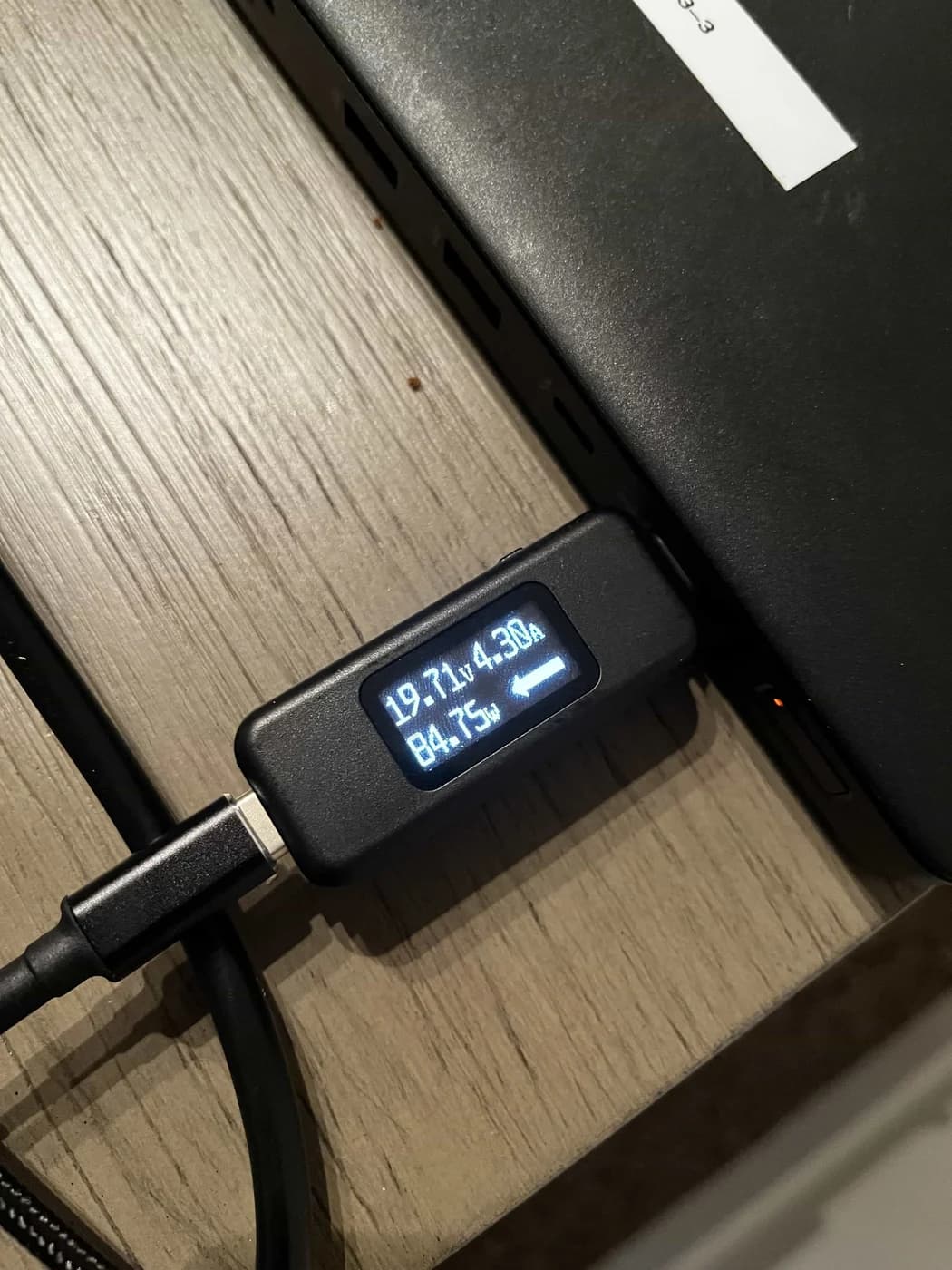
Choose between Plugable's detachable VAMETER3 and METER3-1MF meter cable, with clear advice on reach, displays, 240W charging, data, video and PD analysis.