

Best picks
Best Multimeters for Automotive Work
Batteries, Sensors and RPM
Choose an automotive multimeter for voltage drop, sensors, RPM and small currents. Compare Klein, Innova and Fluke, kit contents and DC clamp limitations too.
By thisMETER EditorialUpdated November 3, 20268 min read2 picks
Our recommendation: Klein Tools MM420
DC voltage, voltage drop and small-current work
Limit: Frequency and duty-cycle inputs require more than 2 V RMS
On this page · Our picks at a glance
Our picks at a glance
- 1
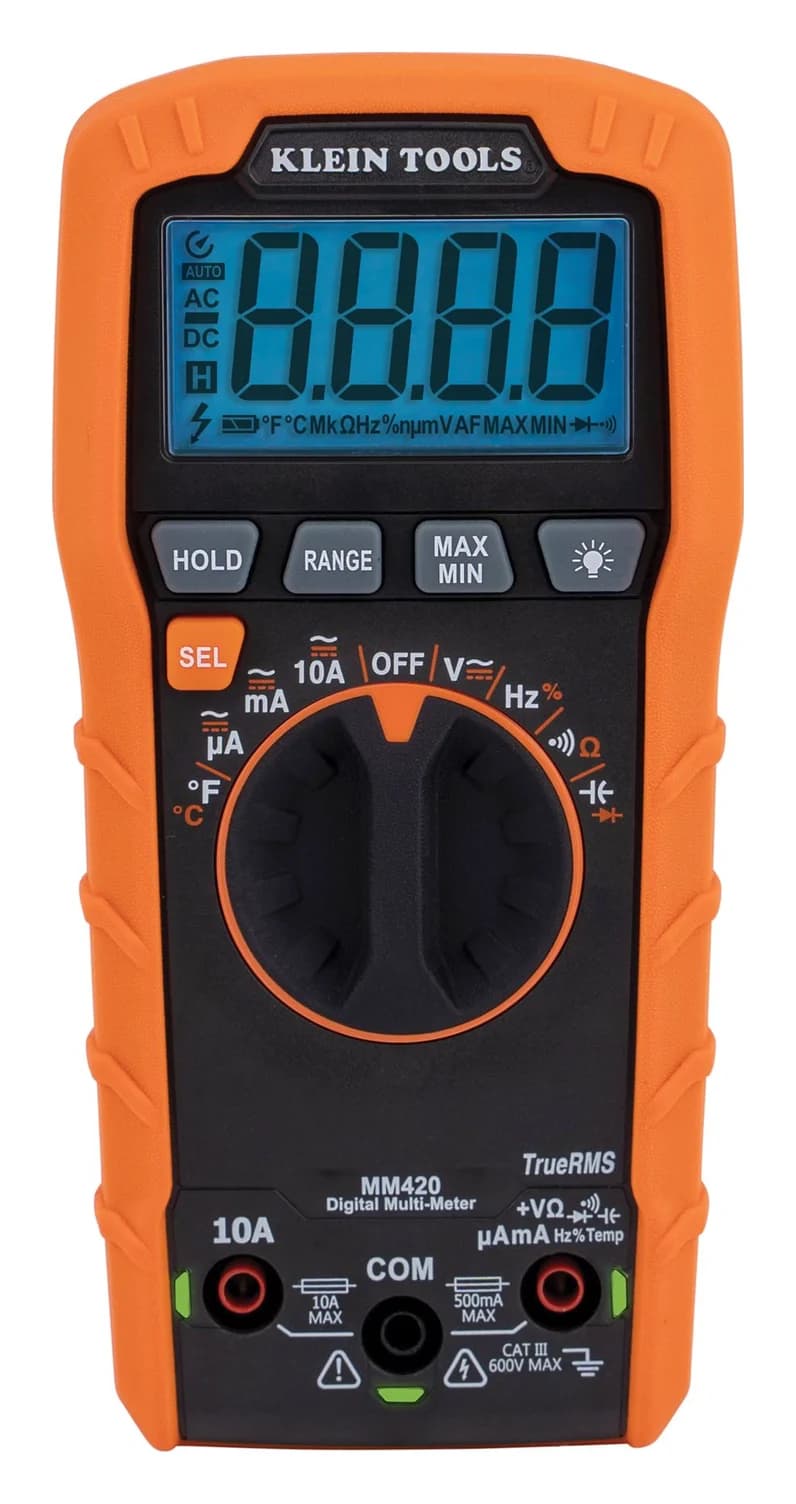
Choose for: DC voltage, voltage drop and small-current work
Limit: Frequency and duty-cycle inputs require more than 2 V RMS
- 2
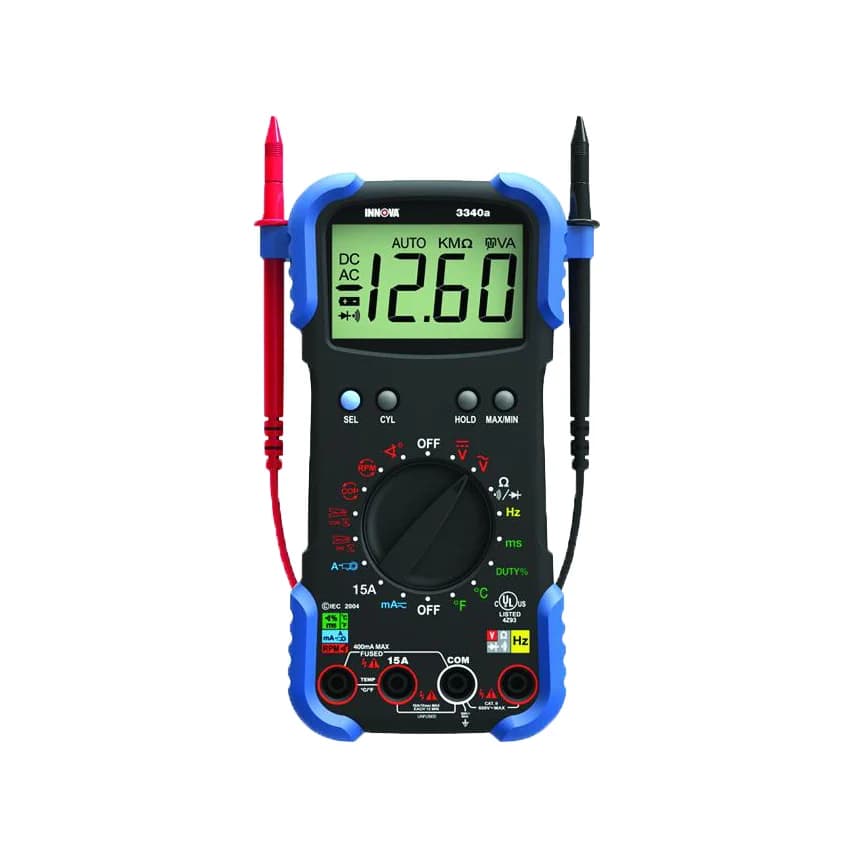
Choose for: Ignition measurements with the supplied inductive pickup
Limit: The official manual states measuring circuit category II without an associated CAT voltage; the complete category/voltage rating remains unconfirmed
Optional companion
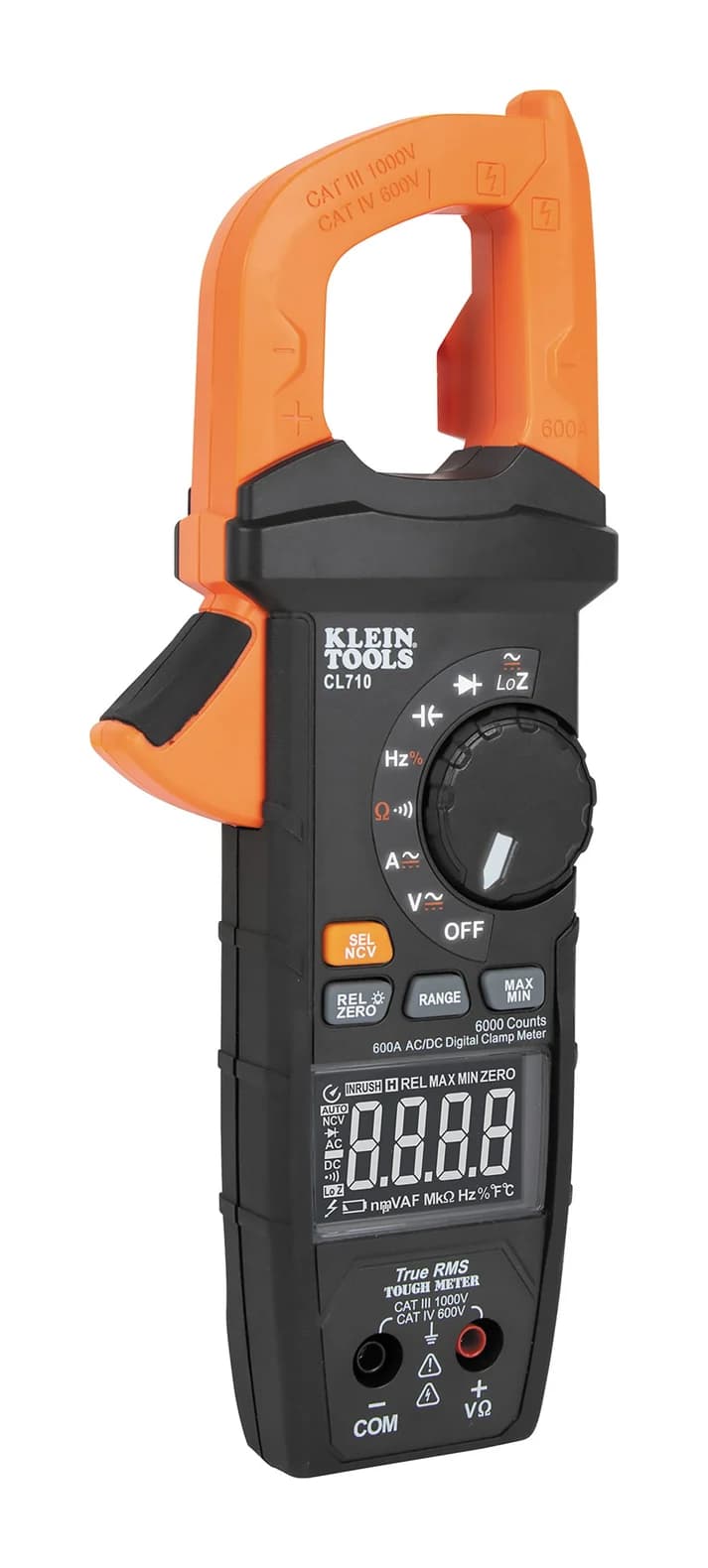
Choose for: Larger DC current through the jaws
Limit: No DC microamp range, so it can't read HVAC flame-sensor current
For most low-voltage vehicle circuit work, choose the Klein Tools MM420: it combines DC millivolts with fused small-current ranges, frequency and duty cycle. Choose the Innova 3340 for dedicated dwell and an included RPM pickup, or the Fluke 88V for professional automotive diagnosis with detailed range specifications and pulse-width measurement. The Klein CL710 is our DC clamp companion for larger currents; its small-current limitations matter more than its maximum range.
Recommendations follow manufacturer specifications and manuals; no physical testing is claimed.
Quick picks by vehicle task
Compare specifications and all conditions
Klein MM420 — general vehicle circuits
- Choose it for
- DC voltage, voltage drop and small-current work
- Main buying trap
- Frequency and duty-cycle inputs require more than 2 V RMS
Innova 3340 — RPM and dwell
- Choose it for
- Ignition measurements with the supplied inductive pickup
- Main buying trap
- Its 15 A current input is unfused
Fluke 88V — professional automotive diagnosis
- Choose it for
- Pulse width, RPM and specified low-current ranges
- Main buying trap
- Standalone and 88V/A kit accessories differ; it is not True RMS
Klein CL710 — DC clamp companion
- Choose it for
- Larger DC current through the jaws
- Main buying trap
- Its finest clamp-current increment is 10 mA
Full comparison table
Swipe to compare. Row labels stay visible.
| Pick | Choose it for | Main buying trap |
|---|---|---|
| Klein MM420 — general vehicle circuits | DC voltage, voltage drop and small-current work | Frequency and duty-cycle inputs require more than 2 V RMS |
| Innova 3340 — RPM and dwell | Ignition measurements with the supplied inductive pickup | Its 15 A current input is unfused |
| Fluke 88V — professional automotive diagnosis | Pulse width, RPM and specified low-current ranges | Standalone and 88V/A kit accessories differ; it is not True RMS |
| Klein CL710 — DC clamp companion | Larger DC current through the jaws | Its finest clamp-current increment is 10 mA |
Scroll horizontally to see every column
| Pick | Choose it for | Main buying trap |
|---|---|---|
| Klein MM420 — general vehicle circuits | DC voltage, voltage drop and small-current work | Frequency and duty-cycle inputs require more than 2 V RMS |
| Innova 3340 — RPM and dwell | Ignition measurements with the supplied inductive pickup | Its 15 A current input is unfused |
| Fluke 88V — professional automotive diagnosis | Pulse width, RPM and specified low-current ranges | Standalone and 88V/A kit accessories differ; it is not True RMS |
| Klein CL710 — DC clamp companion | Larger DC current through the jaws | Its finest clamp-current increment is 10 mA |
Comparison: the ranges behind those recommendations
These are manufacturer specifications, not verified readings. “Not listed” means the cited documentation does not establish the function or detail.
Compare specifications and all conditions
DC millivolts for voltage drop
- Klein MM420
- 400 mV range; 0.1 mV steps
- Innova 3340
- Resolution not stated on product page
- Fluke 88V
- 600 mV range; 0.1 mV steps in normal mode
All specifications
- Klein CL710
- 600 mV range; 0.1 mV steps
Small DC current
- Klein MM420
- 400 µA range; 0.1 µA steps
- Innova 3340
- 40 mA / 400 mA fused ranges; resolution not stated
- Fluke 88V
- 600 µA range; 0.1 µA steps in manual; see discrepancy below
All specifications
- Klein CL710
- 60 A range; 10 mA steps
Frequency / duty cycle
- Klein MM420
- To 50 kHz / yes
- Innova 3340
- Both listed
- Fluke 88V
- To 200 kHz / yes
All specifications
- Klein CL710
- To 60 kHz / yes
RPM / dedicated dwell
- Klein MM420
- Neither listed
- Innova 3340
- Included RPM pickup / dwell listed
- Fluke 88V
- RPM function / dedicated dwell not listed
All specifications
- Klein CL710
- Neither listed
Current connection
- Klein MM420
- Test leads in series
- Innova 3340
- Test leads; fused and unfused inputs
- Fluke 88V
- Test leads in series
All specifications
- Klein CL710
- Clamp around a single conductor
Full comparison table
Swipe to compare. Row labels stay visible.
| Measurement task | Klein MM420 | Innova 3340 | Fluke 88V | Klein CL710 |
|---|---|---|---|---|
| DC millivolts for voltage drop | 400 mV range; 0.1 mV steps | Resolution not stated on product page | 600 mV range; 0.1 mV steps in normal mode | 600 mV range; 0.1 mV steps |
| Small DC current | 400 µA range; 0.1 µA steps | 40 mA / 400 mA fused ranges; resolution not stated | 600 µA range; 0.1 µA steps in manual; see discrepancy below | 60 A range; 10 mA steps |
| Frequency / duty cycle | To 50 kHz / yes | Both listed | To 200 kHz / yes | To 60 kHz / yes |
| RPM / dedicated dwell | Neither listed | Included RPM pickup / dwell listed | RPM function / dedicated dwell not listed | Neither listed |
| Current connection | Test leads in series | Test leads; fused and unfused inputs | Test leads in series | Clamp around a single conductor |
Scroll horizontally to see every column
| Measurement task | Klein MM420 | Innova 3340 | Fluke 88V | Klein CL710 |
|---|---|---|---|---|
| DC millivolts for voltage drop | 400 mV range; 0.1 mV steps | Resolution not stated on product page | 600 mV range; 0.1 mV steps in normal mode | 600 mV range; 0.1 mV steps |
| Small DC current | 400 µA range; 0.1 µA steps | 40 mA / 400 mA fused ranges; resolution not stated | 600 µA range; 0.1 µA steps in manual; see discrepancy below | 60 A range; 10 mA steps |
| Frequency / duty cycle | To 50 kHz / yes | Both listed | To 200 kHz / yes | To 60 kHz / yes |
| RPM / dedicated dwell | Neither listed | Included RPM pickup / dwell listed | RPM function / dedicated dwell not listed | Neither listed |
| Current connection | Test leads in series | Test leads; fused and unfused inputs | Test leads in series | Clamp around a single conductor |
Sources: MM420 manual, Innova page, 88V manual and CL710 manual.
Best for general vehicle circuits: Klein Tools MM420
Start here if the job is tracing a supply, checking a ground or measuring a small circuit current. Klein's MM420 page specifies auto-ranging, True RMS, Lead Alert jack illumination and temperature measurement.
Klein Tools
A 4,000-count auto-ranging True RMS multimeter rated CAT III 600V that measures up to 600 V and 10 A, plus temperature, capacitance, frequency and duty cycle.
Check package and model options
- 600 V max
- 10 A max
- 4,000 counts
- CAT III 600V
The manual specifies a 400 mV DC range with 0.1 mV resolution and 10 MΩ input impedance. Its small-current ranges extend from microamps through milliamps; the 400 mA DC range resolves 100 µA. That range-specific figure is more useful for assessing a small draw than the finest microamp increment alone.
The limits: there is no dedicated RPM or dwell function listed. Frequency and duty cycle require more than 2 V to 220 V RMS, so do not assume every sensor signal qualifies. The standard package includes leads, a thermocouple and batteries; choose Innova instead if an inductive engine-speed pickup is the reason you are buying.
Best for RPM and dwell: Innova 3340
Choose the 3340 when the required measurements are RPM, dwell or pulse width. Innova lists dwell, frequency, temperature, pulse width and duty cycle, and supplies the temperature probe, inductive RPM clamp and carrying case.
Innova
An auto-ranging automotive multimeter that adds RPM (with an inductive pickup), dwell, pulse width, duty cycle, frequency and temperature to the usual electrical tests, with a 15 A unfused current input.
- 600 V max
- 15 A max
- 4,000 counts
Innova specifies 0–10,000 RPM with the inductive pickup on conventional and distributorless ignition systems; its feature list also includes coil-on-plug vehicles. Confirm the pickup arrangement for your vehicle before buying. An inductive RPM clamp detects ignition events; choose a DC current clamp separately when current is the measurement.
The important limitation is the 15 A unfused input, restricted to 15-second tests with at least 15 minutes between them. The 40 mA and 400 mA DC ranges are fused. Innova's product page does not provide display count, per-range accuracy, voltage resolution or a textual CAT rating, so we do not rank it above the others for those specifications.
Innova also hosts a 3340A manual marked Rev. B. It supplies range tables but calls the temperature probe and inductive pickup optional, while the current 3340 page includes both. Confirm the supplied revision and package before applying those older tables.
Best for professional automotive diagnosis: Fluke 88V
Choose the 88V for documented automotive signal measurements and current ranges. Fluke specifies pulse width, frequency, duty cycle and RPM, plus Min/Max/Average recording and peak capture as short as 250 µs. Its manual gives DC voltage accuracy of ±(0.1% + 1 digit) on the 6 V through 1000 V ranges; the DC millivolt range has a different accuracy.
It is not True RMS: Fluke confirms this in its product-page answer, and the manual describes average-responding AC conversion. Nor does the manual list a dedicated dwell mode. Choose Innova when an explicit dwell function is essential.
Read the documents together. The product page calls best DC-current resolution 0.001 mA, while the manual specifies 0.1 µA on the 600 µA range. The comparison above reports the manual's range-specific value; ask Fluke to resolve that discrepancy if it decides your purchase.
Fluke 88V versus 88V/A: what actually comes in the box?
88V, part 2550519
- Included accessories according to its product page
- Meter, high-impact holster, test leads, Quick Reference Guide
88V/A kit, part 2117440
- Included accessories according to its product page
- Meter, TL224 leads, AC285 clips, TP220 probes, RPM 80 pickup, TPAK hanger, 80BK temperature probe, two automotive backprobe pins, insulation-piercing probe, C800 case, holster, installed battery and manuals
Full comparison table
Swipe to compare. Row labels stay visible.
| US manufacturer package | Included accessories according to its product page |
|---|---|
| 88V, part 2550519 | Meter, high-impact holster, test leads, Quick Reference Guide |
| 88V/A kit, part 2117440 | Meter, TL224 leads, AC285 clips, TP220 probes, RPM 80 pickup, TPAK hanger, 80BK temperature probe, two automotive backprobe pins, insulation-piercing probe, C800 case, holster, installed battery and manuals |
Scroll horizontally to see every column
| US manufacturer package | Included accessories according to its product page |
|---|---|
| 88V, part 2550519 | Meter, high-impact holster, test leads, Quick Reference Guide |
| 88V/A kit, part 2117440 | Meter, TL224 leads, AC285 clips, TP220 probes, RPM 80 pickup, TPAK hanger, 80BK temperature probe, two automotive backprobe pins, insulation-piercing probe, C800 case, holster, installed battery and manuals |
The standalone page calls the RPM pickup and temperature probe optional. The shared manual describes the pickup as included; the 88V/A page explicitly includes it. Use the exact package list when ordering. The kit adds accessories around the same 88V meter; buy the standalone version if you already own suitable accessories.
See the Fluke 88V · See the 88V/A kit
Best DC clamp companion: Klein Tools CL710
The CL710 measures AC and DC current through its jaws, with 60 A and 600 A ranges. Its manual specifies clamping a single conductor and provides a DC zero function. This is our companion choice when larger-current measurement matters more than the smallest increment.
Klein Tools
A 6,000-count True RMS clamp meter that measures AC and DC current to 600 A and voltage to 1000 V, with a low-impedance mode and non-contact voltage detection in the jaw.
Check package and model options
- 1,000 V max
- 600 A max
- 6,000 counts
- CAT IV 600V, CAT III 1000V
It is a poor first choice for tiny sleeping-current checks: the 60 A range has 10 mA resolution and ±(2.0% + 8 digits) accuracy. Those extra digits are part of the error allowance, not additional precision. Use the clamp-versus-multimeter guide to choose the connection method and our clamp meter shortlist for broader options.
Klein's page mentions a thermocouple in a feature bullet, but its temperature specification is blank and the manual provides no temperature function. We therefore do not recommend the CL710 for temperature. Its frequency/duty-cycle input also requires more than 8 V to 220 V RMS and a zero-crossing signal; it does not replace a suitable automotive signal meter.
How we choose
These are research-based picks, with no instrument readings published as our own. We compared official product pages with their manuals, prioritized vehicle tasks over headline ranges, and named conflicting specifications. Fluke's automotive voltage-drop application note informed our circuit-selection advice. Our selection policy and measurement policy explain the distinction between manufacturer specifications and future measurements.
Buying guide: match the meter to the diagnosis
Battery voltage, voltage drop and battery condition
Fluke's 88V manual states that voltage tests indicate state of charge, not battery condition, and recommends a load test for performance under load. Follow how to test a car battery for that process, or our battery tester guide for dedicated tools.
For a wiring fault, Fluke's voltage-drop note explains why an unloaded resistance check can miss a restriction. Voltage drop depends on current flow, so the circuit must be operating for that assessment. Use the vehicle's specified test conditions and limits. For computer circuits, the note recommends a high-impedance meter; do not substitute the CL710's LoZ mode for a normal voltage input on a delicate signal circuit.
- Yes: Battery condition question: follow the battery diagnostic guide
- Yes: Wiring restriction: assess voltage drop with the circuit operating
- Yes: Low-current computer circuit: use the specified high-impedance voltage input
- No: A continuity result alone does not establish loaded circuit performance
RPM, dwell, frequency and duty cycle
Buy the ignition functions your service procedure actually calls for. For breaker-point ignition work, look for the dwell-angle test described in Innova's manual. Fluke's manual describes different RPM settings for conventional engines and waste-spark systems, so a pickup alone does not settle configuration. Frequency counts signal repetitions; duty cycle describes the proportion above or below a trigger level, while pulse width measures pulse duration. The 88V manual provides separate guidance for those measurements, including a pulse-width procedure for port fuel injectors. Check signal amplitude and triggering requirements before treating any frequency-capable meter as a sensor diagnostic tool.
Small currents, fuses and time limits
Compare resolution on the range that can accommodate the expected current. The MM420's microamp increment does not describe its milliamp range, and the CL710's large-current ceiling does not establish small-drain accuracy.
For direct current through the leads, the MM420 manual specifies 500 mA/600 V and 10 A/600 V fast-blow fuses; above 6 A, it recommends 30-second measurements followed by 10 minutes of recovery. The 88V manual specifies 0.440 A/1000 V and 11 A/1000 V fast fuses, and permits 10 A continuously up to 35 °C; hotter operation has shorter duty limits. Innova's unfused high-current input deserves particular care. Replace fuses only as the respective manual specifies.
Check the package before ordering
Choose the function
Decide whether you need general circuit measurements, ignition functions or clamp current.
Match the accessories
Check the exact package for the RPM pickup, temperature probe, clips and backprobes your procedure needs.
Confirm the version
For Fluke, match the standalone or automotive-kit part number to its official included-items list.
For general meter selection beyond cars, see our multimeter guide. Use how to use a multimeter for the basic controls and connection methods.
Verdict
Choose MM420 for general vehicle circuits, Innova 3340 for its included RPM pickup and dedicated dwell, or Fluke 88V for professional automotive functions and detailed range specifications. Choose 88V/A when you need its accessory package. Add CL710 for larger DC currents, and choose a more suitable low-current instrument when small drain accuracy is the priority.
Frequently asked questions
Do I need an automotive multimeter or will a regular one work?
Choose a general meter such as the MM420 for DC voltage, millivolts, resistance and small-current measurements. Its manual also specifies frequency and duty cycle. Move to the Innova 3340 when you need dedicated dwell and an included RPM pickup, or the Fluke 88V for automotive pulse-width and RPM functions with more detailed specifications. Buy for the measurement in your vehicle's service procedure.
Is the Fluke 88V True RMS?
No. Fluke's own product-page answer says the 88V is not a True RMS meter, and its manual describes AC conversion as average responding, RMS indicating. The MM420 and CL710 are True RMS. For this shortlist, prioritize the required DC ranges, signal functions and accessories; if your work also calls for True RMS AC measurement, include that requirement explicitly rather than assuming an automotive model provides it.
Can a multimeter tell whether my car battery needs replacing?
A voltage reading alone cannot establish battery condition. Fluke's 88V manual distinguishes state of charge from condition and calls for a load test to assess performance under load. Use the linked car-battery guide for the diagnostic process and the battery-tester guide for dedicated tools. Choose the multimeter here for circuit diagnosis rather than treating its voltage display as a battery replacement verdict.
Is a 600 A DC clamp suitable for parasitic battery drain?
The range label alone does not settle that. The CL710 manual specifies 10 mA resolution and ±(2.0% + 8 digits) on its lowest, 60 A range. That is why we recommend it as a larger-current companion. For small drains, choose a suitably specified low-current instrument and follow the vehicle's diagnostic procedure. Do not crank the engine with a handheld multimeter inserted in series; Fluke warns against this.
Klein Tools MM420
AmazonRelated guides
Best picks · Multimeters
Best Multimeters for Electricians: LoZ, CAT Ratings and Job Fit
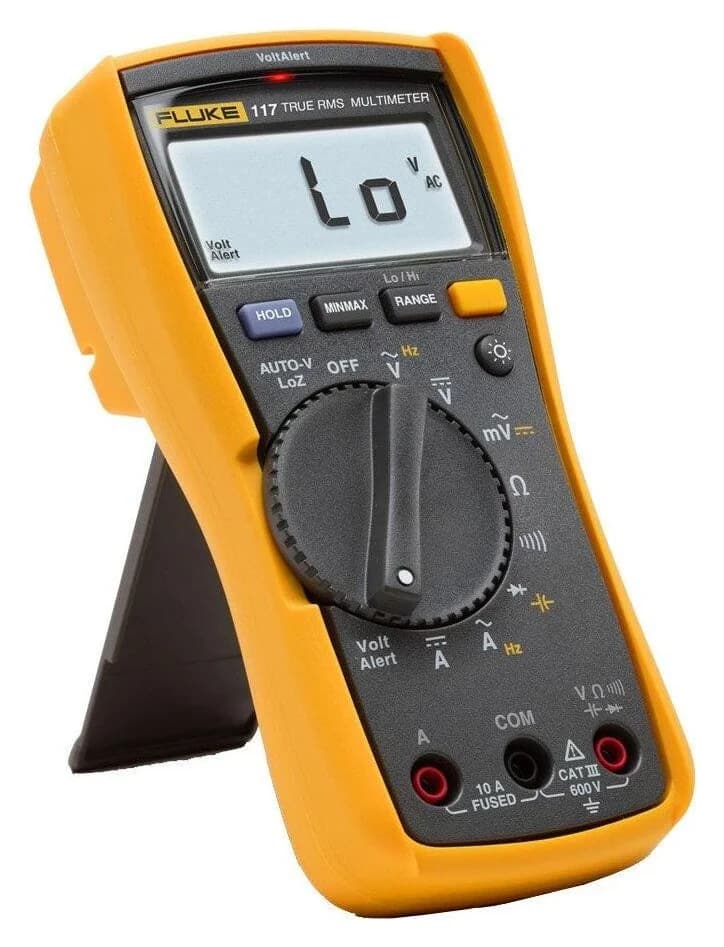
Choose an electrician's multimeter by job: Fluke 117 for branch circuits, 87V MAX for industry, Klein MM420 for extra functions, or the narrower Fluke 113.
Comparison · Multimeters
AstroAI DM6000AR vs KAIWEETS HT118A: Which Budget Multimeter?
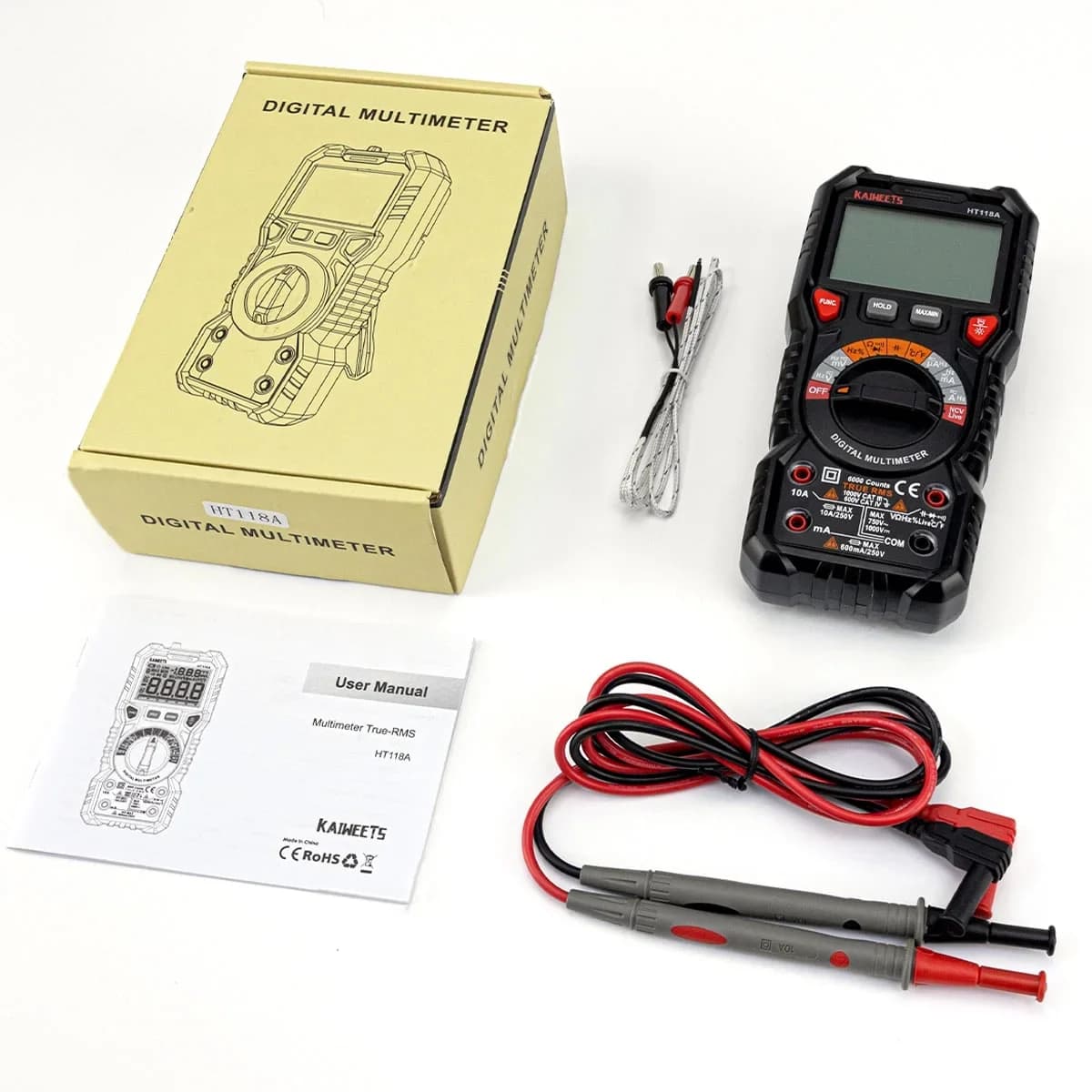
Choose an AstroAI DM6000AR or KAIWEETS HT118A for your first meter: compare controls, voltage claims, fuses, accessories and safe low-voltage starter tasks.
Buying guide · Multimeters
How to Test Continuity With a Multimeter: Fuses, Wires and Switches
Test fuses, wires and switches with a multimeter. Read OL, account for lead resistance, find intermittent breaks and compare model-specific beep thresholds.